

World War II was a pivotal period in aviation history, marked by the development of aircraft that transformed military strategy and aerial combat. Historians and aviation enthusiasts alike have celebrated numerous aircraft from that era for their technological advancements, combat effectiveness, and enduring legacy. Here are ten iconic WWII aircraft that continue to captivate historians and aviation aficionados around the globe.
1. Supermarine Spitfire (1938)
One of the most recognizable aircraft of WWII, the Supermarine Spitfire, played a significant role in the Battle of Britain. Its agile design and powerful Rolls-Royce Merlin engine allowed it to outperform many of its contemporaries. Historians estimate that over 20,000 Spitfires were built, making it a symbol of British resilience during the war.
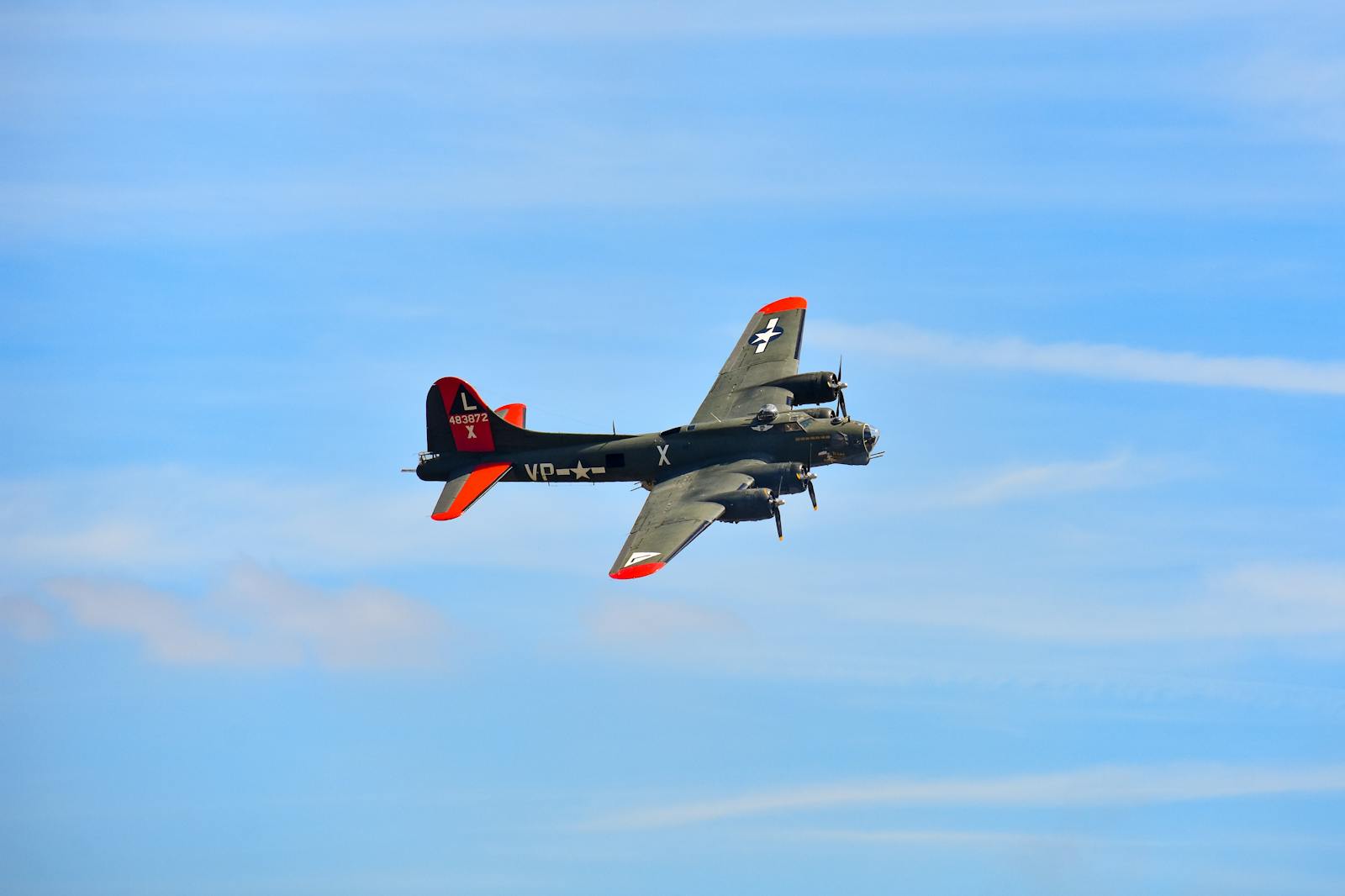
2. Boeing B-17 Flying Fortress (1938)
The Boeing B-17 Flying Fortress became famous for its strategic bombing missions over Europe. With a wingspan of 103 feet and the ability to carry up to 8,000 pounds of bombs, it was instrumental in the Allied bombing campaign. Approximately 12,731 B-17s were produced, and its durability earned it a legendary status among WWII aircraft.
3. North American P-51 Mustang (1940)
The North American P-51 Mustang is often hailed as the best all-around fighter of WWII. With a top speed of 437 mph and a combat radius of over 1,000 miles, it provided long-range escort to bombers and helped achieve air superiority. Historians credit the P-51 with significantly reducing bomber losses during missions, with around 15,000 units manufactured.
4. Messerschmitt Bf 109 (1937)
The Messerschmitt Bf 109 was the backbone of the Luftwaffe and one of the most produced fighter aircraft in history, with more than 33,000 units built. Its versatility allowed it to serve as a fighter, interceptor, and ground attack aircraft. The Bf 109’s advanced design and performance capabilities made it a formidable opponent for Allied pilots throughout the war.
5. Lockheed P-38 Lightning (1939)
The Lockheed P-38 Lightning is distinctive for its twin-boom design and was a key player in both the European and Pacific theaters. It combined the roles of a fighter and a bomber, capable of carrying bombs and rockets as well as engaging enemy aircraft. Its speed and versatility made it a favorite among pilots, with around 10,000 units produced.
6. Douglas C-47 Skytrain (1941)
As a military transport aircraft, the Douglas C-47 Skytrain was essential for logistics and troop movement during WWII. It could carry 28 soldiers or 6,000 pounds of cargo, proving invaluable for supply operations. Historians note that over 10,000 C-47s were built, and its legacy continues today as a vital transport aircraft in various military operations.
7. Avro Lancaster (1941)
The Avro Lancaster was the Royal Air Force’s primary heavy bomber, known for its ability to carry a large payload and execute precision bombing raids. It had a maximum bomb load of 22,000 pounds, allowing it to tackle high-value targets. Historians recognize the Lancaster for its role in significant missions, including the famous Dambusters raid, with about 7,300 aircraft produced.
8. Mitsubishi A6M Zero (1939)
The Mitsubishi A6M Zero was Japan’s most famous fighter aircraft, known for its exceptional maneuverability and long-range capabilities. It played a critical role in the early years of the Pacific War, achieving dominance during initial engagements. With roughly 10,000 units produced, the Zero’s design influenced post-war aviation and remains a subject of study for historians.
9. Fairchild C-119 Flying Boxcar (1947)
Although introduced shortly after WWII, the Fairchild C-119 Flying Boxcar is often associated with the era due to its role in airlift operations. Capable of carrying cargo, troops, and even vehicles, it became vital for logistical support during the war. Approximately 1,200 units were built, and it continued to serve in various capacities in subsequent conflicts.
10. Boeing B-29 Superfortress (1942)
The Boeing B-29 Superfortress was a revolutionary bomber, featuring advanced technology such as a pressurized cabin and remote-controlled.