
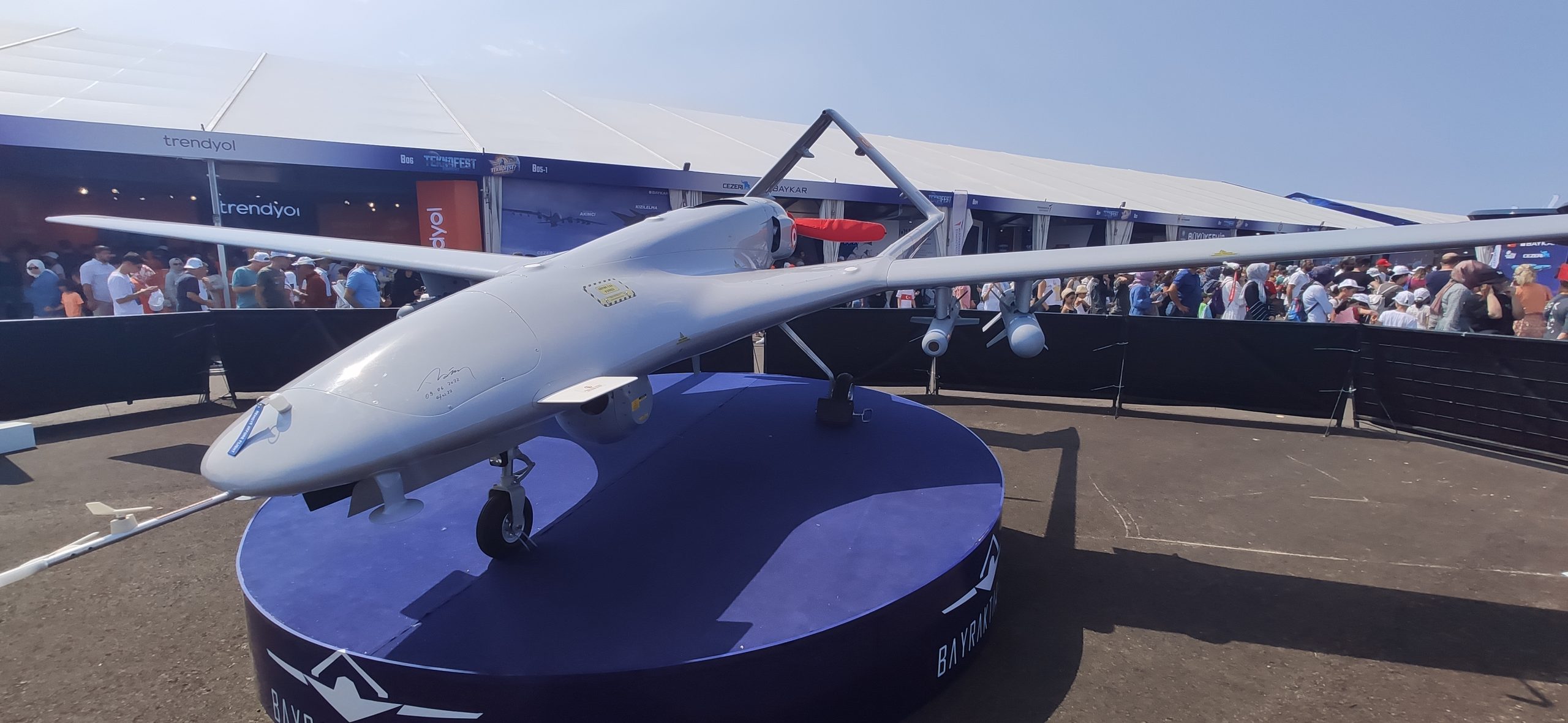

Military drones did not just add another tool to the battlefield, they changed who can see, strike, and survive in modern war. From mass-market systems to bespoke loitering munitions, these aircraft have reshaped everything from artillery duels in Ukraine to global counterterrorism campaigns. The ten drones below illustrate how unmanned systems have transformed tactics, strategy, and the balance of power.
1) Bayraktar TB2
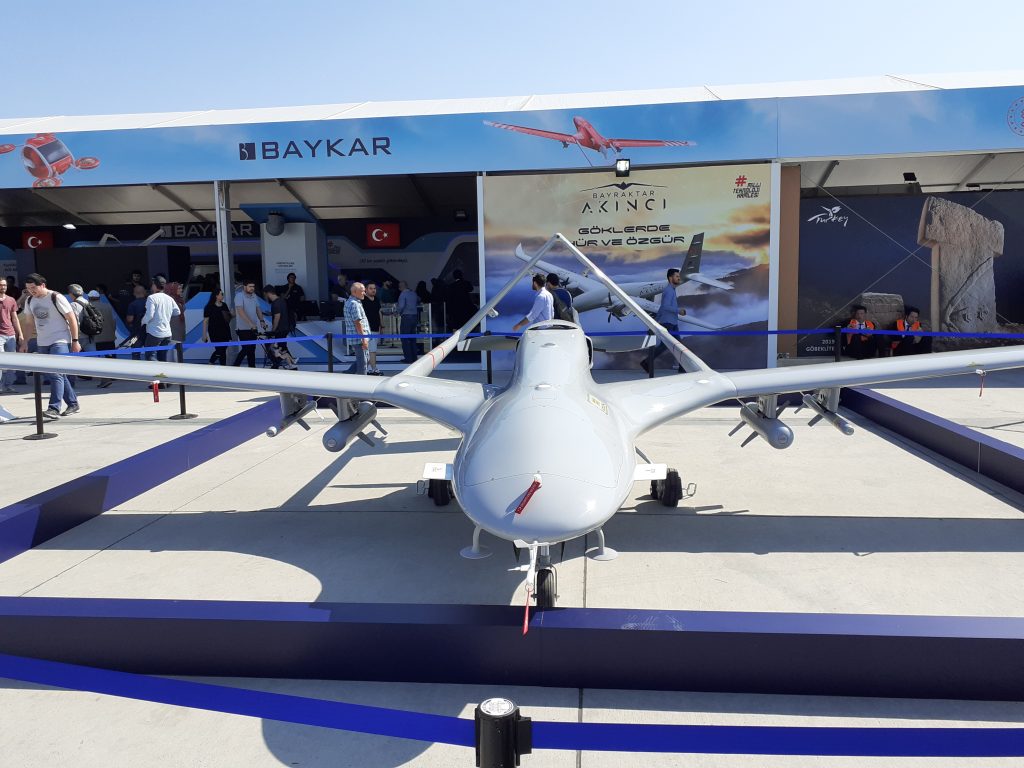
The Bayraktar TB2, a Turkish-made aircraft from Baykar, became a symbol of how relatively cheap unmanned systems can upend traditional airpower. In Ukraine, the Bayraktar helped redefined aerial reconnaissance and precision strikes by feeding real-time targeting data to artillery and ground units, often slipping past legacy air defenses that were optimized for crewed jets. Reporting on Ukrainian innovations describes how such platforms turned the sky into a persistent sensor grid rather than an occasional flyover.
This shift matters because it lowered the entry cost for effective airpower. Instead of relying on a small fleet of expensive fighters, Ukraine could field many TB2s, accept losses, and still maintain coverage. Analysts note that similar dynamics appeared when Azerbaijan used drones to dismantle Armenia’s defenses in Nagorno, showing that states without large air forces can now contest or dominate the air domain. The Bayraktar therefore changed not only how wars are fought, but which countries can realistically hope to win them.
2) FPV Kamikaze Drones
First-person-view kamikaze drones, often built from commercial parts, have transformed close-quarters combat in Ukraine. Operators fly them using live video feeds, threading explosives through trench openings, dugouts, and even vehicle hatches. Detailed accounts of Ukraine’s “kill zone” describe how drones erased the frontline, making any exposed position vulnerable within seconds. Instead of static lines, the battlefield became a fluid space where movement and concealment matter more than distance from the enemy.
These FPV systems are cheap enough to be used in large numbers, yet accurate enough to hit individual soldiers or specific components on a tank. That combination ended classic trench warfare by punishing any attempt to mass troops or vehicles. For commanders, the implication is stark: survivability now depends on dispersion, camouflage, and electronic protection, while logistics and medical evacuations must be rethought for a world where a small quadcopter can hunt targets far behind the nominal front.
3) Lancet Loitering Munition
The Russian Lancet loitering munition shows how drones are changing how wars harm civilians. Designed to circle over a target area before diving onto artillery, air defenses, or vehicles, the Lancet extends the reach and persistence of precision strikes. Analysis of how drones are changing how wars harm civilians notes that such systems blur the line between front and rear, because they can be launched from relative safety yet hit targets in or near populated zones.
In theory, loitering munitions can reduce collateral damage by allowing operators to wait for a clear shot. In practice, their use around cities and infrastructure complicates civilian evacuation and sheltering, since the threat can appear without warning and linger overhead. The Lancet’s role in counterbattery fire also encourages both sides to disperse guns into villages or industrial areas, increasing the risk that civilians will be caught between incoming shells and the drones hunting the launchers.
4) Orlan-10 Surveillance Drone
The Orlan-10, a Russian reconnaissance drone, has been extensively adapted and exploited by Ukrainian forces, illustrating how battlefield actors repurpose enemy technology. Ukrainian units have intercepted its data links, tracked its flight patterns, and used that knowledge to refine their own tactics. Reporting on Ukrainian innovations highlights how integrating drones like the Orlan-10 with artillery has redefined the role of unmanned systems from occasional spotters to constant battlefield managers.
By providing persistent monitoring, the Orlan-10 helps locate gun positions, logistics hubs, and troop concentrations, which can then be struck within minutes. This tight sensor-to-shooter loop accelerates the pace of combat and leaves less time for units to move or hide. For militaries worldwide, the Orlan-10’s impact underscores that even relatively simple surveillance drones, when networked with ground forces, can deliver strategic effects by making every artillery battery more accurate and responsive.
5) Switchblade Loitering Drone
The Switchblade family of loitering drones, supplied by the United States to Ukraine, has reshaped small-unit tactics by putting precision strike power in a backpack. These portable, one-way systems allow infantry teams to hit armored vehicles, firing positions, or command posts without calling in aircraft or heavy artillery. Accounts of Ukraine’s evolving battlefield describe how loitering munitions like the Switchblade and Russia’s Lancet have become central to offensive and defensive operations.
Variants such as the Ukrainian Switchblade 600, cited in analysis of military-grade kamikaze drones, are particularly valued for counterbattery missions, hunting artillery that would once have been protected by distance. For defenders, this means that even well-dug gun lines are at risk from small teams operating far forward. The Switchblade’s spread signals a future in which precision firepower is radically decentralized, empowering platoons and even squads to conduct missions that previously required higher-level assets.
6) MQ-9 Reaper
The MQ-9 Reaper is the frontline armed drone for the U.S. Air Force, and it pioneered the model of persistent surveillance and strike that defined early twenty-first century remote warfare. With long endurance and a mix of sensors and weapons, the MQ-9 can watch a target area for hours, then engage when conditions are optimal. Its prominence in lists of the most powerful military drones reflects how it set the standard for medium-altitude, long-endurance combat UAVs.
By separating pilots from the battlefield, the MQ-9 changed political and operational calculations about risk. States could conduct sustained campaigns with fewer personnel in harm’s way, but also faced new scrutiny over civilian casualties and the psychological distance of remote killing. The Reaper’s model of “hunter-killer” surveillance has influenced drone programs from Europe to Asia, embedding the idea that control of the air and the information space can be achieved without a single crewed aircraft crossing the border.
7) RQ-4 Global Hawk
The RQ-4 Global Hawk, often referenced in discussions of Long Range Surveillance, represents the high-altitude, long-endurance end of the drone spectrum. Operating far above commercial air traffic, it can map vast areas, track movements, and feed data into complex command systems. Analysis of how drones, data, and AI transformed our military emphasizes that platforms like the Global Hawk are as much flying servers as aircraft.
By collecting and sharing enormous volumes of imagery and signals intelligence, the RQ-4 enables commanders to see patterns that would be invisible from ground level. When paired with artificial intelligence tools that sift and flag anomalies, this data-rich approach changes decision-making speed and quality. For allies and adversaries alike, the Global Hawk demonstrates that future conflicts will be shaped not only by who has more firepower, but by who can better integrate drones, data, and AI into a coherent picture of the battlefield.
8) Wing Loong II
The Wing Loong II, a Chinese export drone, has expanded access to long-endurance strike capabilities for states that cannot buy Western systems. Comparable in concept to the MQ-9, it offers armed reconnaissance at a lower price point, and has been sold across the Middle East, Africa, and Asia. Its inclusion among the top powerful drones highlights how it has become a default option for governments seeking unmanned airpower without U.S. or European constraints.
This proliferation has strategic consequences. By giving more actors the ability to conduct cross-border strikes and persistent surveillance, the Wing Loong II contributes to a more crowded and contested airspace. Conflicts that once involved only local artillery or aircraft now feature drone campaigns that can target insurgents, militias, or rival states with relatively low risk to the operator. The system’s spread underscores how drones did not just change how wars are fought, they changed which countries can project force beyond their borders.
9) Hermes 900
The Hermes 900, an Israeli medium-altitude drone, is designed for multi-mission endurance, from border surveillance to strike coordination. Its long flight times and modular payloads make it a key node in data-driven operations, where live video, radar, and electronic intelligence are fused in real time. In assessments of how drones, data, and AI are reshaping militaries, systems like the Hermes 900 exemplify the shift toward continuous sensing rather than episodic reconnaissance.
By feeding information directly into AI-enabled analysis tools, the Hermes 900 helps commanders spot patterns such as smuggling routes, rocket launch preparations, or massing forces. This accelerates the tempo of operations and supports more precise targeting, but it also raises questions about automation in lethal decision-making. For states that adopt similar platforms, the Hermes 900 model shows that the real power of drones lies not only in the airframe, but in the software and networks that interpret its data.
10) Harop Loitering Munition
The Harop loitering munition, developed through Indo-Israeli cooperation, is designed to suppress enemy air defenses by homing in on radar emissions and then diving into the target. Unlike traditional missiles, it can circle for extended periods, waiting for a radar to switch on. Its role in conflicts such as Azerbaijan’s campaign against Armenia in Nagorno, and its place among the most powerful drones, underline how it has changed the calculus for surface-to-air missile crews.
By turning air-defense radars into potential beacons for their own destruction, the Harop complicates any attempt to build a protective bubble against aircraft or other drones. Operators must choose between emitting and risking a strike, or going dark and losing situational awareness. This dynamic opens corridors for other unmanned or crewed aircraft and illustrates how loitering munitions function as both sensors and ammunition. In high-threat environments, the Harop has become a template for future systems that merge reconnaissance, electronic warfare, and precision attack in a single expendable platform.
More from Wilder Media Group: