

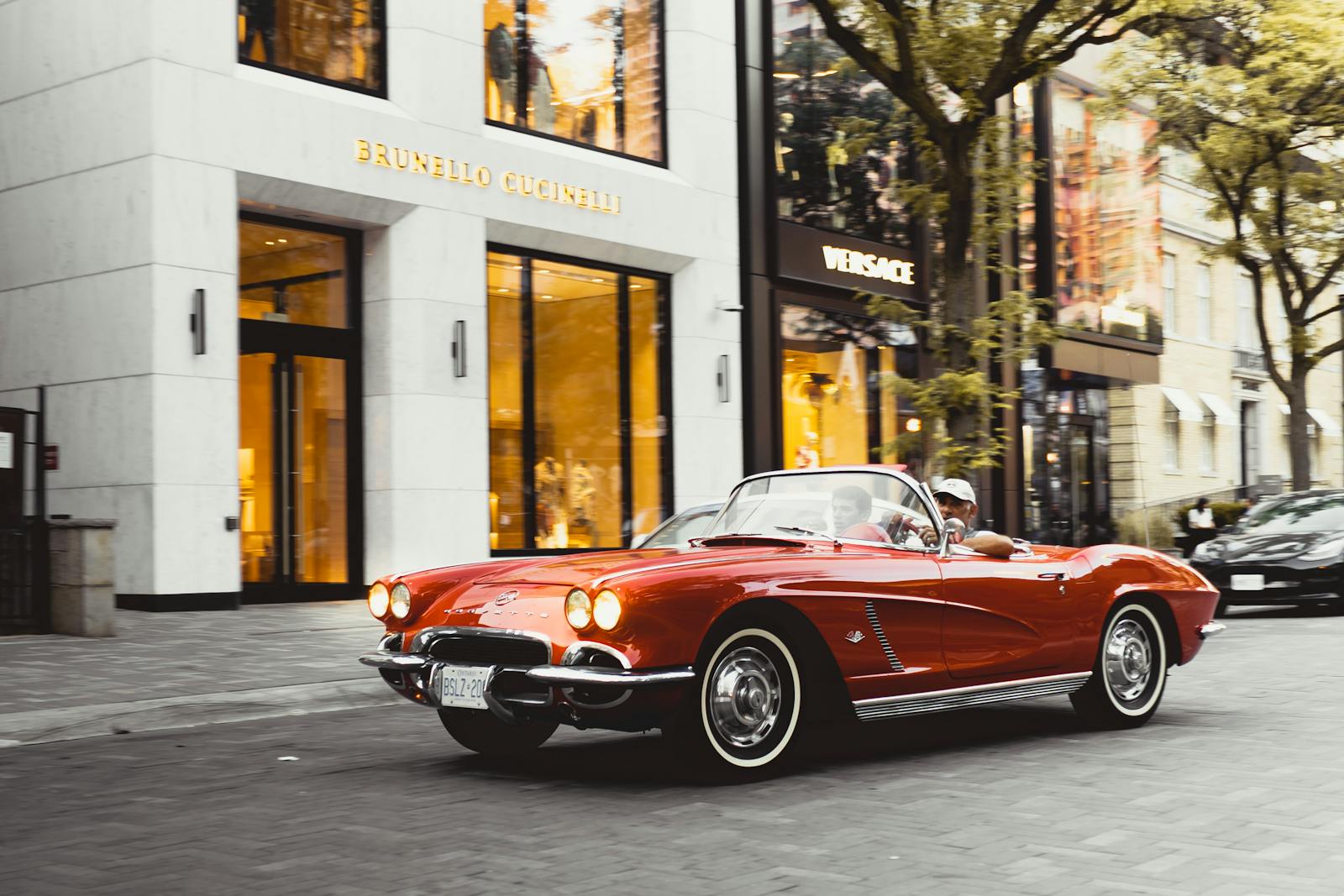
The automotive landscape has evolved significantly over the past few decades, with safety standards becoming increasingly stringent. Many sports cars that captured the hearts of Baby Boomers would likely fail today’s rigorous safety tests, raising questions about how far automotive safety has come. This matters not only for nostalgia but also for understanding the advancements in vehicle safety technology that protect drivers and passengers today.
1. Chevrolet Corvette (C1, 1953–1962)
The first-generation Chevrolet Corvette, produced from 1953 to 1962, is iconic among car enthusiasts. However, its lack of modern safety features, such as airbags and anti-lock brakes, would render it non-compliant with current standards. The C1’s fiberglass body and minimal crash protection would likely result in a poor performance in crash tests.
2. Ford Mustang (1964.5)
The original Ford Mustang, launched in 1964, became a cultural phenomenon. Despite its popularity, the Mustang lacked essential safety elements like crumple zones and side-impact protection. Today’s safety tests demand a higher level of occupant protection, which the 1964.5 model simply cannot provide.
3. Porsche 911 (1965–1989)
The early models of the Porsche 911, especially those produced before 1989, were known for their impressive performance but featured minimal safety equipment. With no electronic stability control or advanced airbag systems, these models would likely fail to meet the standards set by the National Highway Traffic Safety Administration (NHTSA). The absence of modern safety features significantly compromises the vehicle’s crashworthiness.
4. Jaguar E-Type (1961–1975)
The Jaguar E-Type is often lauded as one of the most beautiful sports cars ever made. However, its design prioritizes aesthetics over safety. With no seatbelt reminders and inadequate passenger protection, the E-Type would struggle to pass contemporary crash tests, which emphasize passenger safety and structural integrity.
5. Ferrari 250 GTO (1962–1964)
The Ferrari 250 GTO is a legendary vehicle among collectors, with only 36 units produced. However, its lack of modern safety features, such as modern seatbelts and airbags, would make it unlikely to pass today’s standards. Collectors may cherish its racing pedigree, but without proper safety measures, it would be deemed unsafe by today’s regulations.
6. Chevrolet Camaro (1967)
The first-generation Chevrolet Camaro, introduced in 1967, quickly became a favorite among muscle car fans. However, the absence of crucial safety features, such as electronic stability control and advanced airbag systems, would prevent it from passing modern safety tests. The Camaro’s rigid structure and basic safety designs do not meet current crash test criteria.
7. Datsun 240Z (1970–1973)
The Datsun 240Z is celebrated for its performance and affordability, yet it lacks many of the safety innovations found in today’s vehicles. Features like anti-lock braking systems and side-impact airbags are absent in this classic model. Given its design, the 240Z would likely struggle to achieve satisfactory ratings in today’s crash tests.
8. Lotus Elan (1962–1975)
The Lotus Elan is a lightweight sports car that emphasizes agility and performance. However, its design focuses on speed rather than safety, lacking essential features like reinforced passenger compartments and modern restraint systems. Consequently, the Elan would not fare well in contemporary safety assessments.
9. MG MGB (1962–1980)
The MG MGB holds a special place in automotive history but falls short in terms of safety. With its weak structure and minimal safety features, including basic seatbelts and no crumple zones, the MGB would be unlikely to survive today’s rigorous crash tests. The model’s design reflects a bygone era that did not prioritize driver and passenger safety as today’s standards demand.
10. Pontiac Firebird (1967–1981)
The Pontiac Firebird, particularly its early models, is a classic American muscle car that many Boomers adored. However, it lacks modern safety technology, such as traction control and advanced airbag systems, which are now standard in new vehicles. As a result, the Firebird would not meet contemporary safety guidelines and would likely score poorly in crash tests.