

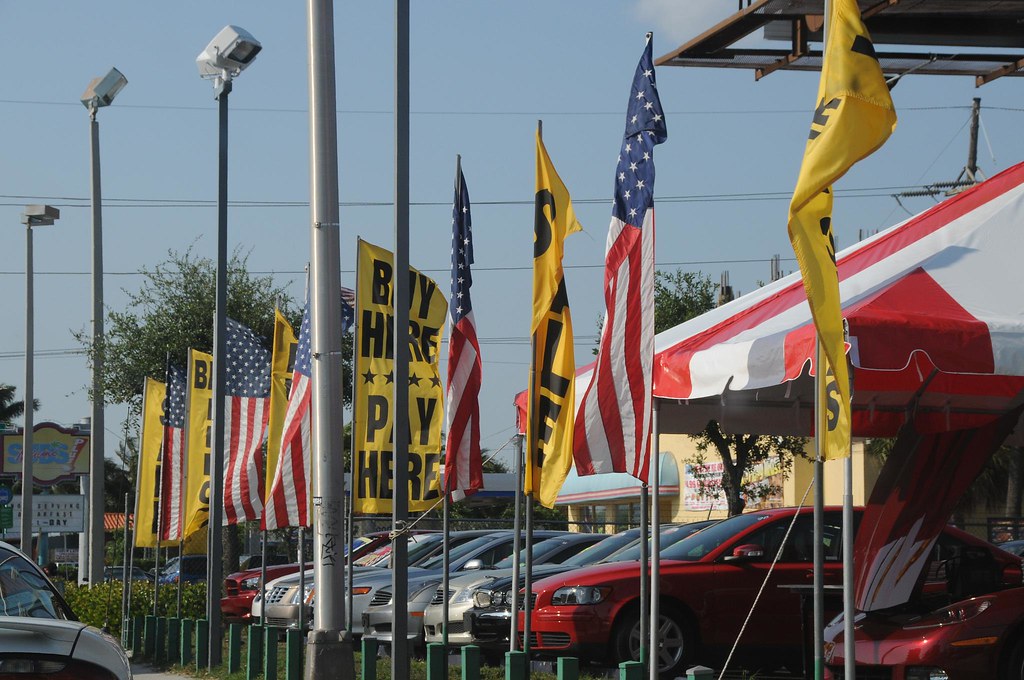
Car dealers use a predictable playbook of tricks that cost buyers thousands of dollars every day. By understanding the specific tactics regulators and investigators have documented, you can spot the red flags before you sign anything. Use this guide as a checklist so you recognize the most common dealer traps and keep control of the deal from the first ad you see to the final signature.
1) The Bait-and-Switch Trap
The bait-and-switch trap starts with an eye-catching ad for a low-price vehicle that is not actually available, then shifts you toward a more expensive option once you arrive. According to the FTC’s 2023 consumer protection guidelines, bait-and-switch tactics involve advertising a low-price vehicle that is unavailable, then pushing a higher-priced alternative, affecting 15% of surveyed buyers. The Federal Trade Commission has highlighted how these tactics and related junk fees can plague car buyers, and has proposed rules to ban such practices in car-buying transactions.
Legal experts describe bait and switch as advertising a vehicle at an attractive price when that car is either not available or does not exist, then steering you to something costlier, as detailed in guidance on bait and switch auto fraud. The stakes are high because you may have already invested time, arranged transportation, or emotionally committed to buying, which makes it harder to walk away. Knowing that regulators see this as a widespread problem should give you confidence to leave if the advertised car suddenly “just sold.”
2) Lowballing Your Trade-In Value
Lowballing your trade-in value is one of the easiest ways a dealer can tilt the deal in their favor without changing the sticker price. A 2024 Consumer Reports survey found that dealers often undervalue trades by 20% to 30% below Kelley Blue Book estimates, citing vague “market conditions” to justify the gap. In one example, a 2020 Honda Civic valued at $18,000 was quoted at only $15,000, instantly shifting $3,000 from the buyer’s pocket to the dealership’s profit.
Because many shoppers focus on the monthly payment, a low trade-in offer can be hidden inside what looks like a reasonable deal. The impact is especially severe if you still owe money on your current car, since an undervalued trade can leave you “upside down” and rolling negative equity into the new loan. Treat your trade-in as a separate transaction, get written offers from multiple buyers, and be ready to sell privately if the dealer refuses to come close to verified benchmarks.
3) Sneaky Hidden Fees at Signing
Sneaky hidden fees at signing often appear only after you think the deal is done, inflating the final price without any real added value. Reporting has shown that hidden charges such as “dealer prep” fees typically range from $500 to $1,000 and are added post-negotiation without clear disclosure, as seen in a California Toyota dealership case. These junk fees are exactly the kind of costs that regulators targeted when they developed the CARS Rule to fight exploitative add-ons and bait-and-switch tactics in the showroom.
The CARS Rule is intended to prohibit exploitative junk fees in the car-buying process, saving people time and money and protecting honest dealers, according to coverage of how The CARS Rule was finalized. When you see vague line items like “processing,” “prep,” or “documentation” that are not required government fees, you are looking at pure margin for the store. Insist on a full, itemized buyer’s order before you agree to anything and be prepared to walk if the dealer refuses to remove nonessential charges.
4) Yo-Yo Financing Reversal
Yo-yo financing, sometimes called a “spot delivery” reversal, happens when a dealer tells you that your loan is approved, lets you drive off, then calls days later to say the financing fell through. The FTC’s 2023 auto financing alert describes how dealers use this tactic to pull buyers back into the dealership and force them into higher-interest deals. In one documented example, a buyer in Texas was upsold from a 4% APR to a punishing 12% APR after being told the original financing could not be honored.
This trick works because you already feel like the car is yours, and you may have sold your old vehicle or rearranged your life around the new one. The leverage shifts to the dealer, who can threaten to unwind the deal unless you accept worse terms. To protect yourself, refuse to sign any paperwork that labels financing as “conditional,” verify approval directly with the lender, and be ready to return the car rather than accept a dramatically higher rate.
5) Upselling Useless Add-Ons
Upselling useless add-ons is a profit center that often kicks in after you have agreed on the price of the car. A 2023 exposé found that buyers are routinely pressured into extras like VIN etching for $300, even though the underlying service is worth about $20, or nitrogen-filled tires for $150 when standard air is free. According to that reporting, 40% of buyers ended up paying for these add-ons, many of which provide little or no real-world benefit compared with their cost.
These products are often bundled into the finance paperwork, so you may not realize you are paying for them until you see the final contract. The finance manager may frame them as essential for “protection” or “resale value,” even when the coverage is minimal. The stakes are clear: a few unnecessary add-ons can erase any discount you negotiated on the vehicle itself. Decline everything by default, then selectively add only what you have researched and truly want.
6) Creating Fake Urgency
Creating fake urgency is a classic sales tactic that pushes you to decide before you have time to think. A 2024 BBB report on urgency tactics notes that phrases like “this deal ends today” or “someone else is coming to buy it” create false scarcity, leading 25% of buyers to skip research. In one Florida Ford deal, inventory was misrepresented to make it seem like a specific vehicle was the last of its kind, even though similar models were still available.
When you are told that a price or vehicle is only available “right now,” you are less likely to compare offers, check independent pricing guides, or review the contract carefully. That rushed environment is exactly where other tricks on this list, from junk fees to overpriced add-ons, slip through. The safest response is to slow the process down: leave the dealership, verify inventory online, and get competing quotes. Any legitimate offer should still be there after you have done your homework.
7) Hiding Vehicle Accident History
Hiding vehicle accident history, especially flood or collision damage, can turn a used car into a long-term money pit. NHTSA’s 2023 vehicle history guidelines emphasize the importance of accurate disclosure, yet a ProPublica investigation in June 2024 found that 10% of used cars were sold with undisclosed flood damage from Hurricane Ida in 2021. These vehicles often look fine on the surface but can suffer from corroded wiring, mold, and chronic electrical failures that appear months later.
The financial stakes are severe because flood damage can void warranties and dramatically shorten a car’s lifespan. Unsuspecting buyers may pay market price for a vehicle that should be heavily discounted or scrapped. To protect yourself, always run a vehicle history report, inspect for signs of water intrusion such as rust under seats or silt in crevices, and consider a pre-purchase inspection from an independent mechanic who knows how to spot flood indicators.
8) Confusing Financing Jargon
Confusing financing jargon lets dealers make a loan sound affordable while hiding how much you will really pay over time. The CFPB’s 2024 financing report explains how dealers quote a simple line like “3.9% for 60 months” but bury the total finance charges in the fine print. In one example, a $20,000 loan carried total finance charges of $4,200, a cost that many buyers did not fully grasp when focusing only on the monthly payment.
Mixing up APR and interest rate, or stretching the term to lower the monthly bill, can dramatically increase the total amount you pay. Dealers may also emphasize that you are “approved” without clarifying that a shorter term or slightly higher payment could save thousands in interest. Always ask for the full out-the-door price, the APR, the loan term, and the total finance charges in dollars. If the numbers are not crystal clear, pause the deal until they are.
9) Door-Buster Pricing Bait
Door-buster pricing bait uses an attention-grabbing advertised price to lure you in, then quietly adds costs that erase the discount. Pricing analysis from 2023 describes ads for models like the 2022 Chevy Equinox at $1,000 below MSRP, only for shoppers to discover that the actual vehicles in stock require add-ons totaling $2,500 extra. The headline price applies to a configuration that is either not on the lot or available only in vanishingly small numbers.
This tactic works hand in hand with urgency pressure, since you may feel compelled to grab the “deal” before someone else does. In reality, the final price after mandatory accessories, dealer-installed packages, and inflated fees can exceed what you would pay at a straightforward store. Before visiting, confirm the specific stock number tied to the ad, demand a written out-the-door quote, and be prepared to leave if the dealer refuses to honor the advertised terms.
10) The Four-Square Negotiation Grid
The four-square negotiation grid is a worksheet that lets dealers juggle numbers in ways that confuse buyers about the true cost of the car. A 2024 Wall Street Journal article on this technique shows how dealers write price, monthly payment, trade-in value, and down payment in a grid, then move figures between boxes to make the deal look better without actually lowering the total. According to that reporting, 30% of negotiators found the method confusing and struggled to track what they were really paying.
By focusing your attention on one square, such as the monthly payment, the salesperson can quietly raise the vehicle price or undervalue your trade. The grid also makes it harder to compare offers between dealerships, since each box can be manipulated independently. The best defense is to insist on negotiating one number at a time, starting with the out-the-door price of the car, then addressing your trade-in and financing separately so you always know where the money is going.
11) Spot Delivery Deception
Spot delivery deception overlaps with yo-yo financing but centers on letting you drive off before financing is truly finalized. Per the FTC’s 2023 used car rule, spot delivery involves releasing the vehicle on the spot, then later claiming that the loan terms have changed or been denied. In a Michigan case in 2024, 50 vehicles were reclaimed after buyers were told they had to accept higher interest rates or lose the cars entirely, illustrating how disruptive this tactic can be.
The Federal Trade Commission developed the CARS framework to curb abuses like this, and coverage of the new protections explains how the CARS rule would have restricted unfair financing games. When you accept a spot delivery, you are effectively giving the dealer a free option on your contract. To avoid that leverage, insist on written confirmation that financing is final, keep your old car until everything is approved, and refuse to sign any document that allows unilateral changes after you leave.
12) Downplaying Warranty Limits
Downplaying warranty limits is a subtle but costly trick that often surfaces in the finance office. Consumer Affairs’ 2024 warranty review notes that dealers sell extended plans for about $2,000 that cover only “cosmetic” issues, while implying that they offer broad mechanical protection. At the same time, the federal Magnuson-Moss Act (1975) requires clear disclosure of warranty limitations, meaning you have a legal right to understand exactly what is and is not covered before you pay.
When a finance manager rushes through a stack of forms, it is easy to initial a service contract without realizing that major components like the engine, transmission, or electronics are excluded. The result is paying thousands for coverage that may not help when something truly expensive fails. To protect yourself, read the full warranty booklet, look for exclusions and caps, and compare third-party options. If the coverage is mostly cosmetic, you are usually better off keeping the money in your own repair fund.
More from Wilder Media Group: