


Buying a new car should feel like a reward. But for a surprising number of owners, the thrill fades fast. Data from automotive research firm iSeeCars, published in early 2025, found that certain models get flipped back onto the used market within 12 months at rates far above the national average of roughly 3 to 4 percent. The pattern is consistent: nearly every vehicle at the top of the early-resale list carries a luxury badge.
Three models stand out for the speed and frequency with which owners walk away. Each one tells a slightly different story about mismatched expectations, but they share a common thread: high monthly payments colliding with real-world disappointment.
Why first-year resale rates reveal more than surveys
Owner satisfaction surveys capture frustration in the abstract. Resale behavior captures it in dollars. When someone sells a car they bought less than a year ago, they are almost certainly eating thousands in depreciation and fees to escape a vehicle that is not working for them.
An iSeeCars study of vehicles most frequently resold within one year found that every model in the top 10 was a premium nameplate. Karl Brauer, executive analyst at iSeeCars, pointed to financial strain as a driving factor. With the average new-car loan payment now exceeding $700 per month, according to Edmunds data, many buyers are stretching into luxury territory and discovering they cannot sustain the total cost of ownership once insurance, fuel and maintenance are factored in.
That financial squeeze alone does not explain everything. If the car delivered on its promises, most owners would find a way to keep it. The vehicles on this list tend to disappoint in specific, tangible ways: ride quality that does not match the price, technology that frustrates rather than impresses, or running costs that exceed what the buyer budgeted.
1. Jaguar F-Pace: style over substance for too many buyers
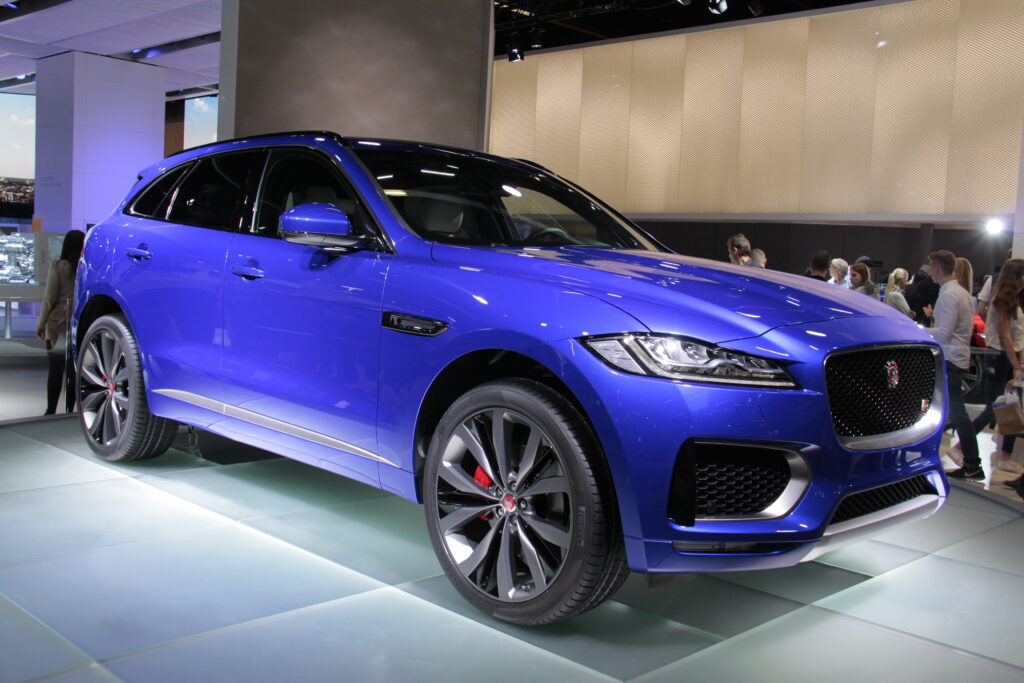
The Jaguar F-Pace posted an early resale rate of 13.3 percent in the iSeeCars analysis, meaning roughly one in eight new F-Pace buyers put the vehicle back on the market before its first birthday. That is more than three times the national average.
On paper, the F-Pace checks the right boxes: a sharp exterior, a well-known British badge and a chassis tuned with a nod toward sportiness. The trouble starts when owners use it as a daily family vehicle. The sport-tuned suspension that feels engaging on a test drive can become tiresome over potholed commutes. Premium fuel is required. Insurance rates reflect the luxury positioning. And Jaguar’s dealer network is far smaller than competitors like BMW or Mercedes-Benz, which can mean longer drives for routine service.
Jaguar’s broader brand uncertainty may also weigh on owners. The company announced a dramatic pivot toward an all-electric, ultra-luxury lineup, raising questions about long-term parts availability and resale support for current combustion models like the F-Pace. For buyers already feeling the pinch of a $700-plus monthly payment, that uncertainty can be the final push toward a trade-in.
2. Mercedes-Benz GLA: the badge costs more than the experience delivers
The Mercedes-Benz GLA appeared in the same iSeeCars dataset with an early resale rate of 16.7 percent, the highest of the three vehicles highlighted here. Nearly one in six GLA buyers sold within a year.
The GLA is Mercedes-Benz’s entry point into the SUV lineup, and that positioning creates a specific kind of mismatch. Shoppers see the three-pointed star and expect the hushed, solid feel of a C-Class or E-Class sedan. What they get is a subcompact crossover built on a transverse-engine platform shared with mainstream vehicles. The cabin is tight, especially in the rear seat. Road noise is noticeable at highway speeds. The base engine, a turbocharged 2.0-liter four-cylinder, is adequate but not the silky experience the badge implies.
Then there is the options sheet. Features that many buyers consider standard in a luxury vehicle, such as adaptive cruise control, a surround-view camera and the full MBUX infotainment suite, often require expensive packages. A GLA that is optioned to feel genuinely premium can push past $50,000, which puts it in the same price range as larger, more comfortable competitors from Genesis, Lexus and even Mercedes’ own GLB.
For buyers who financed at the top of their budget expecting a transformative ownership experience, the GLA’s compact reality can feel like a letdown. The 16.7 percent resale figure suggests that a significant number of them decide the badge alone is not worth the monthly payment.
3. Mazda CX-70 plug-in hybrid: promising tech, uneven execution
The third vehicle on this list is not a traditional luxury brand, but it carries a luxury price. The Mazda CX-70 plug-in hybrid, which arrived as a 2025 model, has drawn pointed criticism from owners and reviewers for falling short of its dual-powertrain promise. AutoGuide included it among vehicles with the lowest owner satisfaction, citing electrical complaints and inconsistent real-world efficiency.
The pitch was appealing: a mid-size, two-row SUV that could handle short commutes on electric power alone and switch to gasoline for longer trips. Mazda quoted an EPA-estimated 26 miles of electric range. But owners have reported that real-world electric range often falls short of that number, particularly in cold weather or at highway speeds. When the gasoline engine kicks in more frequently than expected, the fuel savings that justified the PHEV premium start to evaporate.
Reliability concerns have compounded the frustration. NHTSA’s complaint database shows early reports of charging-system faults, unexpected powertrain warning lights and software glitches in the CX-70 PHEV. For buyers who chose the plug-in variant as a cautious first step into electrification, these issues can feel especially discouraging. A conventional gasoline CX-70 costs thousands less and avoids the complexity entirely, which makes the PHEV’s value proposition harder to defend once problems appear.
Mazda has positioned the CX-70 as part of its upmarket push, with interior materials and pricing that compete with entry-level luxury. That strategy raises the stakes: when a $50,000-plus vehicle has early-production teething problems, owners hold it to a higher standard than they would a $30,000 mainstream crossover.
How online communities accelerate the decision to sell
Buyer’s remorse is not new, but the speed at which it spreads has changed. Owner forums, Reddit threads and social media groups now give dissatisfied buyers an immediate audience. When someone posts about a recurring electrical fault in their CX-70 PHEV or a frustrating dealer experience with their F-Pace, hundreds of owners with similar vehicles see it within hours.
That visibility creates a feedback loop. A buyer who was on the fence about keeping a disappointing vehicle reads a thread full of people who already traded theirs in and decides to do the same. The iSeeCars data captures the end result of that loop: vehicles returning to the used market at rates that would have been unusual a decade ago, when dissatisfied owners were more isolated in their frustration.
Complaint aggregators add another layer. AAA’s breakdown of vehicles with the most complaints shows how quickly grievances accumulate for models with complex technology or inconsistent quality. While that data skews toward older, high-volume nameplates like the Jeep Grand Cherokee and Ford F-150, the same dynamic is building for newer entries like the CX-70 PHEV as its owner base grows.
What shoppers can do before signing
The pattern in this data is not that luxury vehicles are inherently bad purchases. It is that a mismatch between expectations and reality, amplified by financial pressure, leads to regret. Buyers considering any of these models, or similar ones, can take a few concrete steps to protect themselves.
Live with the payment math for a month first. Before signing, add up the projected monthly loan or lease payment, insurance premium, fuel costs and estimated maintenance. If the total makes you uncomfortable, it will not get easier once the car is in your driveway.
Test-drive on your actual roads. A 15-minute loop around a dealership will not reveal how a sport-tuned suspension handles your daily commute or how much road noise enters the cabin at 70 mph. Ask for an extended test drive or a weekend loaner if the dealer offers one.
Check early-owner feedback, not just professional reviews. Press reviews are typically based on short loan periods with manufacturer-maintained vehicles. Owner forums, NHTSA complaint filings and sites like iSeeCars provide a more grounded picture of what the first year actually looks like.
Consider leasing if you are uncertain. A lease limits your financial exposure if the vehicle disappoints. Selling a financed car within a year almost always means absorbing negative equity. A lease at least gives you a defined exit point.
No amount of research eliminates all risk. But the data is clear that certain vehicles, particularly those where premium pricing meets compact packaging or unproven technology, carry a higher chance of early regret. Knowing that before you sign is worth more than any dealer incentive.
More from Wilder Media Group: