
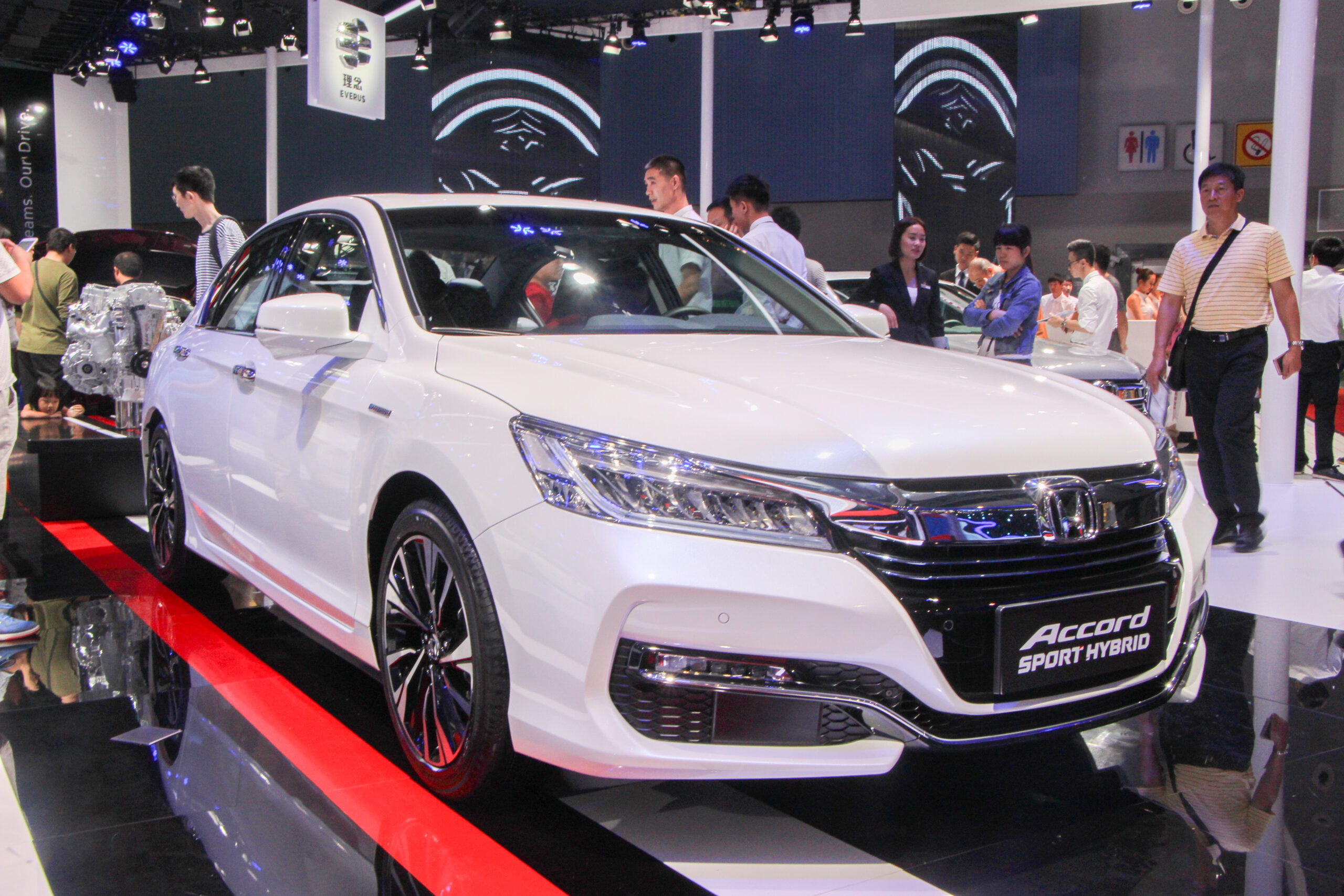

A Honda Accord Hybrid that goes limp at 70 mph. A Nissan Rogue whose engine quits while merging. A Jeep plug-in hybrid that can catch fire in a closed garage. A Toyota Tundra that stalls mid-tow because of metal shavings left over from the factory.
These are not hypotheticals. They are the scenarios behind four of the largest active vehicle recalls in the United States right now, collectively covering well over one million cars, SUVs, and trucks. Each recall involves a defect that can disable a vehicle without warning or, in the case of the Jeep plug-in hybrids, start a fire even when the ignition is off.
All four campaigns remain open as of spring 2026, and all repairs are free at authorized dealerships. Here is what is wrong, which vehicles are affected, and what owners should do.
Honda Accord Hybrid: 256,603 Sedans That Can Lose Drive Power at Highway Speed
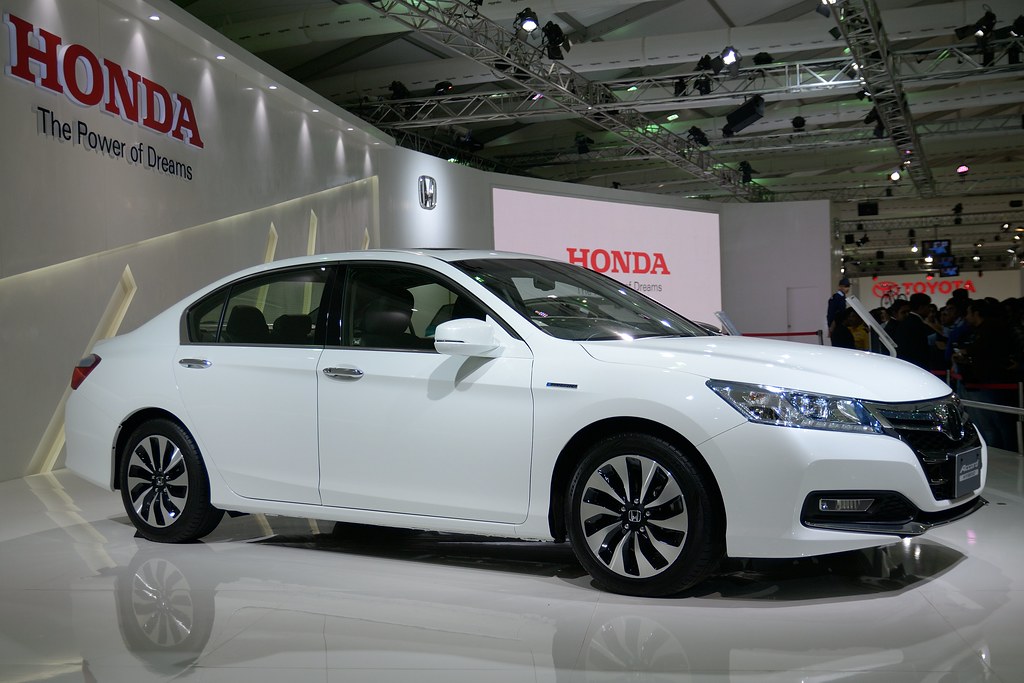
Honda is recalling approximately 256,603 model-year 2023 through 2025 Accord Hybrid sedans because a software error in the hybrid powertrain control unit can cause a sudden, complete loss of drive power while the vehicle is moving. The National Highway Traffic Safety Administration (NHTSA) confirmed the campaign after receiving complaints from drivers who reported their cars decelerating sharply on highways with no warning light or prior symptom.
The root cause is a programming flaw in how the system manages transitions between electric and gasoline propulsion. When the handoff fails, the transmission effectively disengages. The engine may keep running, but no power reaches the wheels. For a driver in the left lane of an interstate, the result is a car that is rapidly slowing into the path of traffic behind it.
Honda’s fix is a software update performed at dealerships at no charge. The company posted details on its recall lookup page, where owners can enter a VIN to confirm whether their vehicle is included. Kelley Blue Book reported that the update reprograms the hybrid control module to prevent the faulty handoff.
The Accord Hybrid recall is part of a broader pattern. An NBC Chicago investigation found that hybrid power-loss complaints have surged across multiple brands, including Ford and Stellantis, raising questions about whether the industry moved too quickly in scaling hybrid technology without adequate fail-safe programming.
Nissan Rogue: Two Separate Recalls Covering More Than 640,000 SUVs
Nissan’s compact Rogue SUV is the subject of two overlapping recall campaigns that together affect roughly 642,000 vehicles from model years 2021 through 2024. Both involve the 1.5-liter variable-compression turbocharged three-cylinder engine, designated KR15DDT, that Nissan introduced as a fuel-efficiency upgrade.
The first campaign, covering about 318,781 Rogues, targets a defect in the electronic throttle body assembly. Plastic gears inside the unit can crack and break, causing the throttle to stick or fail entirely. When that happens, the engine may lose power, hesitate under acceleration, or stall. NHTSA recall codes for this campaign are R25E2 and R25E3, as Kelley Blue Book confirmed.
The second campaign addresses a separate bearing-related engine failure. The Wall Street Journal reported that Nissan recalled an additional 300,000-plus Rogues after regulators linked throttle body gear failures and internal engine damage to a growing number of roadside breakdowns.
Symptoms often start subtly: a brief hesitation when accelerating from a stop, a faint knocking sound at idle, or a momentary power dip on the highway. Drivers who have experienced more severe failures describe the engine cutting out entirely while passing or merging, with no ability to regain power. A class-action complaint filed by Nissan owners alleges the automaker knew about the engine’s tendency toward premature failure and delayed action.
For both campaigns, Nissan has instructed dealers to reprogram the engine control software and inspect or replace the electronic throttle body assembly at no cost. Owners who notice any loss of power or unusual engine noise should schedule service promptly and avoid extended highway driving until the repair is complete.
Jeep Wrangler and Grand Cherokee Plug-In Hybrids: Fire Risk Prompts “Park Outside” Warning
Stellantis has issued one of the more alarming recall directives in recent memory: owners of certain Jeep Wrangler 4xe and Grand Cherokee 4xe plug-in hybrids should park their vehicles outdoors, away from homes and other structures, until repairs are made. The reason is a high-voltage battery defect that can cause a fire whether the vehicle is running, charging, or simply parked.
The NHTSA’s official recall notice covers model-year 2020 through 2025 Wrangler 4xe and 2022 through 2025 Grand Cherokee 4xe vehicles. Internal battery cells can short-circuit due to a manufacturing defect, generating enough heat to ignite surrounding components. Several fires have been reported, including incidents where vehicles were not plugged in at the time.
The fix involves a dealer inspection of the battery pack and, where necessary, replacement of battery modules along with installation of updated monitoring software. Because battery pack availability has been limited, some owners have faced extended wait times. Stellantis has said it will provide rental vehicles or other transportation assistance for owners whose cars are awaiting parts, though experiences have varied.
This is not an isolated problem for plug-in hybrids. Ford issued a similar recall for roughly 24,000 model-year 2023 through 2025 Escape PHEVs and 2023 through 2026 Lincoln Corsair Grand Touring models over comparable high-voltage battery fire concerns. For any owner of a recalled plug-in hybrid, the “park outside” instruction should be treated as mandatory, not precautionary.
Toyota Tundra and Lexus LX: Factory Debris That Can Destroy an Engine
Toyota is recalling more than 126,000 model-year 2022 through 2024 Tundra pickups and Lexus LX 600 SUVs equipped with the twin-turbocharged V35A-FTS V6 engine. The problem: metal shavings and machining debris left inside the engine block during manufacturing can work loose over time and damage the main bearings, eventually leading to catastrophic engine failure.
A Pickup Truck Talk analysis noted this is actually the second recall Toyota has issued for the same fundamental defect, after an earlier campaign failed to fully resolve the problem. NHTSA recall language states that residual debris “can lead to potential engine knocking, engine rough running, engine no start, and/or a loss of motive power,” all of which increase crash risk.
CarBuzz confirmed that certain Lexus GX models with the same engine family are also included in the recall population. Symptoms typically begin with a faint metallic knocking at startup or under load, progressing to rough idle and, in the worst cases, a complete loss of power while driving.
Given that the Tundra is frequently used for towing and the LX 600 weighs over 5,500 pounds, a sudden stall on a highway on-ramp or a mountain grade poses serious danger not just to the driver but to surrounding traffic. Toyota’s remedy includes engine inspection and, where bearing damage is found, full engine replacement at no cost. Owners should not wait for symptoms to worsen before scheduling a dealer visit.
How to Check Your Vehicle and What to Do Next
These four campaigns represent a fraction of the active recalls in the U.S. right now. In 2025 alone, automakers issued hundreds of safety recalls covering tens of millions of vehicles, according to NHTSA records. The trend is accelerating as vehicles grow more complex, with software, high-voltage battery systems, and turbocharged engines all introducing new failure modes that did not exist a generation ago.
Checking your vehicle takes less than a minute. Visit nhtsa.gov/recalls and enter your 17-digit Vehicle Identification Number, found on your registration card, insurance documents, or the small plate visible at the base of the windshield on the driver’s side. The tool will show every open recall associated with that specific vehicle, along with the manufacturer’s recommended remedy.
If you experience a safety problem that has not yet been addressed by a recall, you can file a complaint directly with NHTSA at nhtsa.gov/report-a-safety-problem. These reports are how regulators identify emerging defect patterns, and a single complaint can be the one that triggers an investigation.
For any of the recalls described above, the repairs are free at authorized dealerships. Do not wait for a mailed notice. Recall letters can take weeks to arrive, and in the case of fire-risk defects, every day of delay matters. Call your dealer, confirm parts availability, and schedule the work. If you are buying a used vehicle, run the VIN through NHTSA’s tool before signing anything. An unresolved recall is not just a negotiating chip. It is a safety hazard that transfers with the title.
More from Wilder Media Group: