
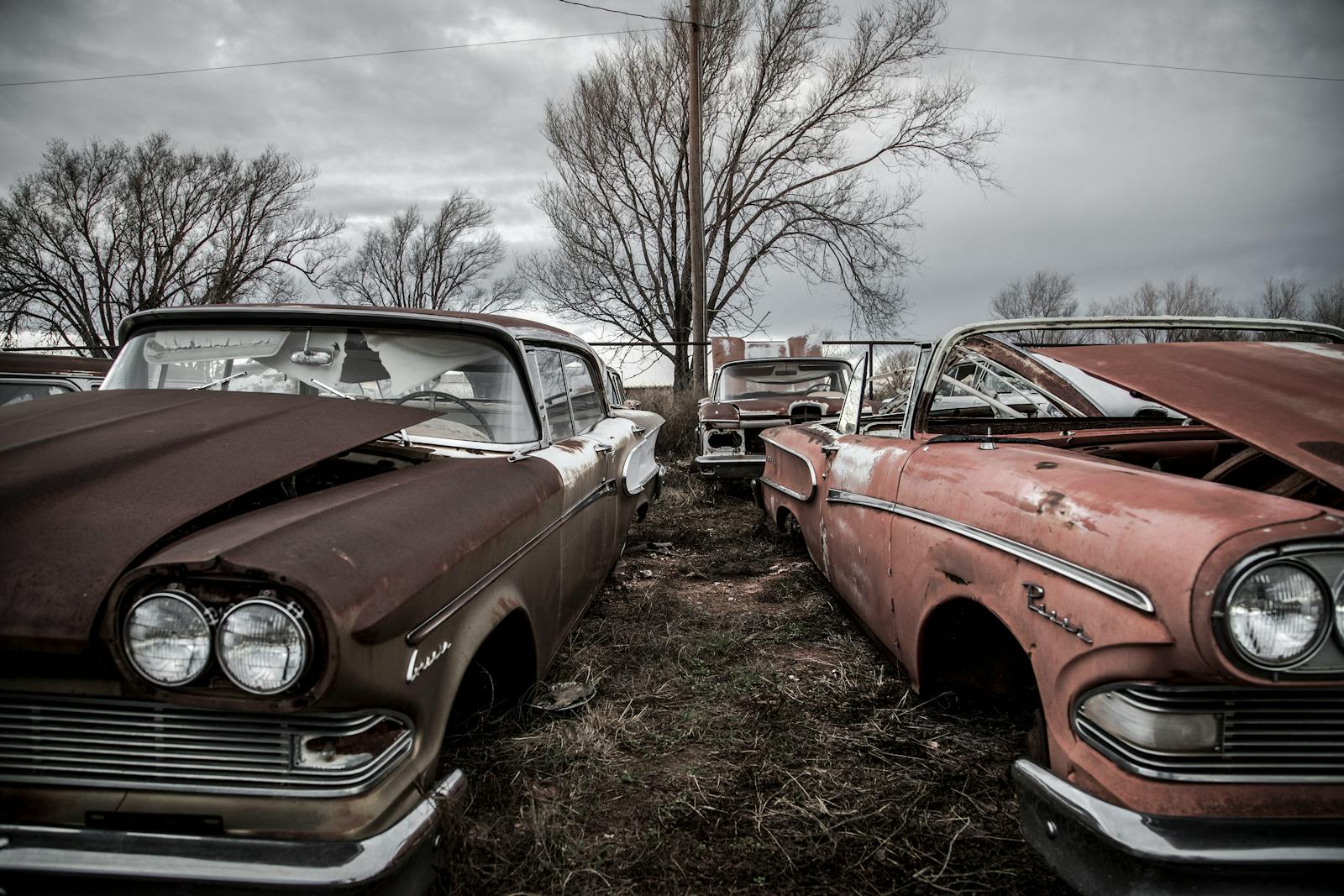

Hidden behind a tree line in rural Nebraska sits a sight that sounds like urban legend: roughly 400 Chevy Chevelles parked fender to fender, surrounded by thousands of other classic cars. What looks at first like a forgotten junkyard is, in reality, a sprawling time capsule of American muscle and mid‑century sheet metal, quietly aging in the prairie air. For gearheads, it is less a scrapyard and more a pilgrimage site that somehow stayed off the radar until very recently.
The spread belongs to a man named John, a lifelong parts hunter who has spent decades stacking up project cars instead of letting them vanish into the crusher. His property, tucked near the small town of Wymore, has become a kind of open‑air archive of Chevelles, Novas, and other Detroit iron, each row telling a slightly different story about how American performance cars were built, driven, and eventually parked. The sheer scale of the place reframes what a “barn find” can be when the barn is effectively an entire landscape of steel.
The Nebraska muscle car maze
From the moment visitors step through the gate, the first thing that hits them is the density of Chevelles. Hoodless shells sit next to surprisingly complete coupes, with quarter panels and rooflines forming a jagged skyline that stretches toward the horizon. In one walk‑through, the camera pans from the entrance all the way to a distant tree line, and the cars simply do not stop, a visual that backs up the claim of roughly 400 Chevelles packed into John’s property for anyone who thought the number sounded exaggerated when they first heard it. The effect is less like a traditional salvage yard and more like a maze of mid‑size GM muscle, each path branching into another cluster of potential donor cars.
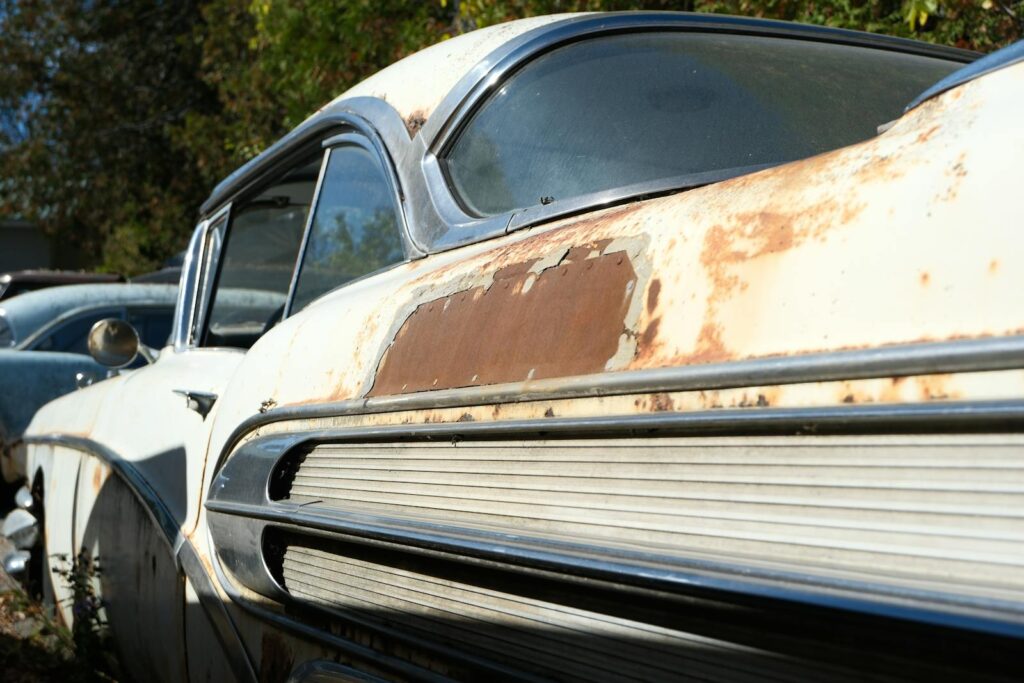
What makes the scene even more striking is that the Chevelles are only part of the story. The same walkthrough shows Big Tim and his host weaving past rows of other classics, with John explaining how his Chevy heavy inventory grew over time as he bought out smaller yards and private stashes. The camera lingers on fenders stamped with familiar badges, from SS trim to base‑model script, underscoring that this is not a random pile of scrap but a curated stockpile of cars that once defined American performance. Even in rough shape, the silhouettes are instantly recognizable, and the repetition of that long hood and short deck drives home just how many of these cars John has managed to keep in one place.
John’s Muscle Car & Classic Auto Parts Salvage Yard
John’s operation is more organized than the word “junkyard” suggests. He runs what is explicitly called a Muscle Car and Classic Auto Parts Salvage Yard, and that label matters, because it signals that the cars are there to be mined for pieces that keep other builds alive. In the video tour, Big Tim and John walk past rows that are loosely grouped by model and generation, pointing out which shells still have solid frames, which doors can be saved, and where the hard‑to‑find trim is hiding. The yard is in Wymore, Nebraska, but its reach is national, with enthusiasts calling in from across the country hunting for specific brackets, glass, or body panels that have long since disappeared from dealer shelves.
That structure is what turns this hidden field of metal into a resource instead of a graveyard. Rather than crushing out old inventory, John has let the yard grow horizontally, filling every corner of the property with cars that might be picked over slowly for years. The walk that Big Tim and John take is not just a casual stroll, it is a guided tour through decades of parts accumulation, where each row represents another wave of cars saved from the shredder. For restorers trying to keep period‑correct details on their Chevelles, Novas, or other GM muscle, the fact that someone in Wymore has been quietly stacking and cataloging these cars is the difference between a stalled project and a finished build.
Why thousands of “junk” classics still matter
For some people, a field full of rusting cars is an eyesore. For others, it is a living archive of how American performance culture evolved. Writer Hank, a lifelong gearhead with a particular love for classic American muscle cars and 1960s Mopars, has argued that yards like John’s are crucial because they preserve the raw material that keeps history on the road instead of locked in museums. While Hank’s personal favorites wear different badges, his reporting on the Nebraska stash treats those hundreds of Chevelles and the thousands of other classics as a shared resource for anyone who cares about carburetors, chrome, and big‑block torque. In that framing, every stripped shell is not a loss but a donor that helped another car survive.
More from Wilder Media Group: