

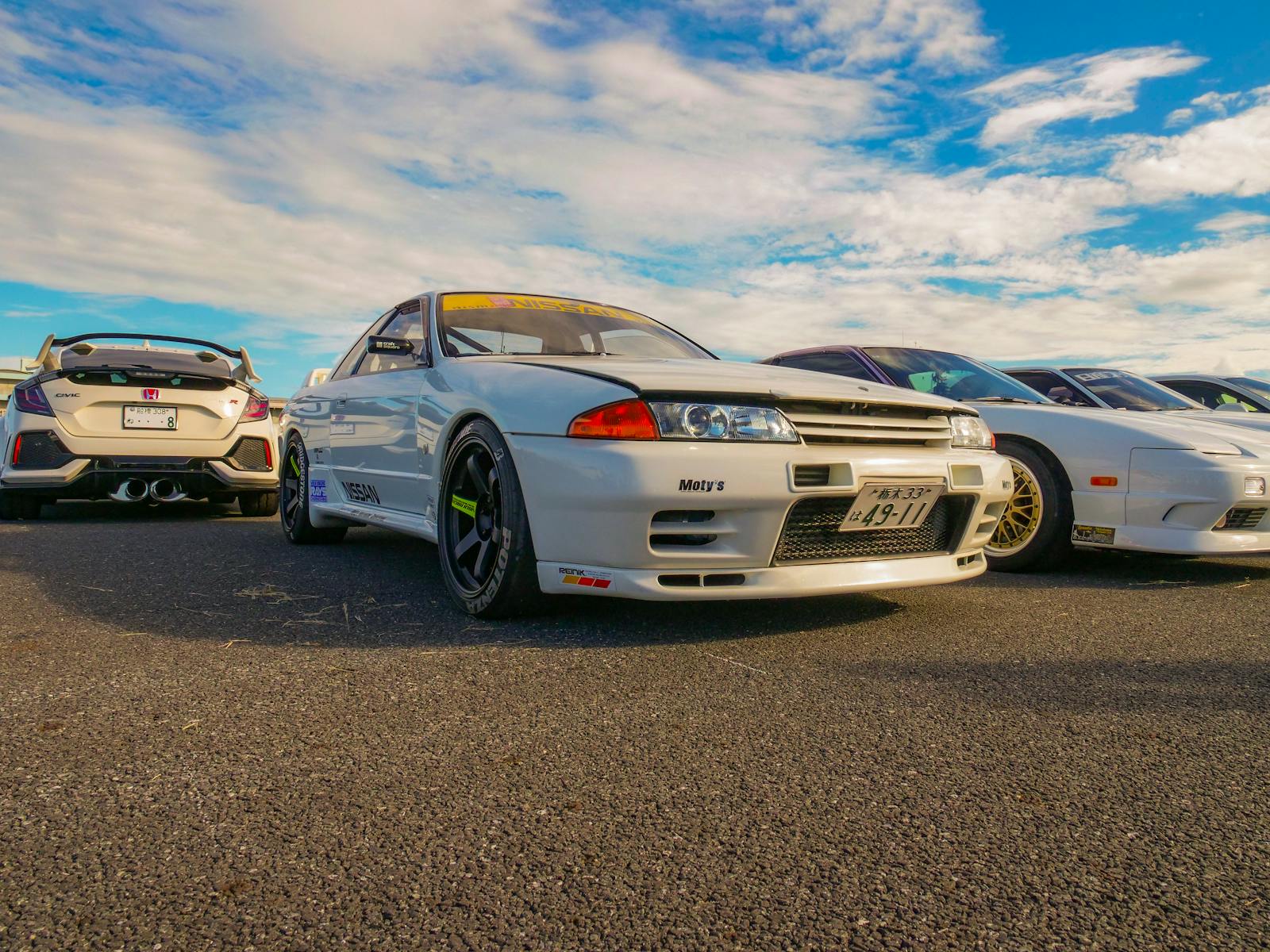
A recent examination of the Japanese Domestic Market (JDM) has revealed that several popular JDM cars, once heralded for their performance and innovation, have ultimately failed to meet expectations. This matters to car enthusiasts and potential buyers alike, as it highlights the importance of critically assessing vehicle performance against the hype often generated by marketing and cultural trends.
1. Nissan Skyline GT-R R32 (1989-1994)
Often celebrated as a legend in the tuning community, the Nissan Skyline GT-R R32 initially created a massive buzz due to its performance capabilities and success in motorsports. However, many enthusiasts were disappointed with the car when it was finally available in markets outside Japan. Critics argue that the car’s performance was overhyped, especially given its weight and ride comfort, which did not align with the lofty expectations set by its racing pedigree.
While the R32 GT-R boasts a powerful RB26DETT engine producing 276 horsepower, real-world performance does not always match the legendary status it has achieved. Many buyers found that tuning costs and maintenance issues quickly overshadowed the initial appeal, leading to a reconsideration of its true value in the JDM market.
2. Toyota Supra MK4 (1993-2002)
Another car that has garnered a cult following is the Toyota Supra MK4. While its 2JZ-GTE engine is often praised for its tuning potential and reliability, the hype surrounding its capabilities has created unrealistic expectations among fans and potential buyers. Many enthusiasts argue that the car’s performance has been exaggerated, especially considering its weight and handling characteristics.
Sales figures reveal that the MK4 Supra was not as popular as its legend suggests, with only around 20,000 units sold in the United States during its production run. The demand for these cars has driven prices up significantly, but for many buyers, the experience does not live up to the lofty reputation that has been built over the years.
3. Honda S2000 (1999-2009)
The Honda S2000 is often touted as a driver’s car, but its reputation may be inflated due to its limited production and racing success. While the S2000 features a high-revving 2.0L F20C engine, many drivers find that the car’s stiff suspension and lack of torque make it less user-friendly compared to its contemporaries. The driving experience is often characterized as exhilarating but can be frustrating for everyday use.
Moreover, the S2000 has seen prices soar, with certain models selling for upwards of $30,000 despite their age. Buyers attracted by the hype may find that the car’s performance does not justify the steep price tag, especially when considering modern alternatives that offer improved comfort and versatility.
4. Mazda RX-7 (FC/FD) (1986-2002)
The Mazda RX-7 has long been celebrated for its rotary engine and lightweight design. However, the hype surrounding its performance often overlooks significant drawbacks such as reliability issues and high maintenance costs. While the RX-7 is indeed fun to drive with a balanced chassis, owners frequently face challenges related to engine longevity and fuel consumption.
Sales figures indicate that the RX-7, particularly the FD model, is often seen as an icon, yet fewer than 50,000 units were sold in the United States, revealing limited mainstream appeal. Many buyers who are drawn to the car’s cult status may find themselves disillusioned when faced with the realities of ownership.
5. Subaru WRX STI (various models, 2004-present)
The Subaru WRX STI has been a staple in the performance car market, but its reputation has been marred by varying quality and performance across different model years. While it has been marketed as an all-weather performance champion, many owners report that the vehicle’s handling can be inconsistent, particularly in less-than-ideal conditions. The hype surrounding the rally heritage of the WRX STI has created an expectation that may not always align with the driving experience.
In recent years, sales data shows a decline in WRX STI popularity, with only about 5,000 units sold in 2022, indicating that buyers are becoming more critical of the model’s price point versus performance. Newer competitors have emerged, offering similar performance without the reliability concerns that sometimes plague the WRX STI, leaving enthusiasts questioning the value of the long-admired brand.