
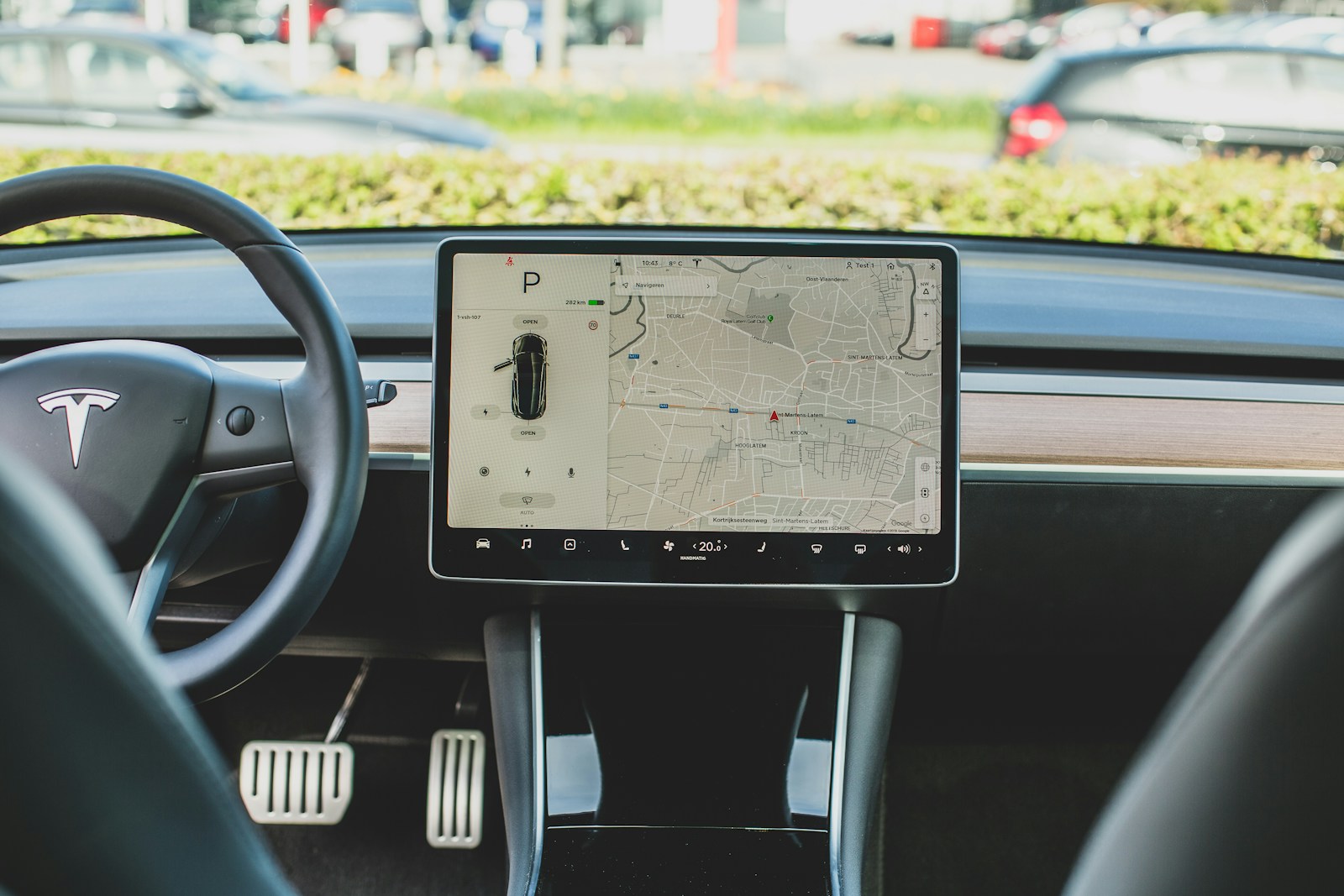

New cars have never been more capable on paper. They park themselves, watch for pedestrians, and adjust cabin temperature by voice command. Yet a growing number of owners say the technology that is supposed to make driving better is making it worse. Across owner forums, consumer surveys, and even regulatory reviews, the same five features keep surfacing as the ones drivers would happily rip out of the dashboard.
The complaints cut across price points, from a $28,000 compact crossover to a six-figure electric sedan. And they point to a real tension in the industry: automakers are building cars to satisfy regulators and spec-sheet shoppers, not necessarily the person who has to live with the vehicle every morning in stop-and-go traffic.
1. Automatic start-stop systems that drivers fight every single morning
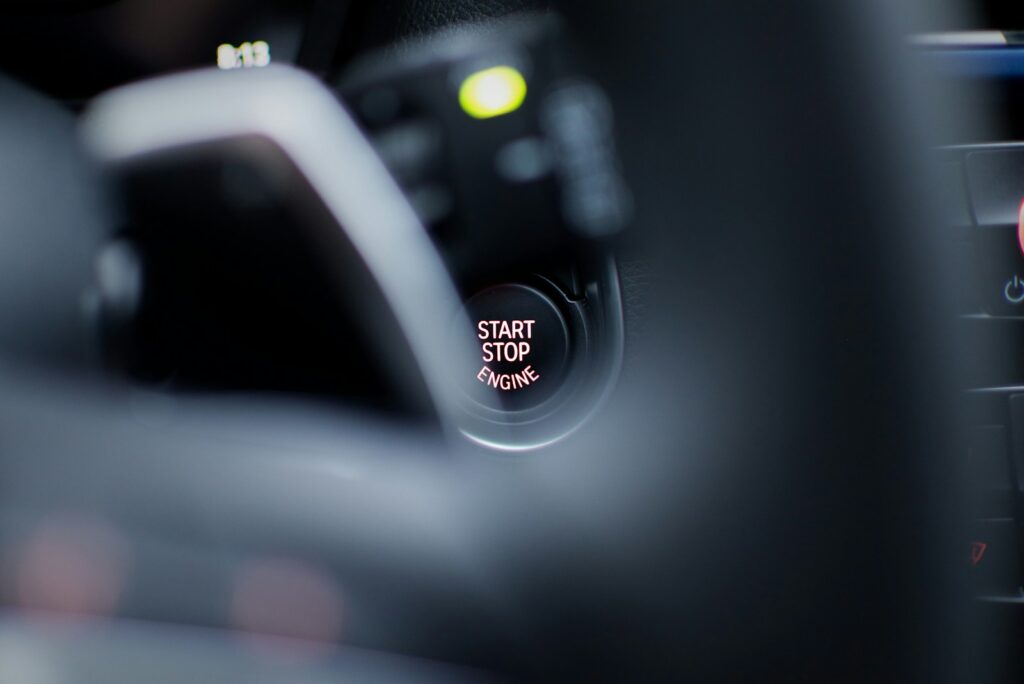
The pitch was simple: shut the engine off at red lights, save fuel, cut emissions. Automatic start-stop spread rapidly after the EPA began granting automakers favorable fuel-economy credits for including the technology. By 2024, the system appeared in the majority of new gasoline vehicles sold in the United States.
The reality is less tidy. AAA testing has found that start-stop saves roughly 5 to 7 percent on fuel in heavy city driving, a figure that drops sharply on highways or in moderate traffic. Meanwhile, drivers consistently describe the same complaints: a shudder as the engine cuts out, a half-second lag when pulling away from a light, and an uneasy feeling that the car might hesitate when they need to move quickly, such as turning left across oncoming traffic.
The backlash is measurable. Toyota now lets owners of certain Tacoma and Tundra trims keep start-stop turned off permanently rather than forcing them to press a defeat button on every ignition cycle. Ram did the same with its 1500 pickup after dealer feedback. When automakers start engineering workarounds for their own feature, it is a sign the feature has a problem.
Regulators are paying attention too. As the EPA reconsiders how it calculates off-cycle credits, the question hanging over start-stop is straightforward: if a technology adds cost, irritates owners, and delivers single-digit fuel savings, should compliance rules keep pushing it into every new car?
2. Lane-keeping assist that fights the driver for the steering wheel
Lane-keeping assist exists to nudge a drifting car back between the lines. When it works as intended, it is a genuine safety net for a drowsy or distracted driver. When it is tuned too aggressively, it feels like someone in the passenger seat grabbing the wheel.
Owners of everything from Honda CR-Vs to BMW 3 Series sedans describe the same frustration: the system jerks them away from a pothole, fights a deliberate lane position near a construction zone, or tugs the wheel on a curve it misreads as a drift. In a widely discussed Reddit thread on the most annoying features in modern cars, lane assist topped the list, with drivers noting that both the warning-only and active-steering versions cause problems.
Consumer surveys back that up. A breakdown of common owner complaints published by AOL Autos ranked overly sensitive lane-keeping as a leading source of dissatisfaction, particularly systems that vibrate the seat or tug the wheel on every minor deviation. Reports from markets outside the U.S., including large-scale driver feedback aggregated in India, show the irritation is global.
The paradox is hard to ignore. Euro NCAP and NHTSA safety ratings now reward cars that include lane-keeping technology, which pressures automakers to install it. But if drivers disable the system within the first week of ownership, the safety benefit on public roads drops to zero. Some manufacturers, notably Mazda, have responded by calibrating their systems to intervene less frequently and only at higher confidence thresholds, an approach that may point toward a better balance.
3. Touchscreens that swallowed the climate controls
Nobody objects to a touchscreen for navigation or Spotify. The revolt starts when automakers bury climate controls, seat heaters, and mirror adjustments inside nested menus that require two or three taps to reach. That is not a theoretical complaint. It is a daily one.
A Mercedes A-Class owner captured the mood in a post about post-2024 car features, writing that they love the car but hate hunting through screens to change the fan speed. Wall Street Journal readers echoed the sentiment in a collection of responses to a car-tech column, calling touch-only climate controls distracting and slow, especially on rough roads where a finger can miss the target.
On Jalopnik, a thread asking which new-car features owners would pay to remove drew hundreds of replies, with touchscreen-only HVAC controls near the top. The underlying safety concern is real: the AAA Foundation for Traffic Safety has found that programming a navigation system or adjusting vehicle settings on a touchscreen can take a driver’s eyes off the road for more than 40 seconds on a single task. A separate National Safety Council analysis notes that 53 percent of drivers believe that if technology is built into a vehicle, it must be safe to use while driving, a dangerous assumption when the interface demands visual attention.
Some automakers are already course-correcting. Hyundai and Kia, which a recent J.D. Power-cited Autoblog analysis praised for leading in in-vehicle tech satisfaction, have reintroduced physical climate dials alongside their screens in several 2025 and 2026 models. Porsche never fully abandoned buttons in the Cayenne. The lesson is not that screens are bad. It is that forcing every function through a flat pane of glass ignores how people actually operate a car.
4. Endless beeping, bonging, and “nanny” alerts
A modern car can chime for an unfastened seat belt, an open door, a vehicle in the blind spot, a speed-limit change, a forward-collision warning, a parking sensor, a driver-attention reminder, and a lane departure, sometimes within the span of a single city block. Each alert has a defensible safety rationale. Stacked together, they create a wall of noise that drivers describe as exhausting.
A Carwow review of annoying new-car trends singles out relentless beeping as a top frustration, alongside touch-sensitive controls. Owners describe cars that shriek when reversing near a low hedge, nag at 22 mph in a quiet neighborhood, or flash a fatigue warning because the driver glanced at a side mirror. Some systems layer audio chimes on top of steering-wheel vibrations and dashboard icons simultaneously, which can feel overwhelming in dense urban traffic.
The deeper problem is alert fatigue. Research published by the National Highway Traffic Safety Administration has shown that when drivers are exposed to frequent, low-priority warnings, they begin to ignore or disable all alerts, including the ones that matter. A forward-collision warning is genuinely lifesaving in the seconds before a rear-end crash, but its urgency is diluted if the car has already beeped 40 times during a routine commute.
Some safety engineers argue the fix is not fewer sensors but smarter filtering: context-aware systems that stay quiet during normal driving and speak up only when crash risk is genuinely elevated. Volvo’s latest driver-understanding system, which uses interior cameras to gauge attention level before deciding whether to intervene, is one example of that philosophy. The goal should be a car that watches out for you without treating every mile like a crisis.
5. Flush door handles and the disappearance of physical hardware
Flush door handles started as a signature detail on the Tesla Model S, where retracting them into the body reduced aerodynamic drag and contributed to range. A decade later, they appear on everything from the Hyundai Ioniq 6 to the Range Rover Sport. Market analysts describe the trend as part of a broader push for minimalist, streamlined designs meant to signal cutting-edge engineering.
Owners in cold climates tell a different story. Flush handles on early Model 3s became notorious for freezing shut in winter, requiring owners to bang on the door or pour warm water over the mechanism. Ford Mustang Mach-E owners reported similar issues. Beyond weather, first responders have raised concerns at industry safety conferences that unfamiliar pop-out or electronic-release handles can slow access to occupants after a crash, particularly when the 12-volt battery is damaged and the electronic release fails.
The pushback is part of a wider appetite for physical hardware. A YouTube breakdown of features manufacturers removed and are now bringing back highlights the quiet return of traditional gear shifters, volume knobs, and conventional handles in several 2025 and 2026 models. Toyota’s decision to keep a conventional shift lever in the 2026 Camry, even as competitors moved to rotary dials or buttons, was widely praised in enthusiast reviews. The principle is not complicated: in a vehicle that moves at highway speed, controls you can find by touch without looking are safer than ones that demand a glance and a precise tap.
The growing push to strip cars back to what works
These five complaints are not isolated gripes. They reflect a shift in what buyers are willing to tolerate. For years, the assumption in the auto industry was that more technology always equaled more value. Spec sheets grew longer, and marketing departments treated every new sensor and screen as a selling point.
That equation is changing. J.D. Power’s 2025 U.S. Tech Experience Index found that owner satisfaction with vehicle technology actually declined year over year for several feature categories, including driver-assistance systems and voice recognition. Buyers are not rejecting technology outright; they are rejecting technology that is poorly executed, hard to control, or impossible to turn off.
The automakers paying attention are the ones gaining ground. Mazda has built a brand identity around a driver-focused cockpit with minimal distractions. Porsche charges premium prices partly because it still offers a physical button for nearly every function. Even Tesla, the company that pioneered the all-screen interior, added a dedicated turn-signal stalk back to the refreshed Model Y in 2025.
For shoppers in March and April 2026, the takeaway is practical: test-drive with the technology, not just the engine. Spend ten minutes adjusting the climate, silencing alerts, and opening the doors before signing anything. The best car is not the one with the longest feature list. It is the one that stays out of your way while keeping you safe.
More from Wilder Media Group: