
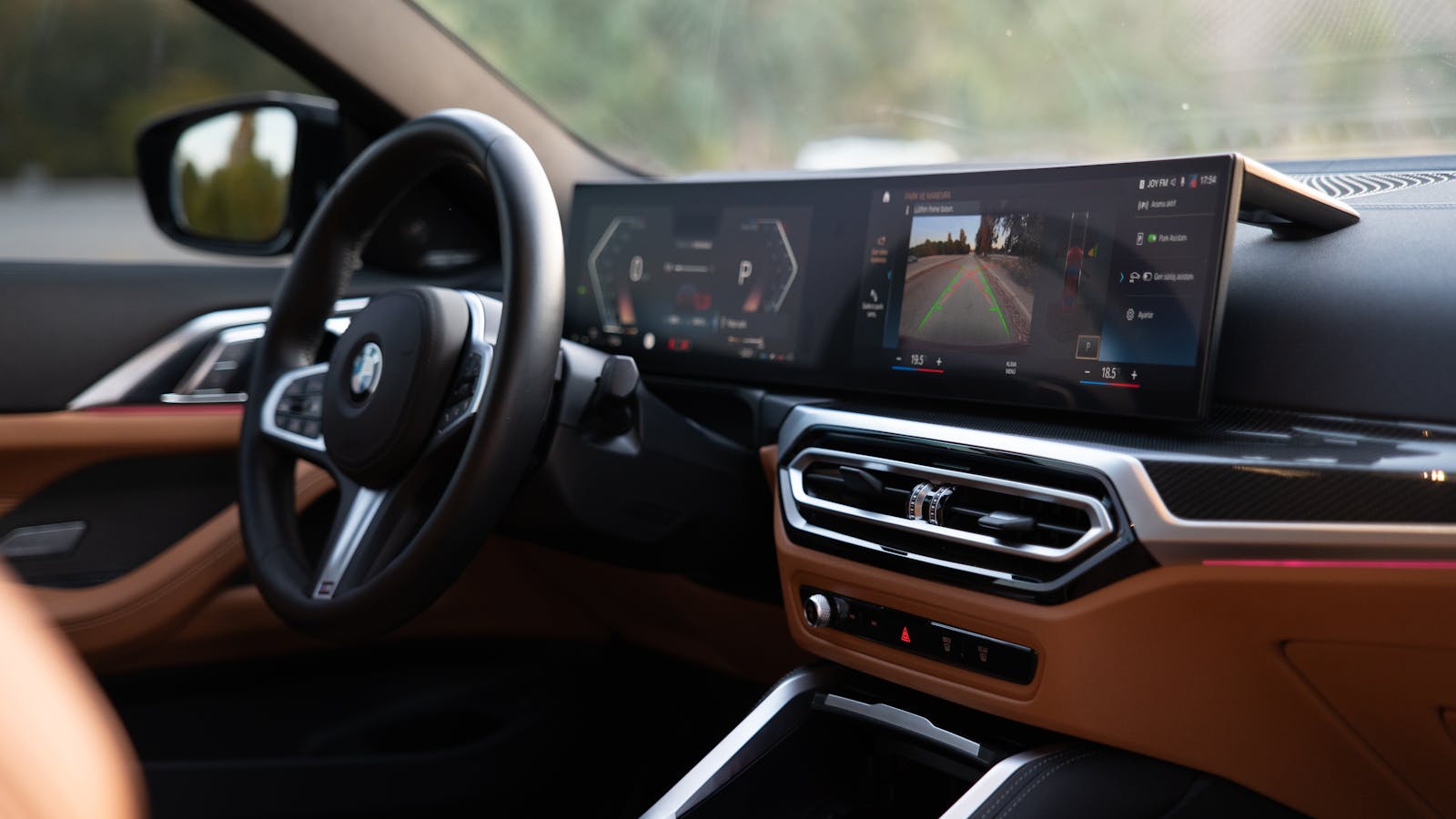

In the first quarter of 2026, millions of vehicles across the United States remain under open recall for defects that range from blank backup cameras to brake components that can fail without warning. Federal data from the National Highway Traffic Safety Administration shows that recall volume stayed elevated throughout 2025, with more than 8.5 million vehicles flagged in both Q3 and Q4 alone. The common thread: as cars rely more heavily on software, sensors, and shared supplier platforms, a single flaw can spread across brands and model years faster than ever.
Here are five of the most consequential safety defects behind the recent surge, and what drivers should do about them.
1. Backup cameras that go dark when drivers need them most
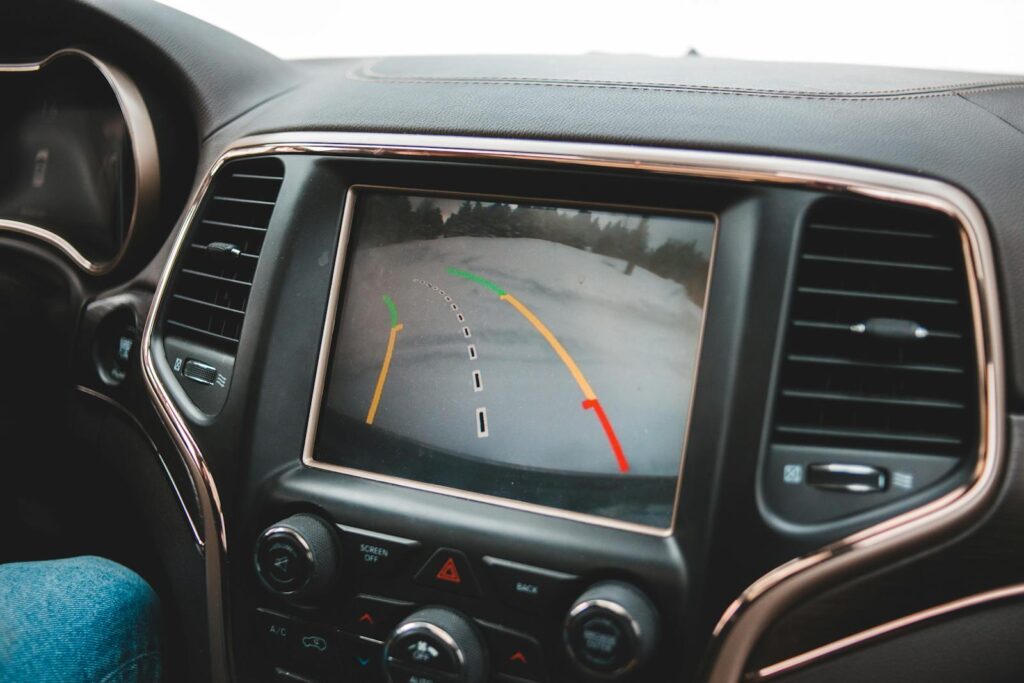
Federal law has required rearview cameras in all new passenger vehicles since May 2018, a rule the NHTSA adopted after years of fatal backover crashes involving children and pedestrians. That mandate makes it all the more alarming that camera failures have become the single largest recall category by vehicle count.
In the fourth quarter of 2025, NHTSA campaign data shows that defects classified under “Back Over Prevention” affected roughly 4.5 million vehicles, dwarfing every other defect group that quarter. The problems vary by model but follow a pattern: screens freeze, go black, or display distorted images while the vehicle is in reverse. In some cases, wiring faults cut the camera feed entirely. In others, a software error prevents the image from loading before the driver has already begun to move.
The risk is concentrated in exactly the environments where cameras matter most. According to KidsAndCars.org, backover incidents injure an estimated 15,000 people per year in the United States, with children under five and adults over 70 accounting for a disproportionate share of victims. A camera that fails silently removes the very safeguard that was designed to prevent those tragedies.
Because many automakers source camera modules and display software from a small number of tier-one suppliers, a defect in one component can ripple across nameplates. That supplier concentration helps explain why backup camera recalls appeared repeatedly in NHTSA’s Q2, Q3, and Q4 2025 data across manufacturers that otherwise share little in common.
2. Instrument clusters that leave drivers flying blind
Modern vehicles have replaced analog gauges with digital instrument clusters that display speed, gear position, warning lights, fuel level, and tire pressure on a single screen. When that screen fails, drivers lose access to all of it at once.
Ford’s recall activity in 2025 illustrates the scale of the problem. The automaker led all manufacturers in total recall campaigns between January and December 2025, and its largest single action pulled back approximately 1.46 million vehicles over instrument displays that could go blank or show distorted graphics. Affected drivers reported losing sight of the speedometer and warning indicators while traveling at highway speeds.
The hazard is not just inconvenience. A driver who cannot see a transmission warning or confirm that the vehicle is in the correct gear may react too slowly to a mechanical fault, or may not react at all. On a crowded highway, that delay can close the gap between a near-miss and a collision.
Instrument cluster failures also reflect a broader vulnerability in vehicle electronics. As automakers consolidate multiple safety readouts onto one display to save cost and dashboard space, a single power interruption or software crash can knock out several layers of driver information simultaneously. NHTSA’s Q4 2025 data ranked electrical system defects as the second-largest recall category, just behind backup camera issues, reinforcing how central electronics have become to vehicle safety risk.
3. Brake defects that extend stopping distances
Brake recalls carry an urgency that few other defect categories match, because any reduction in stopping power translates directly into longer stopping distances and higher crash severity.
Throughout 2025, brake-related campaigns appeared across multiple brands and vehicle types. Ford’s recall data showed a sharp year-over-year increase in actions tied to service brakes and hydraulic systems, with the number of brake-specific campaigns in 2025 roughly quadrupling compared to 2024, according to a LiveNow Fox analysis of manufacturer recall statistics.
Other manufacturers faced similar scrutiny. In mid-2025, Mercedes-Benz and Honda together recalled approximately 350,000 vehicles for braking-related defects. Honda’s action covered more than 259,000 U.S. vehicles equipped with a brake pedal component that could fail to engage properly, a defect that NHTSA flagged because it raised the risk of longer stopping distances with little or no advance warning to the driver.
Brake defects are especially dangerous because drivers often have no way to detect them before an emergency stop. A slow hydraulic leak may produce a slightly softer pedal feel for weeks before the system loses enough pressure to matter. By the time the driver notices, the vehicle may already need significantly more road to come to a full stop. That unpredictability is a core reason NHTSA prioritizes brake-related investigations and pushes manufacturers toward rapid recall timelines.
4. Parts that detach from vehicles at speed
Among the most viscerally alarming recall categories are defects that allow components to physically separate from a moving vehicle. Detached parts can strike other cars, land in travel lanes, or compromise the structural integrity of the vehicle itself.
In Q4 2025, NHTSA tracked a campaign involving certain 2022 through 2026 Ford F-150 trucks where a component could detach from the vehicle during normal driving. The F-150 is the best-selling vehicle in the United States, which means even a narrowly defined defect can affect a large population of trucks on the road.
Earlier in the year, the list of major Q2 2025 recalls included cases where exterior trim on certain 2016 and 2017 Ford Explorer models could come loose at highway speeds, and where seat components in some Lincoln Aviator and Ford Explorer vehicles could unlatch or shift unexpectedly. Separate campaigns covered SUVs with underbody parts prone to damage that could lead to brake fluid leaks, compounding a structural problem with a braking one.
Detachment defects are not limited to Ford. Nissan Rogue owners have faced repeated recall campaigns in recent years, and consumer advocates note that many owners never learn about open recalls unless they proactively check. Unlike a warning light on the dashboard, a loose trim panel or a weakening bracket gives no alert before it fails. That makes owner awareness and VIN-based recall checks especially important for this category of defect.
5. Software and electrical failures across the industry
Underlying many of the defects above is a structural shift in how vehicles are built. Software now controls or mediates braking, steering assist, camera systems, lighting, and powertrain management. When that software fails, the consequences can touch multiple systems at once.
NHTSA recall data from Q3 2025 documented 8.5 million vehicles recalled in a single quarter, with large campaigns affecting models as varied as the 2023 and 2024 Toyota Venza and Ford’s Bronco and Ranger pickups. In Q4, another 8.6 million vehicles were recalled, again with a heavy concentration in electronics and driver-assistance categories. Many of these actions traced back to control modules, sensor calibration errors, or software logic flaws rather than traditional mechanical wear.
The trend is not new, but it is accelerating. NHTSA recorded 932 safety recalls covering more than 30.8 million vehicles in 2022. Annual totals have remained in that range as the software content per vehicle continues to grow. More lines of code mean more potential points of failure, and because automakers increasingly share electronic architectures across their lineups, a bug discovered in one model can trigger recalls spanning an entire brand portfolio.
Regulators are adapting. NHTSA’s recall lookup portal allows owners to search by VIN, make, model, or year, and the agency has expanded its monitoring of over-the-air software updates, which some manufacturers now use to fix defects without requiring a dealership visit. But the agency has also acknowledged that recall completion rates remain stubbornly low. According to NHTSA estimates, roughly one in four recalled vehicles never gets repaired, leaving millions of known safety defects circulating on public roads.
What drivers should do now
The volume of open recalls in early 2026 means that checking your vehicle is no longer optional maintenance. It takes less than a minute. Visit NHTSA.gov/recalls, enter your 17-digit vehicle identification number (found on the driver-side dashboard or your registration card), and the tool will show every open recall associated with your car or truck.
If your vehicle has an open recall, contact your dealership to schedule the repair. By federal law, recall repairs are free to the vehicle owner regardless of whether the car is still under warranty. Some manufacturers also offer loaner vehicles or reimbursement for towing if the defect makes the car unsafe to drive.
Drivers who lease or recently purchased a used vehicle should be especially vigilant. Recall notices are mailed to the registered owner at the time of the campaign, so a change in ownership can mean the new driver never receives the letter. A VIN check closes that gap.
Finally, if you experience a safety problem that has not been recalled, you can file a complaint directly with NHTSA through its Vehicle Safety Hotline or online portal. Those complaints are one of the primary ways the agency identifies emerging defect trends and pressures manufacturers to act.
More from Wilder Media Group: