

The pitch was simple: smarter cars would mean safer, easier driving. But for a growing number of owners, the reality looks different. Frozen infotainment screens, hyperactive lane-keeping alerts, and climate controls buried three menu layers deep have turned daily commutes into exercises in frustration. According to J.D. Power’s 2024 U.S. Vehicle Dependability Study, technology-related problems are now the single largest category of owner complaints, outpacing traditional mechanical issues for the third consecutive year.
Drivers are not rejecting innovation outright. They still want advanced safety features and seamless phone integration. What they are rejecting is technology that feels half-baked, intrusive, or needlessly complicated. That tension between what automakers are shipping and what buyers actually want has become one of the defining friction points in the industry as of early 2026.
Software glitches are redefining what “reliable” means
Reliability used to mean a car that started every morning and did not leave you stranded. That bar has shifted. J.D. Power’s dependability research now tracks infotainment freezes, failed software updates, and buggy driver-assistance systems alongside traditional mechanical defects. In the 2024 study, the firm reported an average of 190 problems per 100 vehicles across the industry, with technology and infotainment categories accounting for a disproportionate share of complaints.
The pattern is consistent across price points. Owners of luxury SUVs and economy sedans alike report needing to reboot their vehicles to restore Apple CarPlay or Android Auto connectivity. As The Autopian documented, these forced restarts have become a routine workaround for owners, not a rare inconvenience. Rebooting a laptop is annoying. Rebooting a car while sitting in a parking lot because the navigation and backup camera went dark feels like a different category of failure.
The problem is structural, not cosmetic. Every connected feature added to a vehicle is another potential failure point layered on top of the mechanical hardware. When automakers market these systems as seamless upgrades, owners who experience weekly glitches feel misled, and their trust in the brand erodes faster than it would over a squeaky brake pad.
Touchscreens are trading simplicity for frustration
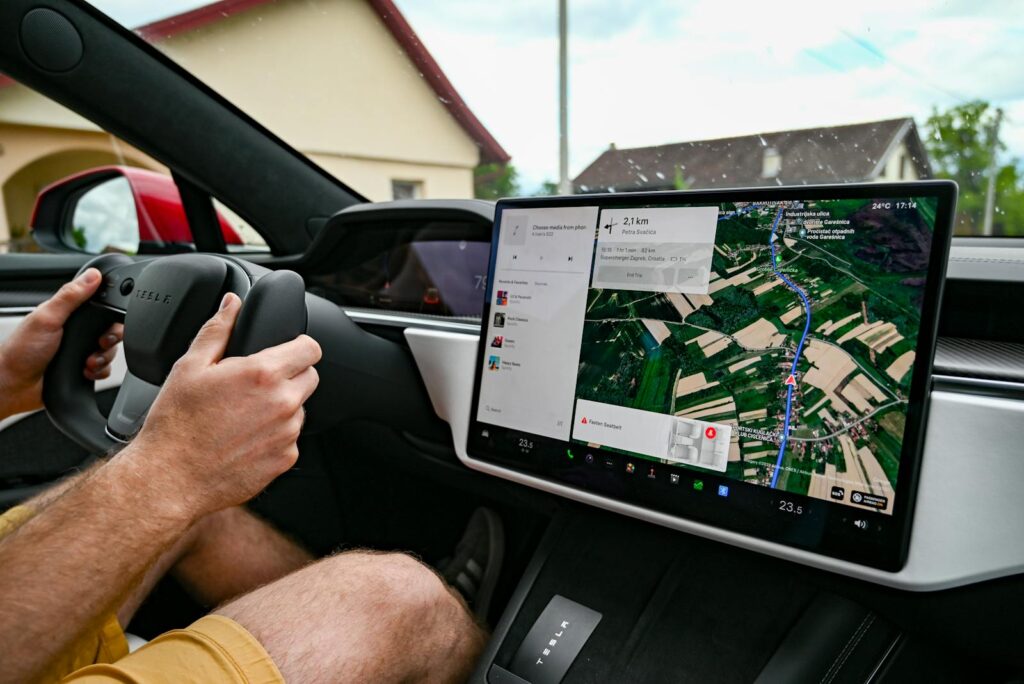
Nearly every new car sold today places a touchscreen at the center of the dashboard. That consolidation looked elegant on the design studio floor, but on the road it has created real problems. A 2022 study by Sweden’s Vi Bilägare found that drivers using touchscreen controls took up to four times longer to perform simple tasks, such as adjusting the heater or turning on the seat warmer, compared to drivers using physical buttons. At highway speeds, those extra seconds translate into hundreds of feet of unmonitored driving.
Safety regulators have taken notice. Euro NCAP, the European vehicle safety body, announced that its updated 2026 assessment protocols will require physical controls for turn signals, hazard lights, windshield wipers, and the horn in order for a vehicle to earn a five-star rating. The decision was a direct response to the industry’s rush toward touchscreen-only cabins.
In the U.S., the Center for Auto Safety has raised similar alarms. Executive Director Michael Brooks has described touchscreen failures, including blackouts and frozen displays, as a major safety concern, particularly when a lockup removes access to the backup camera or defroster mid-drive. Drivers in that situation face an ugly choice: keep driving partially blind, pull over on a busy road, or attempt a system restart in traffic.
Some automakers have started to reverse course. Hyundai, Porsche, and Volkswagen have all reintroduced physical knobs and buttons in recent models after owner feedback made clear that the all-touchscreen approach was a step backward for usability. Whether the rest of the industry follows remains an open question.

Safety alerts that drivers love in theory and hate in practice
Lane-keeping assist, forward-collision warnings, automatic emergency braking: these systems have measurable safety benefits. The Insurance Institute for Highway Safety has linked forward-collision warning with autobrake to a roughly 50% reduction in rear-end crashes. On paper, the case for these features is overwhelming.
In daily use, the relationship is more complicated. A Scientific American investigation found that frequent, sometimes false alerts can cause drivers to disengage from the systems entirely, either by tuning out the warnings or by switching them off. When a lane-departure chime fires because the road markings are faded, or a collision alert screams over a shadow, the system trains the driver to ignore it, the opposite of its intended purpose.
Owner surveys reflect that fatigue. A Tempcover survey of UK motorists found that lane-keeping assistance and automatic speed limiters ranked among the most annoying technologies in respondents’ cars, even as those same drivers acknowledged the theoretical safety value. U.S. sentiment tracks similarly: a Fox Business report on American driver attitudes described owners who felt the constant alerts were less like a co-pilot and more like a scolding.
Automakers do offer customization menus that let owners dial back sensitivity or disable specific alerts. The catch: those settings are typically buried inside the same touchscreen interfaces that drivers already find frustrating to navigate. The result is a paradox. Safety technology that could work well if properly tuned is so difficult to adjust that many owners either leave every alert at full volume and resent it, or shut the whole suite off and lose the protection entirely.
Connected cars raise questions drivers cannot easily answer
Modern vehicles collect data constantly: GPS coordinates, braking patterns, acceleration habits, and in some cases audio from in-cabin microphones. A 2023 Mozilla Foundation review of 25 major car brands found that every single one collected more personal data than necessary, and 84% shared or sold that data to third parties. Cars, the researchers concluded, were the worst product category they had ever reviewed for privacy.
For drivers, the practical impact shows up in small but persistent ways. Features that once worked with a key fob now require an app, an account, and sometimes a subscription. Remote start, heated seats, and even certain safety features have been placed behind monthly paywalls by some manufacturers. Reporting in Scientific American noted that the always-connected model gives automakers ongoing revenue streams but leaves owners feeling like they are renting features in a car they already paid for.
The opacity of data collection compounds the frustration. Most owners have no clear way to see what their car is transmitting, to whom, or how to opt out without disabling features they rely on. Until automakers offer transparent, easy-to-use privacy dashboards, the “smartphone on wheels” pitch will continue to feel less like a benefit and more like a surveillance trade-off that buyers never explicitly agreed to.
Complexity is inflating repair bills
Every camera, sensor, and networked module added to a vehicle is something that can eventually break, and fixing it is rarely cheap. A cracked windshield on a modern car equipped with a forward-facing camera for adaptive cruise control can cost two to three times more to replace than a standard windshield, because the camera must be professionally recalibrated after installation. Business Insider reported that technology-driven quality issues have become an industry-wide norm, not a problem limited to any single brand.
Independent repair shops, which historically offered a cheaper alternative to dealerships, often lack the proprietary software needed to service advanced driver-assistance systems or recalibrate sensor arrays. That funnels more work back to dealer service departments, where labor rates are higher and wait times can stretch for weeks when parts are backordered.
Owners who bought their cars expecting the running costs of a traditional vehicle are discovering that the technology premium extends well beyond the sticker price. When a door handle with an integrated sensor fails, the replacement is not a $30 part from the hardware store. It is a $400 module that requires dealer programming. Those costs accumulate, and for many drivers they reframe the value proposition of features they never specifically asked for.
The road forward
None of this means the industry should abandon advanced technology. Automatic emergency braking saves lives. Over-the-air updates can fix problems without a dealership visit. Electric powertrains are measurably cleaner. The issue is not whether cars should be smart, but whether the current approach respects the people who drive them.
Drivers in early 2026 are sending a consistent signal through surveys, social media complaints, and purchase decisions: they want technology that works reliably on day one, does not demand constant attention, does not harvest their data without clear consent, and does not turn a routine repair into a four-figure bill. Automakers that treat those expectations as design requirements, rather than afterthoughts, will earn the loyalty that flashy spec sheets alone cannot buy.
More from Wilder Media Group: