

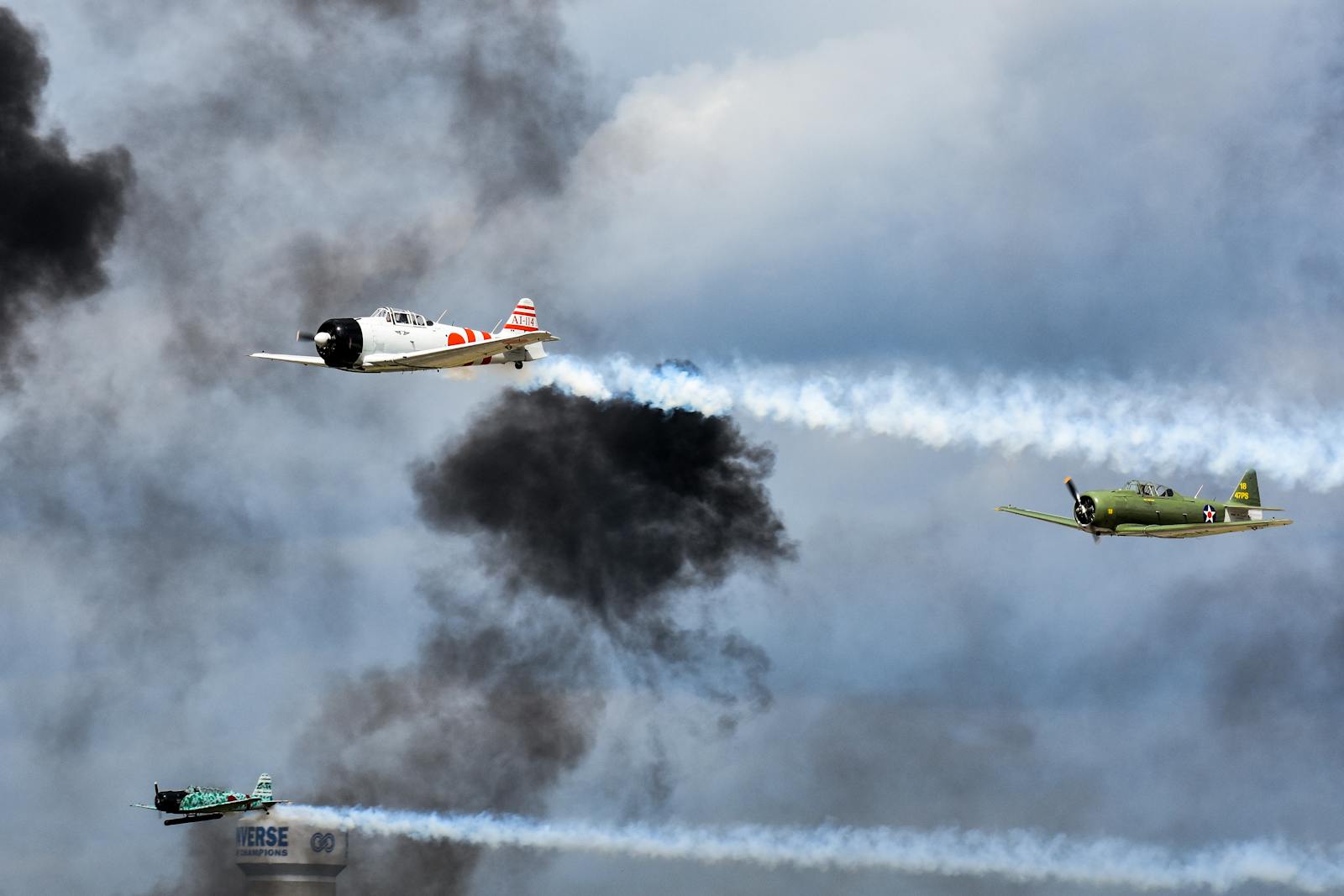
Throughout the history of military conflict, certain aircraft have fundamentally altered the landscape of warfare, influencing tactics, strategies, and even the outcome of wars. From the introduction of air power in World War I to the advanced stealth technology of modern jets, these six airplanes have not only changed the way wars are fought but also redefined military capabilities. Understanding their impact is essential for grasping the evolution of modern warfare.
1. Sopwith Camel (1917)
The Sopwith Camel, introduced in 1917, was a British World War I fighter aircraft that played a crucial role in securing air superiority during the conflict. With its unique twin-gun configuration and exceptional maneuverability, it was responsible for shooting down more enemy aircraft than any other Allied fighter, achieving over 1,200 kills. The Camel’s success underscored the importance of air power in modern warfare and set the stage for future aviation developments.
2. Boeing B-17 Flying Fortress (1938)
Introduced just before World War II, the Boeing B-17 Flying Fortress revolutionized strategic bombing with its ability to carry heavy bomb loads over long distances. With a range of approximately 1,300 miles and the capacity to carry up to 8,000 pounds of bombs, the B-17 was a cornerstone of the U.S. Army Air Forces’ daylight bombing campaign against Germany. Its durability and defensive armament changed how air forces approached long-range bombing missions, emphasizing the significance of aerial bombardment in achieving military objectives.
3. North American P-51 Mustang (1940)
The North American P-51 Mustang, known for its exceptional speed and range, became one of the most effective fighters of World War II. With a top speed of 437 miles per hour and a combat radius of 1,000 miles, the P-51 significantly increased the effectiveness of bomber operations by providing long-range escort capabilities. Its presence in the skies helped the Allies achieve air supremacy over Europe, contributing to the ultimate defeat of Axis forces.
4. McDonnell Douglas F-4 Phantom II (1960)
The McDonnell Douglas F-4 Phantom II, entering service in 1960, became synonymous with air combat during the Vietnam War. This versatile aircraft could perform a wide range of missions, including air superiority, ground attack, and reconnaissance. With over 5,000 units produced, the F-4’s ability to carry a diverse array of weapons and its advanced radar systems made it a formidable opponent. The lessons learned from its deployment shaped future fighter design and tactics for decades to come.
5. Lockheed Martin F-22 Raptor (2005)
Entering service in 2005, the Lockheed Martin F-22 Raptor represents a leap forward in stealth technology and air combat capabilities. With a top speed exceeding Mach 2 and advanced avionics that provide superior situational awareness, the F-22 is designed to maintain air dominance against any adversary. Its stealth features allow it to evade radar detection, making it a pivotal asset in modern combat scenarios, particularly in high-stakes environments where air superiority is critical.
6. Boeing KC-46 Pegasus (2019)
The Boeing KC-46 Pegasus, introduced in 2019, is a next-generation aerial refueling tanker that enhances the operational range and flexibility of military forces. Capable of refueling multiple aircraft simultaneously, the KC-46 can extend the reach of fighter jets and bombers, allowing for prolonged missions and improved logistical support. As air operations become increasingly reliant on long-range engagements, the importance of advanced refueling capabilities cannot be overstated, marking a significant evolution in military strategy.
Conclusion
These six airplanes have not only transformed the battlefield but also defined the evolution of military tactics and strategy through the years. As nations continue to invest in advanced aviation technologies, understanding the historical significance of these aircraft is crucial for comprehending future military developments. The ongoing advancements in aerospace technology will undoubtedly shape the future of warfare, making it imperative for military strategists, policymakers, and the public to stay informed.
To remain updated on the latest developments in military technology and aviation, follow our coverage and engage in discussions about how these innovations will continue to shape the future of warfare.