

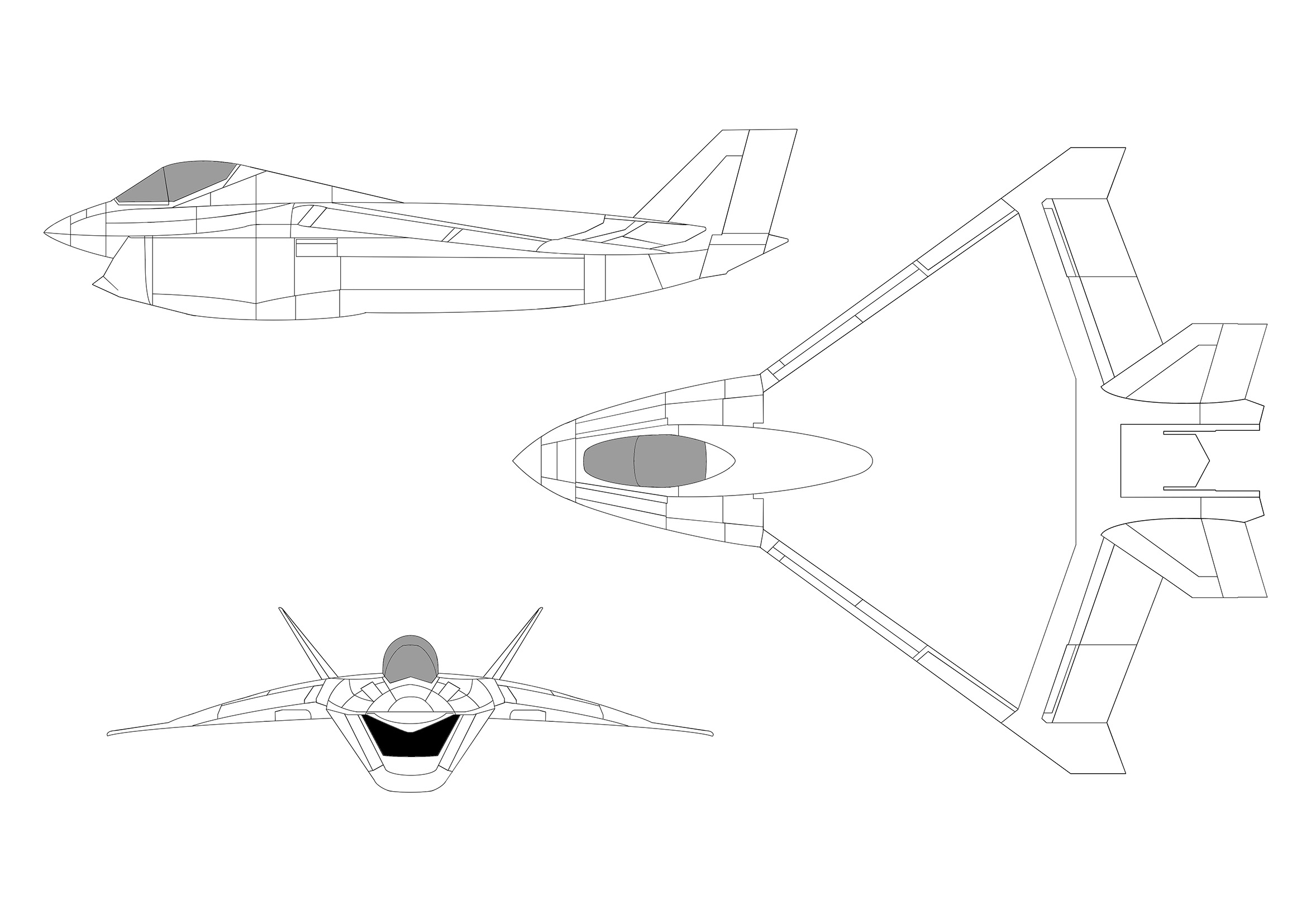
Despite significant investments in technology and research, several experimental aircraft have fallen short of their potential, impacting the aerospace industry and influencing future designs. These aircraft, despite innovative designs and promising capabilities, failed to reach production or widespread adoption, leaving many enthusiasts and experts wondering what could have been. This article explores six notable examples of experimental aircraft that should have been a success, examining their design, intended purposes, and the reasons behind their failures.
1. Boeing X-32 (2000)
The Boeing X-32 was developed as part of the Joint Strike Fighter program and aimed to provide a versatile and cost-effective solution for the U.S. military. Designed to compete with the Lockheed Martin X-35, the X-32 featured a unique design with a wide fuselage and a single engine. Despite its innovative features, the aircraft was ultimately rejected in favor of its competitor, the X-35, which later became the F-35 Lightning II. The decision highlighted the challenges of balancing innovation with established military requirements.
2. Bell X-1 (1947)
Famous for being the first aircraft to break the sound barrier, the Bell X-1 had a groundbreaking impact on aviation history. However, its operational use was limited, as it was built solely for testing supersonic flight and was not intended for mass production. The aircraft’s design was revolutionary, featuring a rocket engine and a sleek fuselage, but it remained a one-off prototype. Although the X-1 set several records, its limited application meant that its full potential was never realized in commercial aviation.
3. North American X-15 (1959)
The North American X-15 was a rocket-powered aircraft that pushed the boundaries of flight, reaching altitudes of over 66 miles and speeds exceeding Mach 6. It was a joint program between NASA and the U.S. Air Force, designed to gather data for future space missions and supersonic flight. Despite its numerous accomplishments and contributions to aeronautics, including influencing the design of the Space Shuttle, the X-15 never transitioned into a production model. Its specialized role and high operational costs limited its broader application in commercial or military aviation.
4. McDonnell Douglas YF-23 (1990)
The McDonnell Douglas YF-23 was a contender in the Advanced Tactical Fighter competition, designed to be stealthy, agile, and fast. With cutting-edge technology, including advanced materials and flight control systems, the YF-23 was a strong competitor against the Lockheed Martin YF-22, which ultimately won the contract and became the F-22 Raptor. The YF-23’s innovative design and potential capabilities were never fully realized, as it was not produced beyond the prototype stage, leaving many to speculate how it would have performed in modern aerial combat scenarios.
5. Sukhoi Su-47 Berkut (1997)
The Sukhoi Su-47 Berkut was an experimental aircraft featuring forward-swept wings, which offered enhanced agility and performance capabilities. Developed by the Russian aerospace company Sukhoi, the aircraft was intended to showcase advanced technologies that could be integrated into future fighter jets. Despite its impressive design and capabilities, including supermaneuverability, the Su-47 never entered mass production due to high costs and changing military priorities. Its unique aerodynamic features and potential applications in modern warfare remain a topic of interest among aviation enthusiasts and defense analysts.
6. Airbus A300-600ST Beluga (1994)
The Airbus A300-600ST, commonly known as the Beluga, was designed for transporting oversized cargo, particularly aircraft components. While it has been successful in its niche role, the aircraft was not widely adopted for commercial use beyond its intended purpose. The Beluga’s distinctive bulbous shape and capacity to carry large loads represented a significant engineering feat, but the limited demand for such specialized aircraft restricted its production. As the aviation industry evolves, the need for innovative cargo solutions may reignite interest in designs like the Beluga.
Conclusion
The stories of these six experimental aircraft reflect the complexities and challenges of aerospace innovation. Each aircraft brought groundbreaking technologies and concepts to the table but ultimately fell short of achieving widespread success. As the aerospace industry continues to evolve, the lessons learned from these prototypes can inform future designs and innovations that may indeed change the landscape of aviation. For those interested in the future of flight, keeping an eye on emerging technologies and experimental designs is crucial. Stay informed, and advocate for continued investment in aerospace research to ensure that today’s experimental aircraft do not meet the same fate.