

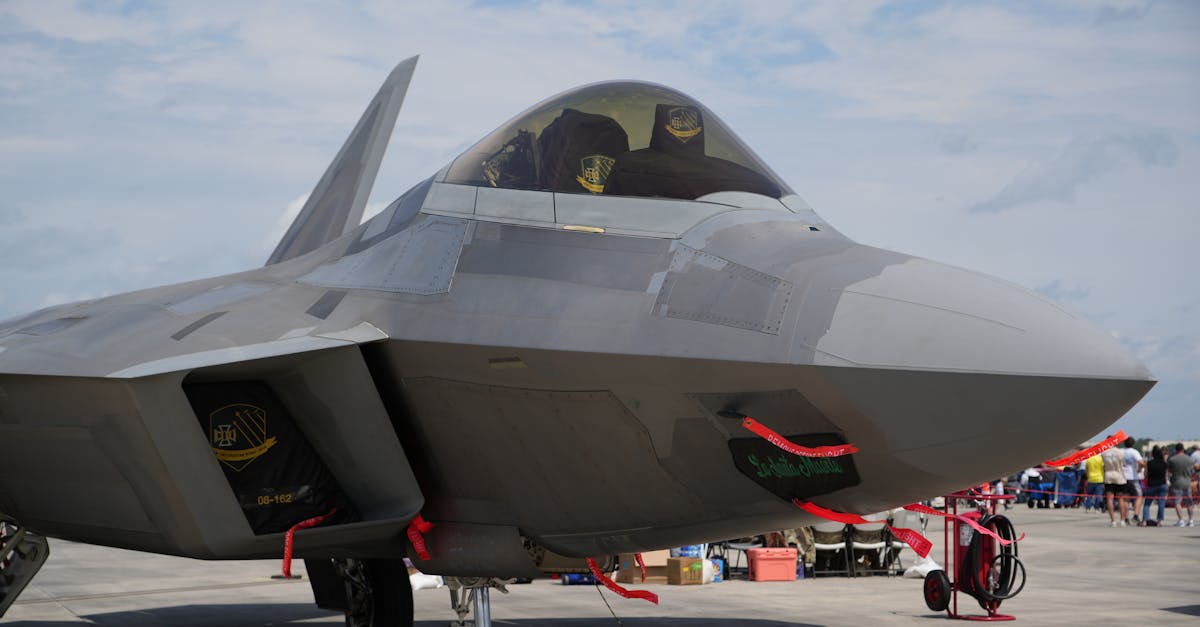
Despite their hefty price tags, several modern fighter jets have garnered criticism for underperforming in various operational capacities. This issue affects military budgets, national security strategies, and global defense dynamics, raising questions about the effectiveness of high-cost investments in advanced aerial technology.
1. F-35 Lightning II
The F-35 Lightning II program, initiated in 2001, has cost more than $1.7 trillion over its lifespan, making it the most expensive weapons system in history. However, the jet has faced numerous delays and technical issues, including problems with its software and sensor integration. Reports indicate that the F-35’s operational readiness rates have sometimes hovered around 50%, significantly lower than the 80% target set by the Department of Defense.
2. Super Hornet (F/A-18E/F)
While the Boeing Super Hornet was once hailed as a versatile multirole fighter, its performance has come under scrutiny, especially when compared to newer aircraft. The U.S. Navy has spent over $60 billion on its Super Hornet fleet, yet reports suggest that its combat capabilities are lacking against advanced adversaries, particularly in terms of speed and stealth. As potential threats like the Chinese J-20 and Russian Su-57 emerge, questions about the Super Hornet’s survivability continue to grow.
3. Eurofighter Typhoon
The Eurofighter Typhoon, developed by a consortium of European countries, has a projected cost exceeding $100 billion for its entire program. Despite its advanced capabilities, the jet has faced issues with its software and air-to-air combat performance. Additionally, its high maintenance costs and limited export success raise doubts about its long-term viability in the competitive global market.
4. Dassault Rafale
France’s Dassault Rafale has been a significant investment, costing around $80 billion since its inception in the 1980s. While it has performed well in some combat scenarios, its overall effectiveness remains hampered by its reliance on complex systems that often experience technical glitches. Furthermore, its relatively high unit cost—approximately $100 million per aircraft—has limited its adoption by other countries, resulting in a lower-than-expected production rate.
5. Sukhoi Su-57
The Russian Sukhoi Su-57 was designed to compete with Western fifth-generation fighters, but its development has faced numerous setbacks and delays, with costs reportedly exceeding $50 billion. Although it boasts advanced stealth capabilities, the Su-57 has yet to be fully operational, with only a handful of units produced. Analysts argue that its performance in real-world scenarios remains untested, casting doubt on its claimed advantages over established models like the F-35.
6. Chengdu J-20
China’s Chengdu J-20 is a fifth-generation stealth fighter with an estimated program cost of around $30 billion. Although it has been touted as a formidable competitor to Western fighters, reports suggest that its maneuverability and avionics lag behind those of its U.S. counterparts. The J-20’s effectiveness in combat scenarios is still largely unproven, raising concerns about whether it can live up to its ambitious design goals.
The Broader Implications
The underperformance of these high-cost fighter jets raises critical questions about military spending and strategic planning. With defense budgets under increasing scrutiny, military organizations must weigh the costs and benefits of investing in advanced technology versus enhancing existing capabilities. The challenges faced by these aircraft highlight the complexities of modern warfare, where technological superiority is often offset by operational realities.
Conclusion
The performance issues surrounding these six modern fighter jets illustrate a troubling trend in military procurement, where massive investments do not always translate to effective defense capabilities. As nations grapple with evolving threats, the need for accountability and transparency in defense spending has never been more urgent. Stakeholders, from policymakers to taxpayers, must advocate for more effective utilization of resources to ensure national security is not compromised by underperforming technology.
It is essential for readers to stay informed about military procurement decisions and advocate for transparency and accountability in defense spending. Understanding these dynamics can help shape future policies that prioritize effective national security measures over costly, underperforming technologies.