

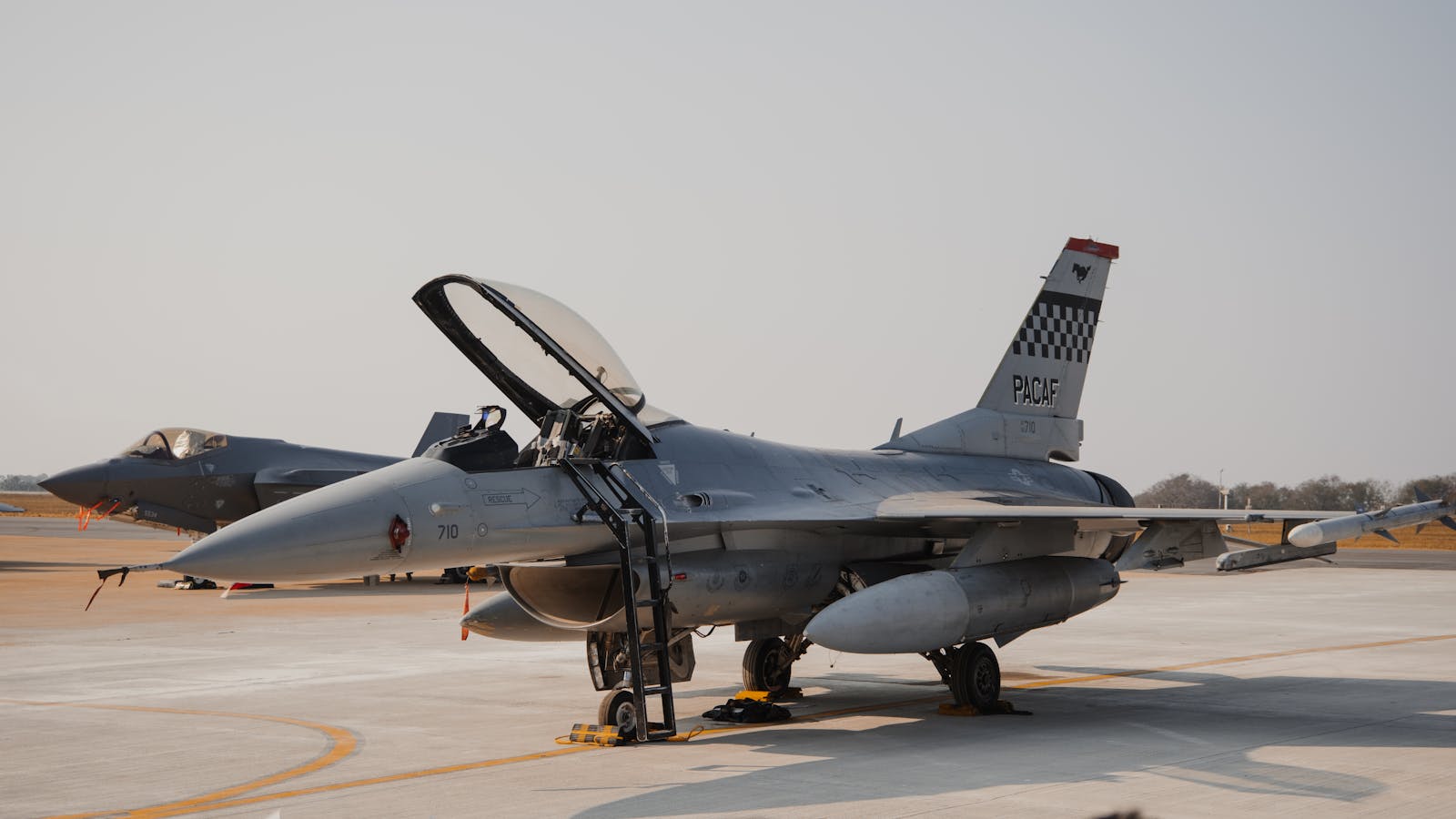
In recent years, several NATO fighter jets have gained prominence globally due to their advanced technology, versatility, and combat capabilities. These aircraft not only serve the defense needs of NATO member countries but have also attracted interest from nations around the world. The significance of these fighter jets extends beyond their military applications; they play a crucial role in international defense alliances and geopolitical stability.
1. Lockheed Martin F-35 Lightning II
The F-35 Lightning II, introduced in 2006, is a fifth-generation multirole stealth fighter developed by Lockheed Martin. With over 600 units delivered and more than 1,700 aircraft expected to be in service by the end of the decade, its popularity stems from its advanced stealth capabilities and cutting-edge technology. F-35s are currently used by 16 NATO countries, including the United Kingdom, Italy, and Norway, making it a key player in NATO’s air defense strategy.
2. Eurofighter Typhoon
The Eurofighter Typhoon, first entering service in 2003, is a collaborative effort among four European nations: the UK, Germany, Italy, and Spain. With over 600 units produced, this air superiority fighter stands out for its agility and advanced avionics. The Typhoon has been adopted by several non-NATO countries as well, such as Saudi Arabia and Oman, further solidifying its reputation as a global favorite.
3. Boeing F/A-18 Super Hornet
The Boeing F/A-18 Super Hornet, an evolution of the original F/A-18 Hornet, has been a staple of naval aviation since it entered service in 1999. With over 600 aircraft currently in operation, it is a versatile multirole fighter that has been deployed in numerous conflicts worldwide. Its ability to operate from aircraft carriers and its advanced combat systems have made it a preferred choice for both the U.S. Navy and allied nations.
4. Dassault Rafale
The Dassault Rafale, a French multirole fighter jet introduced in 2001, has gained international acclaim for its versatility and effectiveness in various combat scenarios. With more than 200 units produced, it has been acquired by several countries, including Egypt, India, and Qatar. The Rafale’s capabilities in air-to-air and air-to-ground missions make it a formidable asset in NATO operations.
5. Saab JAS 39 Gripen
The Saab JAS 39 Gripen, which first flew in 1988, is a lightweight multirole fighter developed by the Swedish aerospace company Saab. With around 300 units delivered globally, it is known for its cost-effectiveness and advanced technology. The Gripen has been adopted by several NATO partner countries, including Hungary and the Czech Republic, thanks to its modern design and operational flexibility.
6. Lockheed Martin F-22 Raptor
While primarily operated by the United States Air Force since 2005, the Lockheed Martin F-22 Raptor is often referenced in discussions about NATO air power. With only 187 units produced, its high cost has limited international sales. However, its unmatched stealth capabilities and air superiority make it a benchmark for other nations looking to enhance their air combat capabilities.
The Global Impact of NATO Fighter Jets
The growing interest in these NATO fighter jets underscores the need for advanced military capabilities in a rapidly changing global landscape. Countries worldwide are investing heavily in modernizing their air forces, often turning to NATO models for their proven track records and advanced technologies. The market for military aircraft is projected to reach $31 billion by 2025, with NATO jets playing a significant role in that growth.
The Future of NATO Fighter Jets
As geopolitical tensions rise and new threats emerge, NATO fighter jets are expected to evolve further. Innovations in artificial intelligence, drone technology, and enhanced avionics are likely to shape the future designs of these aircraft. Collaborative projects, such as the Future Combat Air System (FCAS) involving France, Germany, and Spain, illustrate NATO’s commitment to maintaining a technological edge in air defense.
Conclusion: A Call to Action
The prominence of these six NATO fighter jets reflects the vital role they play in ensuring global security and defense partnerships. As nations continue to modernize their air forces, staying informed about advancements in military aviation will be crucial for understanding international defense dynamics. Readers are encouraged to follow developments in military aviation and consider the implications for global security in the coming years.