

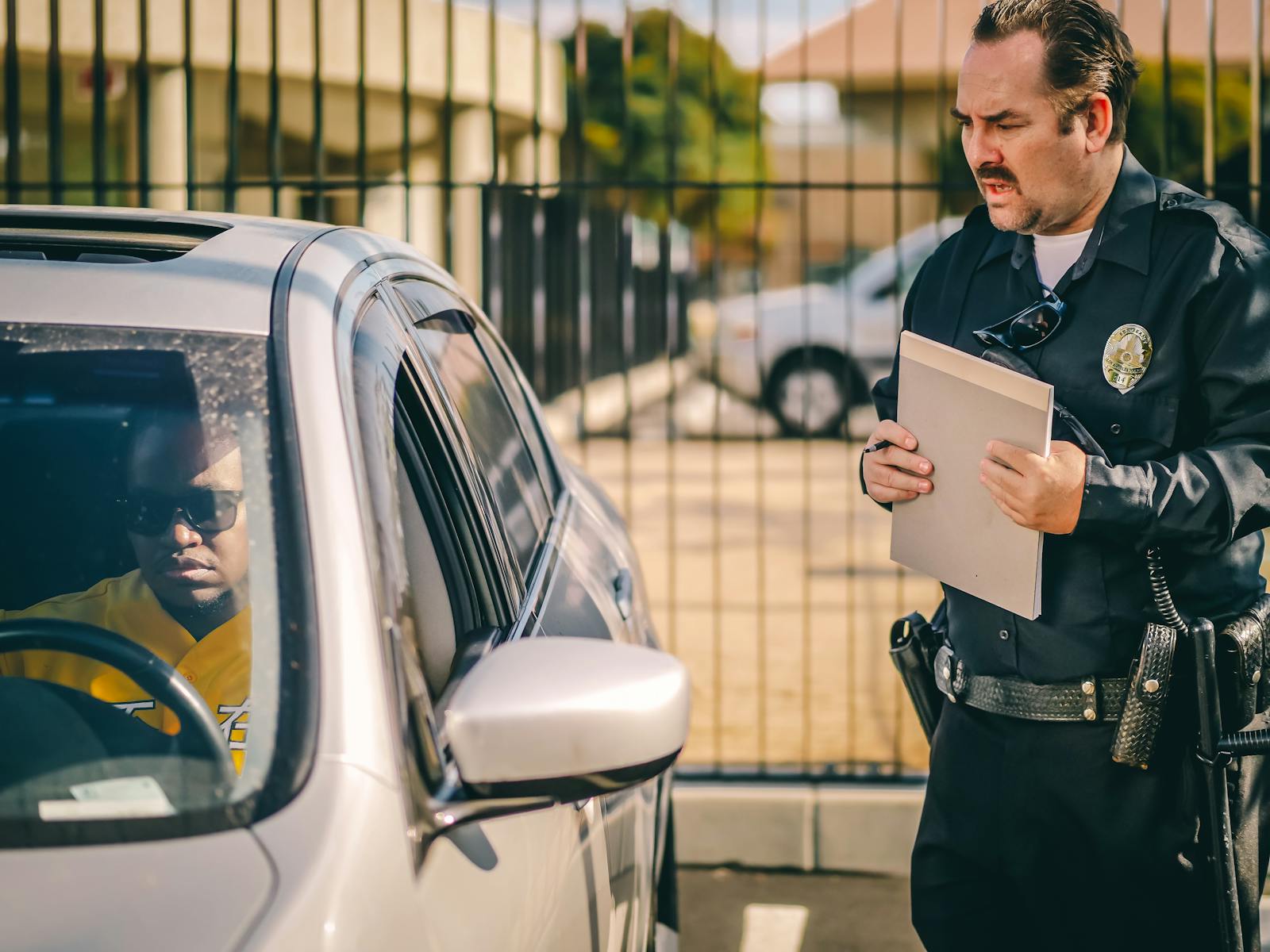
We’ve all been there. You’re cruising along, maybe jamming to your favorite playlist, when suddenly you see those flashing lights in your rearview mirror. Cue the heart racing and the existential questioning: “Did I speed? Was my blinker on? Am I about to be interrogated like I’m a suspect in a crime thriller?” But here’s the thing: not every traffic stop is cut and dry, and sometimes, you might find yourself in a position where questioning the stop makes sense. Let’s talk about six situations where it’s totally okay to raise an eyebrow and ask, “Uh, what’s going on here?”
1. Lack of Reasonable Suspicion
First up, it’s important to know that cops need a reason to pull you over. If you’re just minding your business and suddenly get stopped without any clear reason—like, you didn’t run a stop sign or swerve into another lane—it’s entirely reasonable to ask the officer why they decided to pull you over. You can politely say something like, “Excuse me, officer, but I’m not sure what I did wrong.” There’s no harm in seeking clarity, and it can help you understand the situation better.
2. Unclear Identity of the Officer
Sometimes, you might find yourself being approached by an officer whose identity isn’t immediately clear. If they’re not in uniform or driving a marked vehicle, you can absolutely question who they are. It’s your right to ensure that you’re dealing with a legitimate authority. A little skepticism goes a long way in keeping you safe. Just ask, “Can I see your badge and identification?” It’s a reasonable request—after all, you wouldn’t let a stranger into your house, would you?
3. Questions About Your Rights
Ever feel like you’re stuck in a weird game of 20 Questions? If an officer starts asking you about where you’re coming from, where you’re going, or other personal details that don’t seem relevant to the stop, you can question the necessity of those inquiries. You might say, “I’m not sure how that relates to my driving today.” Asking about your rights is perfectly okay. Remember, you’ve got the right to remain silent, and if you’re feeling uncomfortable, you can assert that. Just keep it respectful, and you’ll maintain the upper hand.
4. No Evidence of Violation
Sometimes, you might find yourself pulled over with no clear evidence of a traffic violation. Maybe the officer claims you were speeding, but your speedometer was steady as a rock. In such cases, it’s fair to ask, “What evidence do you have that I was speeding?” It’s all about communication. You’re not being confrontational; you’re just seeking the facts. It’s like asking for proof when your friend claims they can make the best lasagna—everyone deserves to know what’s cooking!
5. Inappropriate Conduct by the Officer
If things start to feel a little off—like the officer is being overly aggressive or making you uncomfortable—you have every right to question their behavior. You might say, “I feel a bit uneasy with how this is going. Can we keep this professional?” It’s crucial to stand your ground while remaining calm. You deserve to be treated with respect and dignity, no matter the circumstances. Plus, it’s a good reminder that you’re not just a driver; you’re a person with rights.
6. When You’re Unaware of the Law
Let’s be honest: the laws around driving can feel like they were written in ancient hieroglyphics. If you’re getting pulled over and you genuinely don’t understand what you did wrong, don’t hesitate to ask for clarification. You might say, “I’m not familiar with that rule. Can you explain it to me?” It’s okay to admit when you don’t know something. Everyone’s learning, and honestly, we could all use a little more understanding on the road.
Wrap-Up: Staying Calm and Collected
At the end of the day, traffic stops can be stressful. Just remember, questioning an officer doesn’t mean you’re being defiant; it means you’re advocating for yourself. Stay calm, be polite, and keep the conversation respectful. You don’t want to accidentally turn a simple stop into a full-blown drama. And who knows, you might even learn something new about traffic laws or your rights in the process. Just like in life, communication is key, and a little curiosity can go a long way. Safe travels!
More from Steel Horse Rides: