

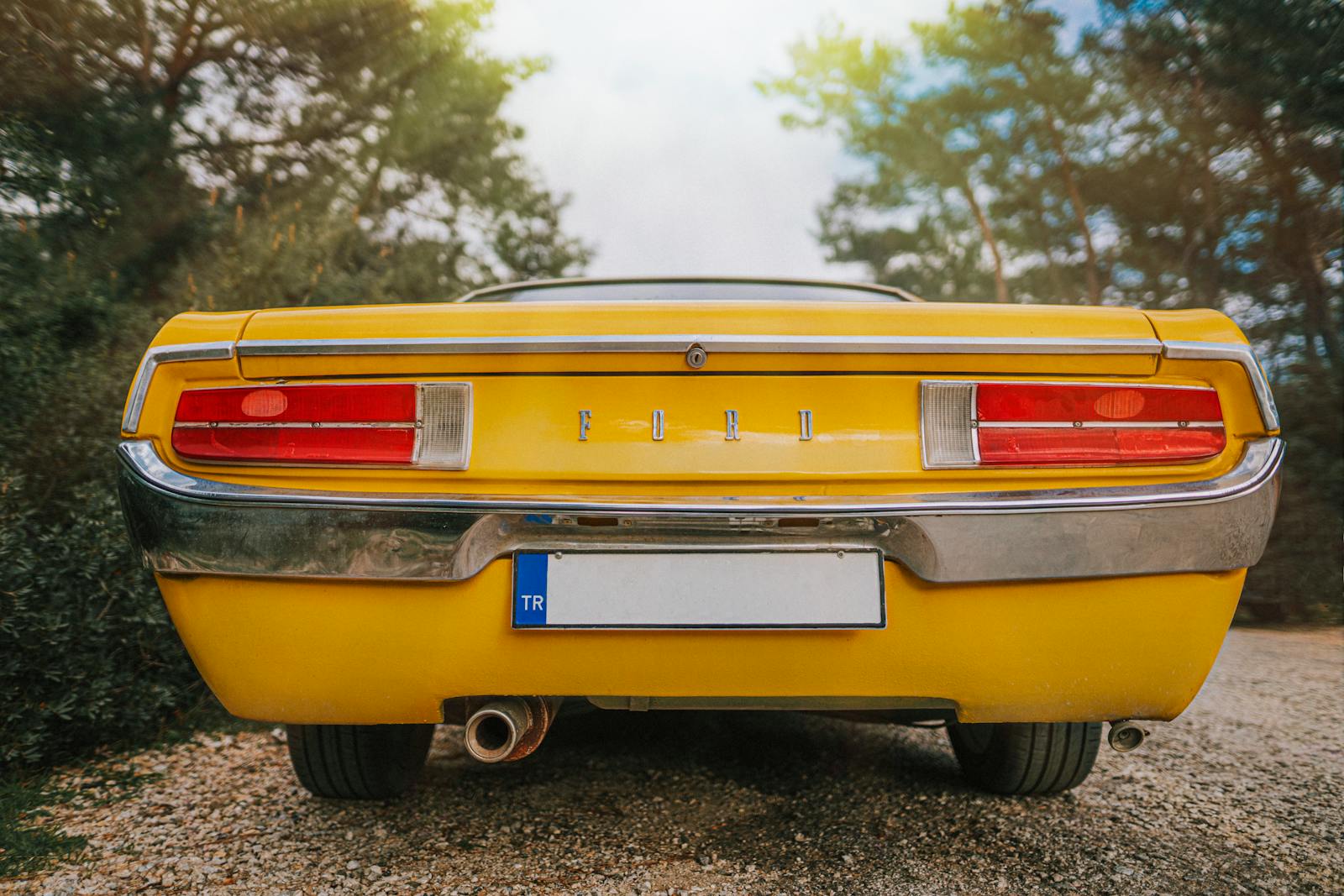
In the automotive landscape of the late 20th century, several American-made vehicles, often referred to as “Boomer Cars,” struggled to maintain their market share against the rising tide of foreign imports. This shift, which began in the 1970s and intensified through the 1990s, affected millions of consumers and significantly altered the automotive industry. As American manufacturers faced increasing competition from brands like Toyota and Honda, some iconic models failed to adapt, leading to their decline and eventual discontinuation.
1. Ford Pinto (1971-1980)
The Ford Pinto is one of the most notorious examples of a Boomer car that could not compete with imports. Launched in the early 1970s, it was designed to be an affordable compact car. However, safety concerns surrounding its fuel tank design and an infamous recall of over 1.5 million units overshadowed its sales. By the time Japanese manufacturers introduced reliable and fuel-efficient models, the Pinto’s reputation was severely damaged, leading to its discontinuation.
2. Chevrolet Vega (1970-1977)
Chevrolet’s Vega was another ambitious attempt to capture the compact car market. Initially praised for its innovative design and lightweight construction, the Vega faced numerous mechanical failures, including engine issues and rust problems. As Japanese automakers like Datsun (now Nissan) began offering more reliable alternatives, the Vega’s sales plummeted, ultimately resulting in a mere 1.7 million units sold during its production run.
3. Dodge Omni (1978-1990)
The Dodge Omni was an early entry into the subcompact market, but it fell short when compared to imports. While it featured a versatile hatchback design, it struggled with performance and reliability. As competitors like the Toyota Corolla and Honda Civic gained traction with better fuel efficiency and quality, the Omni’s appeal dwindled, leading to its phase-out in the early 1990s.
4. Pontiac Fiero (1984-1988)
The Pontiac Fiero was initially touted as a revolutionary sports car, boasting a mid-engine design and lightweight frame. However, production issues and a lack of consistent quality hampered its reputation. While it attracted attention for its unique styling and concept, it could not compete with the growing popularity of Japanese sports cars like the Mazda RX-7 and Toyota Supra, resulting in a decline in sales and eventual discontinuation.
5. Mercury Sable (1986-2005)
The Mercury Sable was designed to compete with mid-size sedans but ultimately could not hold its ground against imports. During its peak, it was praised for its spacious interior and smooth ride. However, as Japanese competitors like the Honda Accord and Toyota Camry became synonymous with reliability and fuel efficiency, the Sable’s sales began to wane. Its production ended in 2005 as consumer preferences shifted decisively toward imports.
6. Chrysler Cordoba (1975-1983)
The Chrysler Cordoba was marketed as a luxury car with a focus on comfort and style. Despite its initial popularity, it struggled to compete with more fuel-efficient imports during the oil crises of the 1970s and early 1980s. As consumers became more price-conscious and interested in compact cars, the Cordoba’s production ceased in 1983, marking the end of an era for larger American sedans.
7. Oldsmobile Cutlass Supreme (1961-1997)
Once one of the best-selling cars in America, the Oldsmobile Cutlass Supreme’s fortunes declined in the face of rising import competition. Known for its muscular performance and comfort, the Cutlass struggled to keep pace with the efficiency and reliability of Japanese models. Despite multiple redesigns, its sales dropped significantly in the 1990s, leading to its discontinuation after more than three decades on the market.
The Impact of Import Competition
The inability of these Boomer cars to compete with imports highlights a significant shift in consumer preferences during the latter half of the 20th century. As American manufacturers grappled with quality control and safety concerns, foreign automakers capitalized on these shortcomings by providing vehicles that emphasized reliability, fuel efficiency, and value. According to the Automotive News Data Center, by the late 1990s, imports held a staggering 30% market share in the U.S. automotive sector, a clear indicator of changing consumer tastes.