
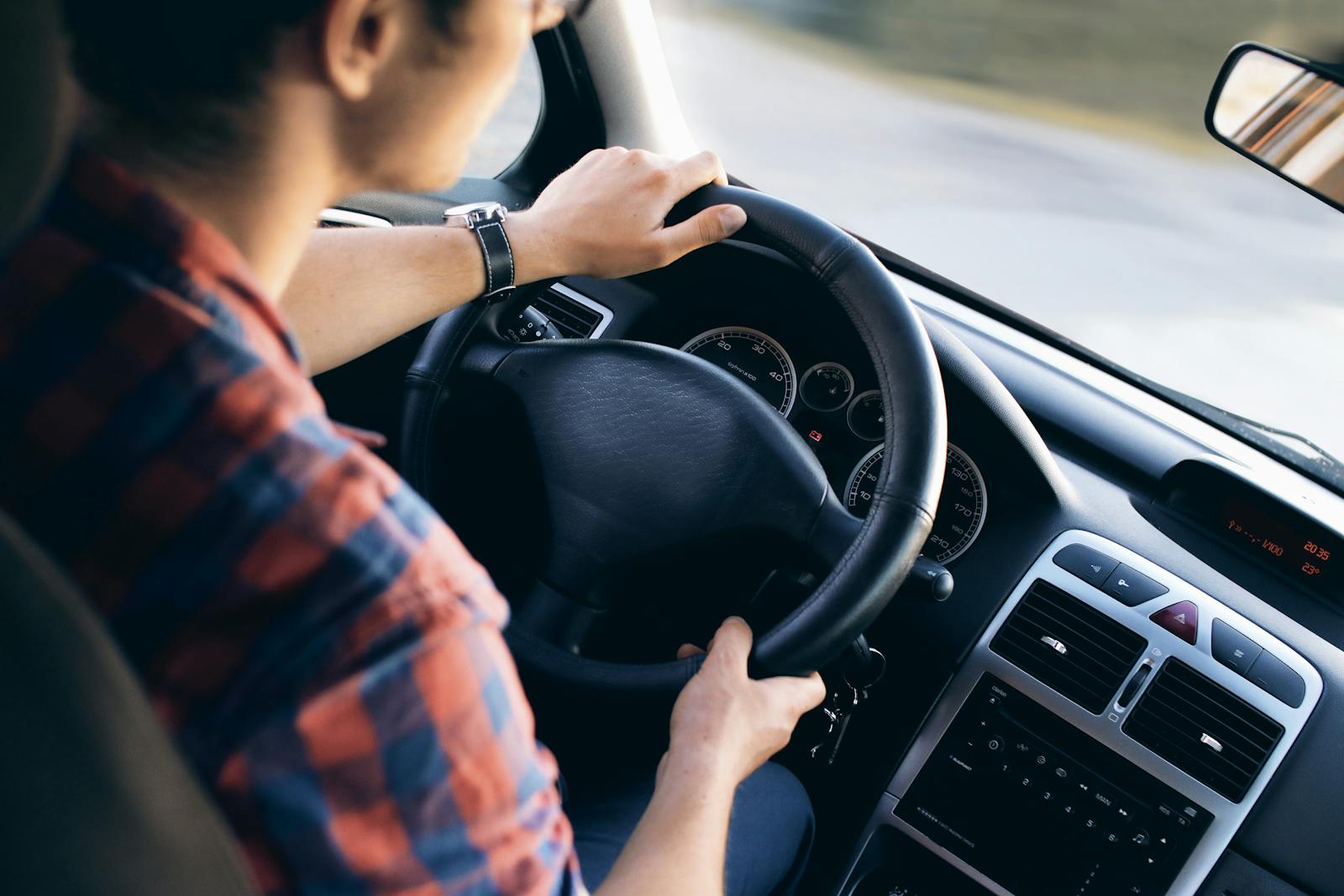

Most drivers think of tickets as punishment for wild speeding or obvious red-light runs, but plenty of “polite” habits can land someone in trouble even when they feel cautious. Traffic officers see these moves every day, and they know how quickly courtesy can turn into a crash report. Here are seven common driving habits that seem safe on the surface yet can still trigger a ticket.

1) Forgetting to Signal Your Turns
Forgetting to signal a turn or lane change often feels harmless, especially when traffic is light or the move seems predictable. In reality, failing to use the indicator is one of the classic behaviors that annoys other drivers and can draw a citation for an unsafe lane change. Driving instructors stress that, Whether traffic is heavy or not, the law still expects a clear signal before any lateral move.
Police also know that missing signals are a common factor in side-swipe and rear-end crashes, which is why officers often treat this as more than a minor etiquette slip. Safety campaigns echo the same point, urging drivers to think about how their habits affect “pedestrians and other motorists” before skipping the blinker. In practical terms, that means signaling every time, even when turning into an empty side street or changing lanes on a quiet highway.
2) Waving Pedestrians Across When It’s Unsafe
Waving pedestrians across outside a crosswalk feels generous, but it can create confusion and legal trouble. When a driver stops short in a live lane and motions someone through, following traffic may not realize why the car has slowed, raising the risk of a rear-end crash or a pedestrian being hit by another lane. Safety experts who study dangerous etiquette point out that this kind of improvised courtesy often clashes with right-of-way rules.
In many jurisdictions, stopping abruptly where there is no crosswalk can be treated as impeding traffic, and officers may cite the driver rather than the pedestrian. The stakes are highest near busy arterials, where one friendly wave can trigger a chain reaction of hard braking. A better move is to obey marked crossings and signals, letting pedestrians use the protections the law already gives them instead of inventing new ones in the middle of the lane.
3) Tailgating to “Help” Someone Merge
Some drivers crowd the car ahead to “open space” for a vehicle trying to merge, assuming that tightening the gap will somehow organize traffic. In practice, tailgating is one of the fastest ways to earn a ticket for following too closely, especially if it leads to a rear-end collision. Instructors who warn about polite but risky often single out this behavior because it feels cooperative while actually shrinking everyone’s reaction time.
When the lead car taps the brakes, the tailgater has almost no room to respond, and officers typically presume the rear driver is at fault. Insurance companies read those reports the same way, which can mean higher premiums long after the ticket is paid. The safer approach is to hold a steady, legal following distance and create merge space by easing off the accelerator early, not by riding someone’s bumper.
4) Slowing Down Excessively to Let Others Pass
Slowing far below the speed limit to let another driver change lanes or exit can feel like the height of patience. Yet dropping speed too much, too fast, is exactly the kind of behavior that can be cited as obstructing traffic or driving without due care. Road safety campaigns that urge people to rethink their driving habits emphasize that courtesy should never surprise the drivers behind.
When one car suddenly crawls along at 25 mph in a 45 mph zone, everyone else has to react, often with abrupt lane changes that create new hazards. That ripple effect is exactly what officers look for when they patrol busy corridors. Instead of slamming on the brakes to be nice, a driver can maintain a reasonable speed, signal early, and adjust position gradually so others have time to respond without panic.
5) Stopping in the Middle of an Intersection
Stopping in the middle of an intersection to “let someone go” from a side street or driveway might feel like a neighborly move, but it directly conflicts with rules against blocking intersections. Traffic laws generally require drivers to clear the box once they enter, and officers can issue tickets when a car comes to rest across crosswalks or in the path of cross traffic. Analysts who examine intersection behavior note that improvised courtesy often leaves everyone guessing.
When one vehicle halts unexpectedly in the middle, others may try to dart through gaps or change lanes around it, raising the risk of side impacts. Pedestrians are also put at risk when crosswalks are blocked and sightlines are cut off. The safer habit is simple: only enter an intersection when there is room to exit, and let signals and marked priorities, not hand gestures, control who moves next.
6) Not Yielding Properly at Roundabouts
At roundabouts, many drivers try to be extra polite by stopping when they actually have the right of way, or by waving multiple cars through at once. That hesitation can violate yield rules and lead to failure-to-yield citations when crashes occur. Traffic educators who discuss confusing courtesies often highlight roundabouts because small mistakes there quickly snowball into backups.
When a driver who should proceed instead stops, vehicles behind may brake hard or swerve, and entering traffic may misread the gap and pull out at the wrong time. Police reviewing a collision will look closely at who had the legal priority, not who tried to be nice. The consistent, ticket-proof habit is to yield only to traffic already in the circle, then commit smoothly once it is a driver’s turn, without extra waving or last-second stops.
7) Flashing Lights to Warn of Speed Traps
Flashing headlights to warn oncoming drivers about a speed trap feels like a quiet favor, but it sits in a legal gray area that can still lead to tickets. Some officers argue that Flashing lights can be distracting or misread, since the same signal might also mean “your high beams are on” or “there is a hazard ahead.” Others note that, when used carefully, Flashing headlights can nudge drivers into safer speeds.
Because laws vary, a driver might face accusations of improper use of high beams or interfering with enforcement, even if some courts later view the warning as protected conduct. The bigger issue is that rapid headlight bursts can startle or confuse other motorists, especially at night. To avoid both tickets and misunderstandings, drivers are better off managing their own speed and relying on posted limits and tools like Handsfree navigation apps instead of improvised light codes.
More from Wilder Media Group: