

Despite their compact frames, several fighter jets are proving to be powerhouses in modern aviation, showcasing advanced technology and formidable capabilities. This article explores seven notable aircraft that, while smaller in size, deliver exceptional performance and effectiveness, significantly impacting military operations worldwide. Understanding these aircraft’s capabilities is crucial for defense analysts, military enthusiasts, and policymakers as they assess future air combat strategies.
1. F-16 Fighting Falcon
The F-16 Fighting Falcon, introduced in 1978, has become one of the most widely used multirole fighter jets globally, with over 4,600 units produced. With a wingspan of only 32 feet and a length of 49 feet, this jet packs a punch with its advanced avionics and versatile weaponry, including air-to-air and air-to-ground munitions. Its thrust-to-weight ratio allows for exceptional maneuverability, making it a preferred choice for air forces around the world.
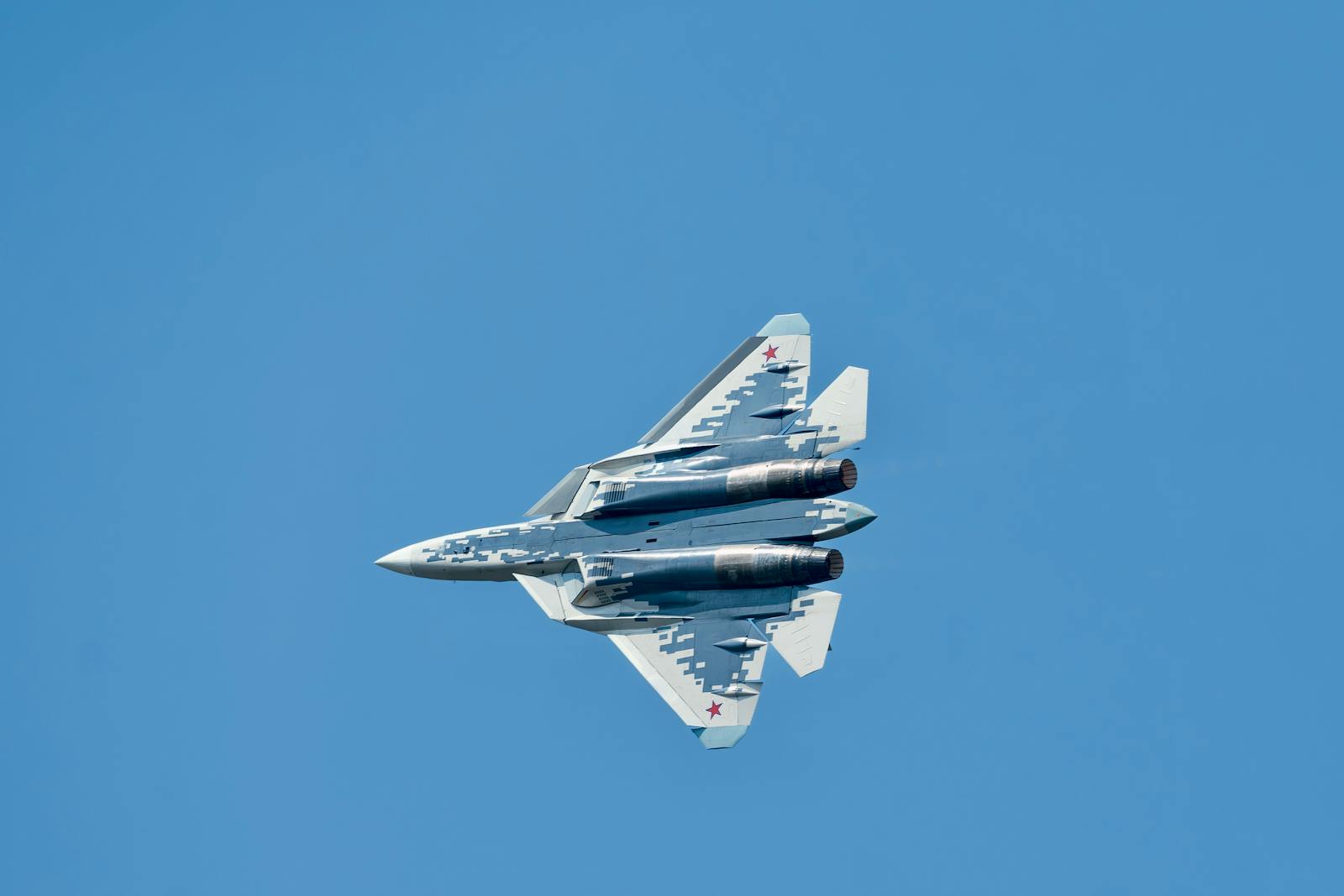
2. Sukhoi Su-57
Russia’s Sukhoi Su-57, which began entering service in 2020, is a fifth-generation stealth fighter that combines speed, agility, and advanced technology. Despite its 65-foot length, the Su-57 is designed for supersonic cruise and is capable of evading radar detection. Its advanced avionics and weapon systems, including hypersonic missiles, provide it with capabilities that surpass many larger aircraft, ensuring air superiority in combat scenarios.
3. Dassault Rafale
The French Dassault Rafale, a twin-engine multirole fighter jet, has a length of approximately 50 feet and a wingspan of 47 feet. Since its introduction in 2001, it has gained a reputation for versatility and effectiveness in various combat roles. The Rafale can simultaneously engage in air-to-air and air-to-ground missions, making it a vital asset for the French Air Force and naval operations, further emphasizing that size does not dictate capability.
4. Boeing F/A-18 Super Hornet
The Boeing F/A-18 Super Hornet, primarily used by the U.S. Navy, is a larger variant of the original Hornet, measuring 60 feet in length. However, its design prioritizes power-to-weight ratios and advanced systems. The Super Hornet is equipped with cutting-edge avionics and can carry a payload of over 17,000 pounds, allowing it to execute a wide range of missions, from air-to-air combat to precision bombing, making it a formidable presence in naval aviation.
5. Eurofighter Typhoon
The Eurofighter Typhoon is a multirole combat aircraft developed by a consortium of European countries and has been in service since 2004. Measuring 50 feet in length with a wingspan of 40 feet, it offers a combination of agility and speed, reaching over Mach 2. The Typhoon excels in air superiority and ground attack roles, showcasing the effectiveness of its compact design coupled with advanced technology in modern warfare.
6. Lockheed Martin F-22 Raptor
The F-22 Raptor, a fifth-generation fighter jet introduced in 2005, stands out for its stealth capabilities and advanced avionics. With a length of 62 feet, it boasts a speed exceeding Mach 2 and is designed for air dominance. Its ability to carry out both air-to-air and air-to-ground missions while remaining nearly invisible to radar highlights how this aircraft maximizes its power despite a manageable size.
7. Chengdu J-20
China’s Chengdu J-20 is a stealth fighter jet that emphasizes advanced technology and combat capability. Entering service in 2017, this aircraft is about 66 feet long, and although it appears larger than other jets on this list, its design focuses on stealth and speed, with a top speed of around Mach 2.5. This fighter represents China’s aspirations to modernize its military capabilities, demonstrating that even jets with a larger footprint can surprise with their performance metrics.
Conclusion: The Importance of Understanding Modern Fighter Jets
The seven fighter jets discussed above illustrate that advanced technology and design can yield exceptional performance, regardless of size. As military engagements become increasingly complex, understanding these aircraft’s capabilities is vital for defense strategies globally. The implications of these advancements in fighter jet technology affect national security and military readiness, making it essential for policymakers and citizens alike to stay informed about the future of air combat.