

The evolution of military aviation has been marked by several key fighter programs that have significantly altered the course of warfare. These programs, developed over decades, have introduced advanced technology, tactics, and strategies that have reshaped how conflicts are fought. Understanding these innovations is crucial for comprehending modern military dynamics and the future of warfare.
1. F-22 Raptor (2005)
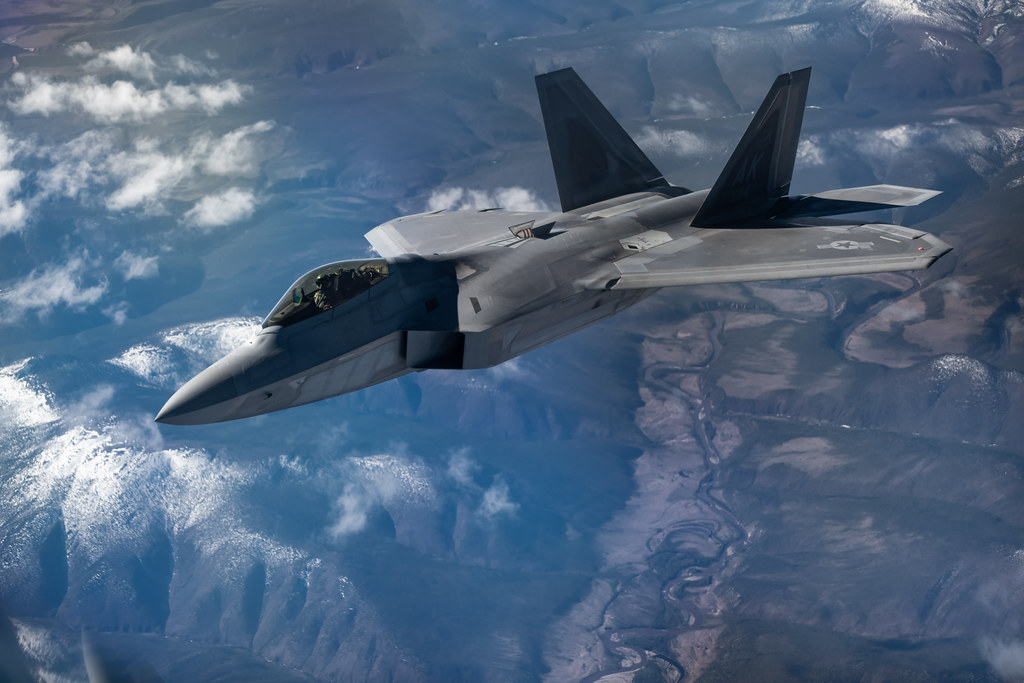
The F-22 Raptor, introduced into service by the U.S. Air Force in 2005, represents a leap in air superiority capabilities. With its advanced stealth features, supercruise ability, and integrated avionics, the F-22 can engage multiple targets with precision while remaining undetected. The aircraft’s capabilities have fundamentally changed how air dominance is achieved in contemporary combat scenarios.
2. F-35 Lightning II (2015)
Developed by Lockheed Martin, the F-35 Lightning II program, which became operational in 2015, has revolutionized multirole combat. With three variants designed for different missions—including carrier operations for the U.S. Navy—the F-35 integrates advanced sensors and networked capabilities that enhance situational awareness. Its deployment has enabled joint operations among allied nations, making it a cornerstone of modern air power.
3. Sukhoi Su-57 (2020)
Russia’s Sukhoi Su-57, which entered service in 2020, is the country’s first stealth fighter jet. It is designed to compete with the F-22 and F-35, featuring advanced avionics, supermaneuverability, and a variety of payload options. The introduction of the Su-57 has prompted NATO and other nations to rethink their aerial combat strategies, emphasizing the need for counter-stealth capabilities.
4. Chengdu J-20 (2017)
The Chengdu J-20, China’s fifth-generation stealth fighter, was officially commissioned in 2017. This aircraft is designed for long-range missions and air superiority, boasting advanced radar-evading technology. The J-20’s operational status signals a shift in the balance of air power in the Asia-Pacific region, prompting responses from neighboring countries and the United States.
5. Eurofighter Typhoon (2003)
Entering service in 2003, the Eurofighter Typhoon is a collaborative project involving the UK, Germany, Italy, and Spain. Known for its agility and versatility, the Typhoon is capable of conducting air-to-air and air-to-ground operations. This multirole fighter has played a pivotal role in European air defense and has been involved in various international missions, showcasing the importance of multinational defense cooperation.
6. Boeing P-8 Poseidon (2013)
The Boeing P-8 Poseidon, operational since 2013, has transformed anti-submarine warfare and maritime patrol missions. Designed for the U.S. Navy, the P-8 combines advanced sensors and weapons systems to conduct long-range reconnaissance and target engagement. Its capabilities have enhanced naval operations significantly, particularly in contested waters where submarine threats are prevalent.
7. Northrop Grumman B-21 Raider (Upcoming)
Set to debut in the mid-2020s, the Northrop Grumman B-21 Raider is poised to redefine strategic bombing. This next-generation stealth bomber is designed to replace the aging B-1 and B-2 fleets, incorporating cutting-edge technology for long-range strikes. The B-21’s introduction reflects the U.S. military’s commitment to maintaining a competitive edge in global power projection.
Conclusion: The Impact of Fighter Programs on Modern Warfare
Each of these fighter programs has not only advanced the technology of aerial combat but also influenced military strategies worldwide. The introduction of stealth, advanced avionics, and multirole capabilities has raised the stakes in air warfare, necessitating new tactics and defensive measures. As nations continue to invest in and develop next-generation aircraft, the landscape of modern warfare will remain in flux.
Understanding these developments is crucial for policymakers, military strategists, and the general public. Awareness of how these fighters impact global security could influence national defense priorities and international relations. Stay informed about the latest in military technology and its implications for global peace and security.
For further insights into military advancements and their effects on modern conflicts, follow our updates and analyses. The future of warfare is evolving rapidly, and understanding these changes is essential for all stakeholders.