
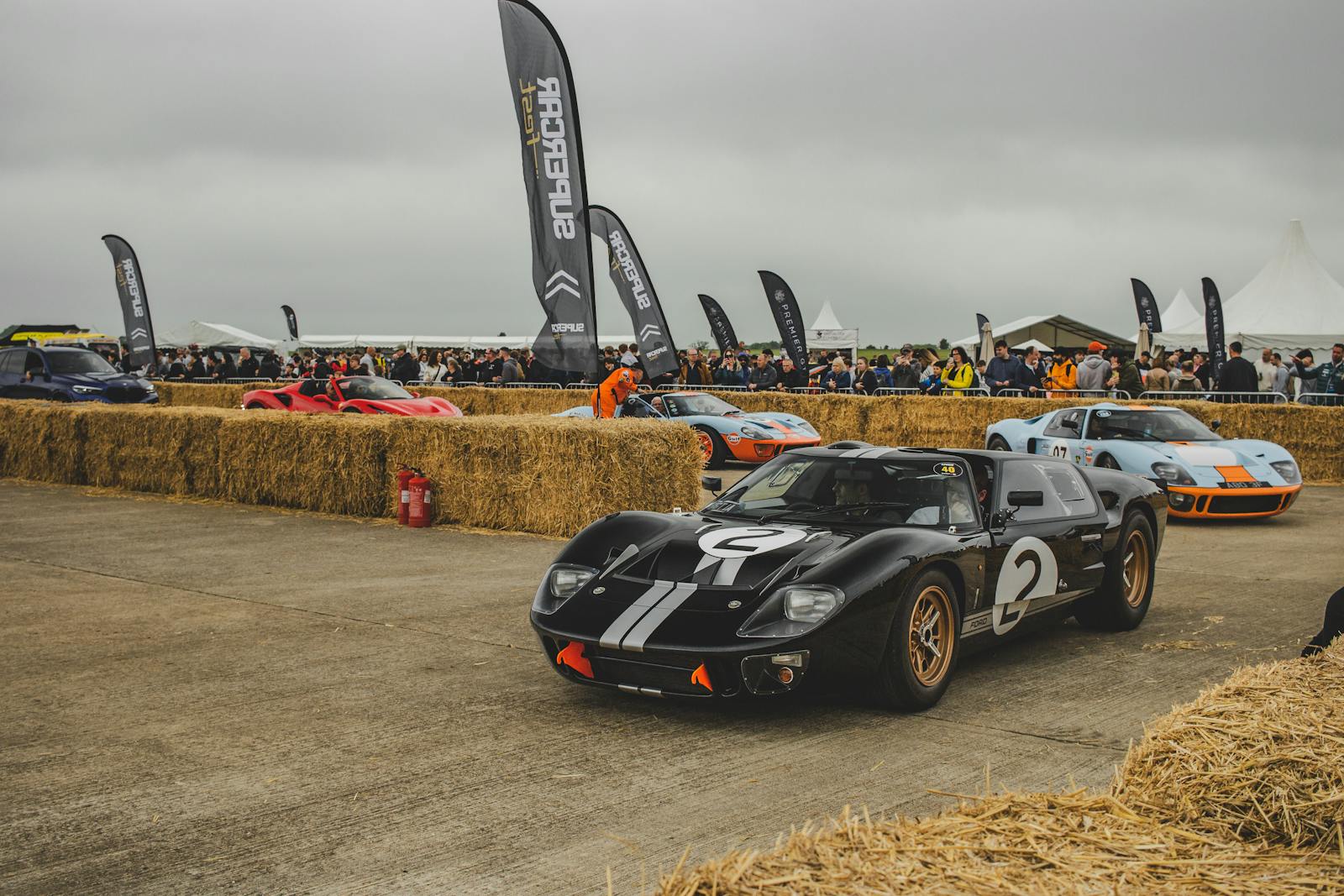

You’ll find cars on this list that shaped automotive style and still turn heads today. Expect a mix of timeless classics and muscular icons that show how Ford balanced form, function, and character across different eras.
As you move through the article, you’ll see why certain designs—from early Fords that defined accessibility to mid‑century and performance models that defined attitude—remain visually compelling. Each entry highlights what made those cars stand out on the road and in history.
1955 Ford Thunderbird
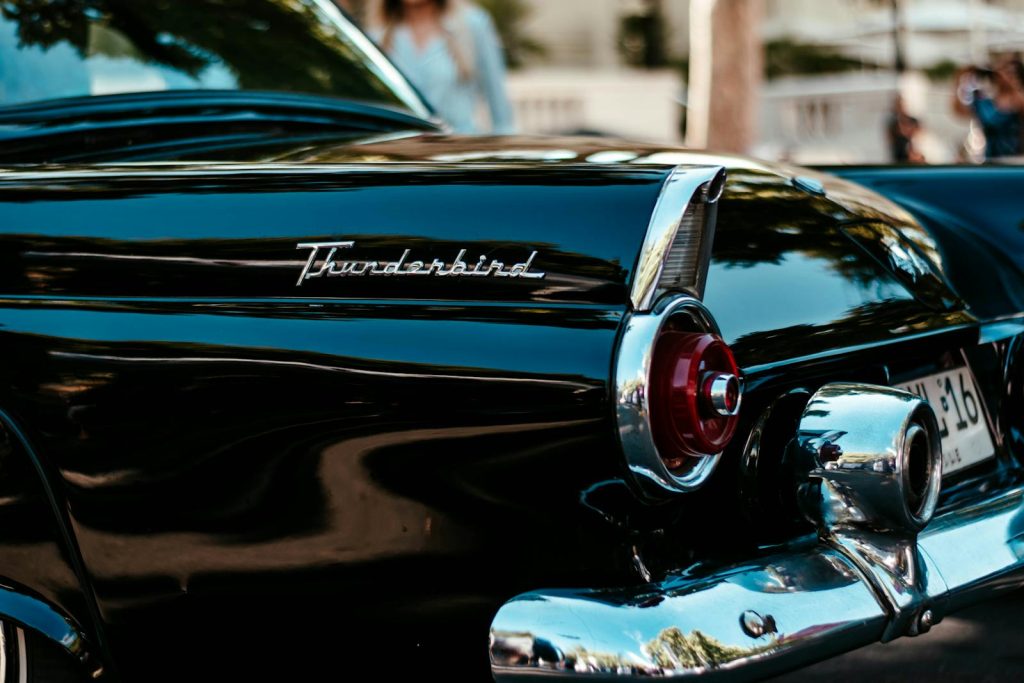
You’ll notice the 1955 Thunderbird’s clean, low lines and compact proportions right away. Its two-seat layout and detachable hardtop give it a purposeful, personal-car feel.
The chrome bumper, porthole-style hardtop on some cars, and 102-inch wheelbase create a balanced, elegant silhouette. Under the hood, a 292 cu in V8 provided smooth, period-appropriate power without overwhelming the car’s refined character.
1965 Ford Mustang Fastback
You’ll notice the 1965 Mustang Fastback for its long, low profile and clean, muscular lines. It looks purposeful without being fussy, which helped define the pony car style.
You can choose classic V8 power or milder engines, but the Fastback’s appeal rests largely on design and presence. Many owners say it still turns heads at shows and on the road.
Ford GT40
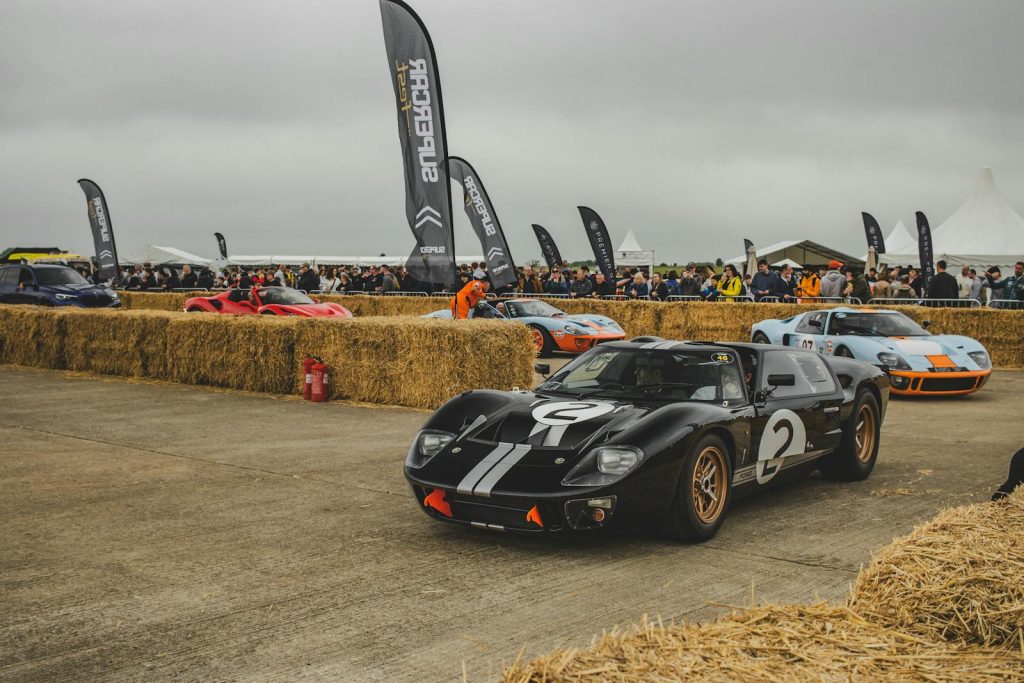
You’ll notice the GT40’s low, squat profile the moment you see it; that 40-inch height gives it an unmistakable presence.
Its clean, aerodynamic lines balance beauty with purpose — every curve cuts wind for racing performance.
The cockpit sits close to the ground, making the car look compact and aggressive.
Seeing one reminds you how design can be both elegant and driven by function.
Ford Model A (1927)
You’ll notice the Model A’s clean, upright lines and simple chrome accents that made it a favorite in its era.
Its proportions feel balanced whether you see a Tudor sedan or an open-top roadster.
You get a car that replaced the Model T with more comfort and style, while staying affordable.
Nearly 5 million were built, so you still see Model As at shows and on the road today.
Ford Mustang GTD
You’ll notice the GTD’s sculpted lines and aggressive stance the moment you see it. The design blends race-bred aerodynamics with Mustang heritage in a way that feels both modern and familiar.
Sit close and you’ll pick up on functional details like the large splitter and rear wing, which give the car purpose beyond looks. The GTD proves Ford can make a Mustang that’s beautiful and track-focused at the same time.
Ford Model T
You’ll recognize the Model T for its plain, purposeful lines and functional design. It favored utility over ornament, which helped make it affordable and widely owned.
You can see its beauty in simplicity: rugged panels, upright stance, and a practical layout that served millions. The Model T’s influence on car design and mass production shaped the vehicles that followed.
1967 Ford Mustang Shelby GT500
You’ll notice the GT500’s wide stance and aggressive front end the moment you see it.
Its fiberglass bootlid and hood scoop add purposeful detail without excess.
You can appreciate the blend of muscle and style in the sweeping side lines.
Rare factory features and authentic cues make this one that collectors seek.
Ford F-100 (1953)
You’ll notice the 1953 F-100’s clean, rounded lines and simple grille the moment you see it. The design marked Ford’s Golden Jubilee and introduced a pickup that balances utility with classic style.
You can find originals with the straight-six or upgraded V8 swaps, so performance varies by build. Many owners prize these trucks for restoration and hot-rodding because they respond well to customization.
More from Steel Horse Rides: