

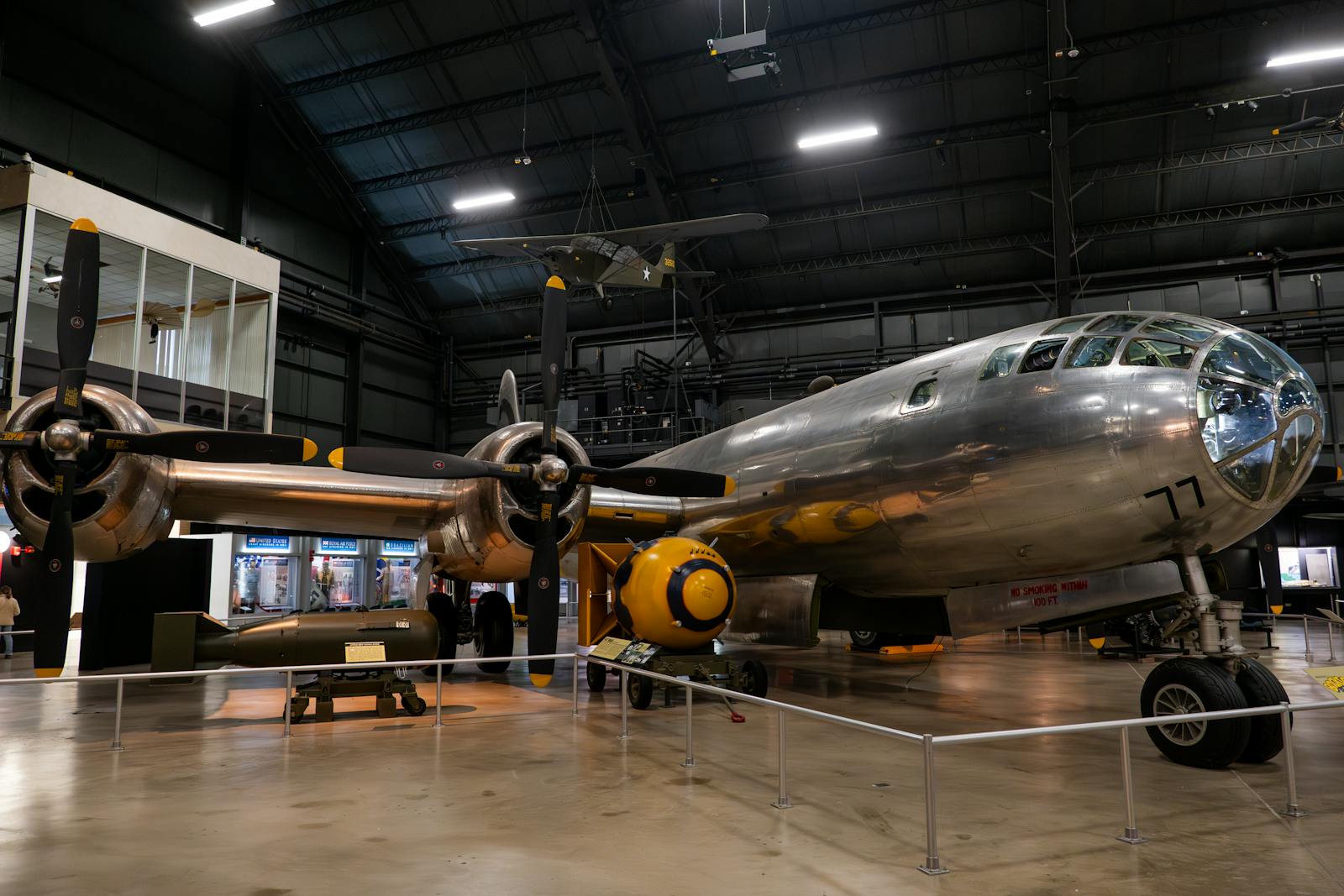
Throughout history, certain bombers have significantly altered military strategies and geopolitical landscapes, affecting millions of lives. From World War II to modern conflicts, these aircraft have not only demonstrated technological advancements but also shaped the outcomes of wars. Here is a detailed look at eight bombers that have left an indelible mark on history.
1. Boeing B-17 Flying Fortress (1935)
The Boeing B-17 Flying Fortress played a crucial role in the strategic bombing campaigns of World War II. With over 12,700 units produced, it became a symbol of American air power. The B-17 allowed the Allies to conduct daylight bombing raids over Germany, significantly crippling Nazi industrial capabilities and contributing to the eventual defeat of the Axis powers.
2. Avro Lancaster (1941)
The Avro Lancaster was the Royal Air Force’s primary heavy bomber during World War II. Notable for its payload capacity, the Lancaster could carry over 14,000 pounds of bombs, making it instrumental in missions like the famous Dambuster raids. Its effectiveness helped to turn the tide in favor of the Allies, particularly in targeting key industrial sites in Germany.
3. North American B-25 Mitchell (1941)
Famous for its role in the Doolittle Raid on Tokyo in 1942, the North American B-25 Mitchell was a medium bomber that impacted American morale and Japanese strategy. This surprise attack demonstrated that the Japanese mainland was vulnerable to American air strikes, marking a pivotal shift in the Pacific theater. Over 9,800 B-25s were produced, serving in various capacities throughout the war.
4. Boeing B-29 Superfortress (1944)
One of the most advanced bombers of its time, the Boeing B-29 Superfortress was instrumental in the latter stages of World War II. With its pressurized cabin and remote-controlled gun turrets, it was designed for high-altitude bombing missions, including the atomic bomb drops on Hiroshima and Nagasaki. The B-29’s technological innovations paved the way for future bomber designs.
5. Rockwell B-1 Lancer (1986)
Entering service in the mid-1980s, the Rockwell B-1 Lancer revolutionized strategic bombing with its variable-sweep wing design and supersonic capabilities. Capable of carrying a payload of 75,000 pounds, the B-1 played a critical role in the Gulf War, delivering precision strikes against enemy targets. Its adaptability has allowed it to serve in various conflicts, including operations in Afghanistan and Iraq.
6. Northrop Grumman B-2 Spirit (1989)
The Northrop Grumman B-2 Spirit introduced stealth technology to the world of military aviation. With its unique flying wing design, the B-2 can evade radar detection, making it a key asset for penetrating heavily defended airspace. Its first combat mission came in 1999 during the Kosovo War, where it successfully executed high-profile bombing campaigns without loss.
7. Boeing B-52 Stratofortress (1955)
In service for more than 60 years, the Boeing B-52 Stratofortress has become an iconic symbol of American air power. With a range of over 8,800 miles and the ability to carry 70,000 pounds of weapons, it has been a versatile platform for strategic bombing since the Cold War. The B-52 remains active today, participating in various operations, demonstrating its enduring relevance.
8. Lockheed Martin F-35 Lightning II (2015)
While primarily a tactical fighter jet, the Lockheed Martin F-35 Lightning II has significant bombing capabilities, representing the future of aerial combat. With advanced stealth and sensor technologies, it can conduct precision strikes against ground targets while remaining undetected. Its integration into air forces worldwide is reshaping modern warfare and strategic planning.
Conclusion
The impact of these bombers extends beyond military engagements; they have influenced international relations, defense policies, and technological advancements in aviation. As nations continue to develop and deploy new aircraft, understanding the historical significance of these bombers is crucial for comprehending current geopolitical dynamics. With ongoing global tensions, the lessons learned from these aircraft remain relevant today.
Stay informed about military developments and their implications for global security. Follow us for the latest updates and analyses on defense technology and international affairs.