

Hidden driving rules can turn a carefree road trip into an expensive lesson, especially when you cross state lines. Across the United States, long-standing safety laws and quirky local codes catch tourists off guard, leading to tickets, confusion, and tense roadside stops. Knowing these eight often-broken rules before you travel helps you stay safe, avoid fines, and respect how each state manages its roads.
1) Oregon’s Full-Service Gas Mandate
Oregon’s full-service gas mandate has roots in a 1951 rule that treated gasoline as a hazardous material requiring trained attendants. The Oregon State Fire Marshal notes that self-service of gasoline, a “Class 1 flammable liquid,” has been prohibited in Oregon since 1951, with limited exceptions under The Non Retail Fueling Cardlock program. The idea was that attendants would reduce spills, control ignition sources, and keep customers away from flammable vapors at the pump.
That safety-first approach was reinforced when the Oregon Department of Justice backed the ban in 2016, arguing that attendants help prevent static sparks and slippery surfaces. Earlier rules also emphasized that exposure to fumes and spills could endanger vulnerable people, as highlighted in coverage of Exposure concerns. Although All gas stations in Oregon can now allow customers to pump their own gas under a new law signed Friday, many stations still rely on attendants, and tourists used to self-serve often step out to grab the nozzle before staff can intervene.
2) New Jersey’s Ban on Self-Pumping Fuel
New Jersey has enforced a statewide ban on self-service gas pumping since 1949, making it illegal for you to operate the pump yourself. The rule was designed to reduce fire risks from flammable vapors and to keep untrained drivers away from ignition sources. At service plazas run by the NJ Turnpike Authority, attendants are required to handle fueling, and signs remind drivers that New Jersey is a full-service state.
Tourists accustomed to self-serve often jump out of rental cars and grab the nozzle, only to be waved off by attendants or warned by police. Violations can lead to fines of up to $50, a frustrating surprise if you are just trying to top off before a beach weekend. The stakes are higher than embarrassment: ignoring attendants in a busy forecourt can create confusion, increase spill risks, and slow traffic at already crowded highway stations.
3) Alabama’s Headphone Driving Restriction
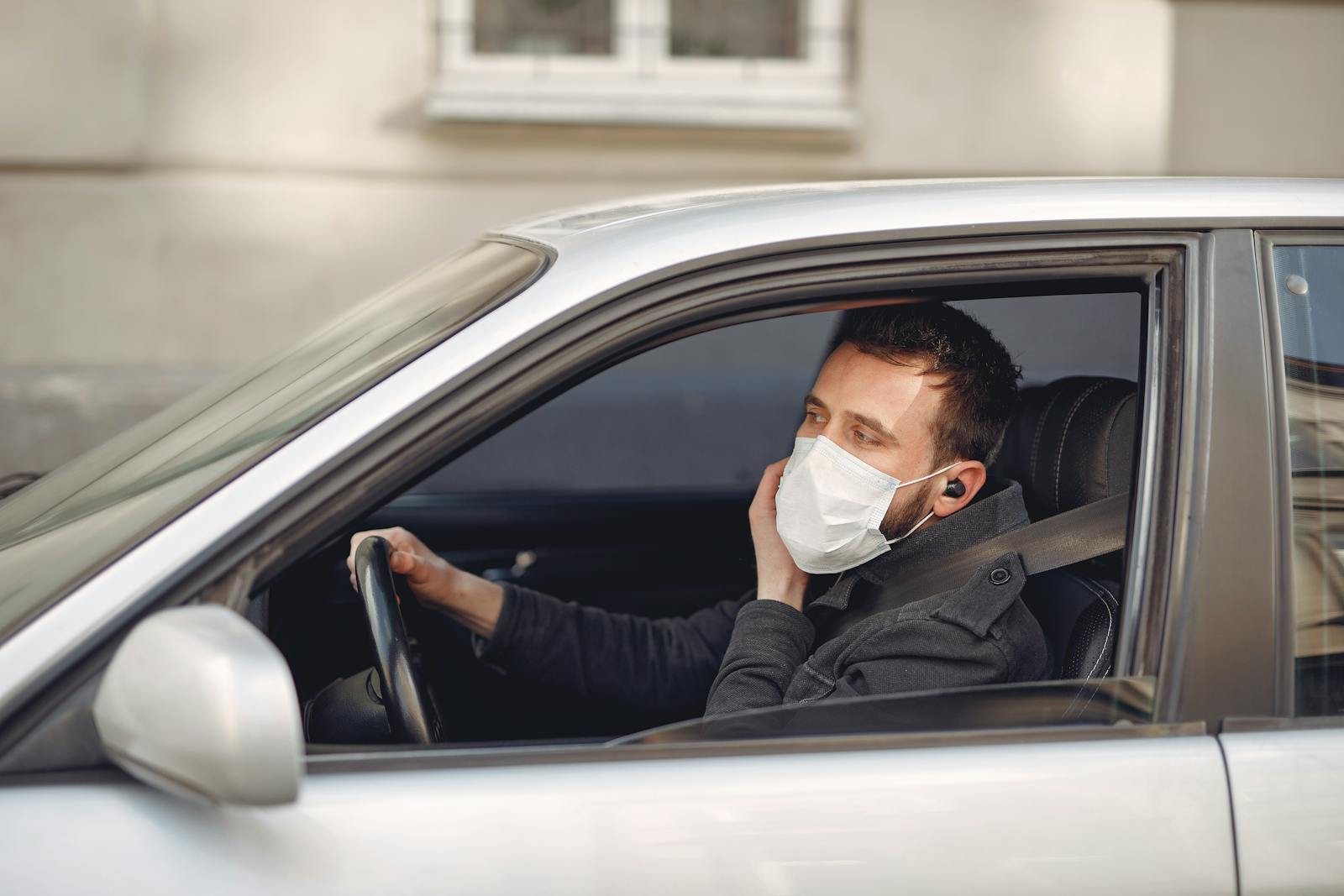
Alabama quietly criminalizes a habit many tourists consider harmless: driving with both ears covered by headphones or earbuds. Code of Alabama § 32-5A-222 makes it illegal to operate a vehicle while wearing audio devices that cover both ears, a rule enforced by the ALEA Highway Patrol as part of its distracted driving campaigns. The law targets noise-canceling headphones and in-ear buds that block outside sound, not single-ear Bluetooth headsets.
On scenic rural routes and long interstate stretches, visitors often slip on over-ear models from brands like Bose or Sony to drown out road noise, unaware they are violating state law. If a trooper sees both ears covered, you can be pulled over even if you are driving perfectly within the speed limit. The safety rationale is straightforward: you must be able to hear sirens, horns, and roadway warnings, especially where emergency response times and passing zones are limited.
4) Georgia’s Move Over Law for Emergency Vehicles
Georgia’s Move Over Law for emergency vehicles is one of the most misunderstood rules among out-of-state drivers. O.C.G.A. § 40-6-16, part of Georgia Code, Title 40, requires you to change lanes away from a stationary emergency vehicle with flashing lights or, if that is not possible, to slow significantly. A detailed explanation of The Move Over Law notes that highway drivers must move over one lane when they can, especially on high-speed corridors.
Since 2005, the law has applied on interstates like I-95 and I-75, where troopers, tow trucks, and utility crews work just inches from traffic. Tourists focused on navigation or unfamiliar exits often fail to shift lanes, assuming slowing slightly is enough. That mistake can lead to citations and, more importantly, puts roadside workers at risk of being struck by vehicles traveling at highway speeds. Georgia’s enforcement underscores a broader national trend of protecting first responders with strict move-over requirements.
5) New York City’s Anti-Honking Ordinance
New York City’s anti-honking rule surprises many visitors who equate Manhattan with constant horn noise. Under NYC Noise Code § 24-224, you are banned from honking your vehicle’s horn except in cases of imminent danger, such as preventing a collision. The NYC DOT explains that unnecessary horn use can trigger fines of up to $350, a steep penalty for venting frustration in gridlocked traffic.
Tourists stuck in cabs or rental cars often lean on the horn at double-parked trucks or slow pedestrians, unaware that this behavior is explicitly prohibited. Enforcement tends to focus on chronic offenders and obvious non-emergency blasts, but officers can ticket any driver who treats the horn as a stress outlet. The policy reflects the city’s broader effort to cut noise pollution, protect residents’ health, and keep crowded streets from becoming even more chaotic.
6) Texas’ Emergency Vehicle Yield Requirement
Texas’ emergency vehicle yield rule expands the move-over concept with a specific speed requirement that trips up many visitors. Texas Transportation Code § 545.157 requires you to change lanes away from a stationary emergency vehicle with activated lights or, if you cannot safely move over, to reduce your speed by 20 mph below the posted limit. The state’s Move Over Texas campaign highlights this 20 mph reduction as a core safety standard.
Rental car drivers on busy interstates around Houston, Dallas, and Austin often slow only slightly or stay at the limit while passing police cruisers or ambulances on the shoulder. That behavior not only risks a citation but also endangers officers and paramedics working inches from traffic. By forcing a clear lane change or a dramatic speed drop, Texas aims to create a visible buffer that gives roadside workers time to react if a driver drifts or loses control.
7) California’s No-Coasting Downhill Rule
California’s no-coasting rule targets a fuel-saving trick that can actually undermine control on steep grades. Vehicle Code § 21710, often cited as CVC 21710, states that “the driver of a motor vehicle when traveling on down grade upon any highway shall not coast with the gears of such vehicle in neutral.” Legal analyses of CVC 21710 emphasize that coasting in neutral on a downgrade is a ticketable offense.
On winding routes like Highway 1 or mountain passes into Lake Tahoe, tourists sometimes slip their automatic transmissions into neutral to save gas or enjoy a quiet glide. According to According to explanations of California Vehicle Code Section 21710, that choice reduces engine braking and can overwork your brakes, increasing the risk of fade or loss of control. The rule, a holdover from early 20th-century safety thinking, still matters on modern vehicles when long descents and heavy traffic combine.
8) Virginia’s Strict Pedestrian Crosswalk Yield
Virginia’s pedestrian right-of-way rule is far stricter than what many drivers experience at home. Code of Virginia § 46.2-924 requires you to yield, and often come to a complete stop, for pedestrians in marked crosswalks at all times. State guidance on VDOT Pedestrian Safety stresses that drivers must give people on foot priority, particularly in urban areas and near transit hubs.
In tourist-heavy zones like Arlington near Washington, D.C., visitors from states with more permissive rules often roll through crosswalks if they believe they can “beat” a pedestrian. Local enforcement targets that behavior with tickets and public awareness campaigns, since even low-speed impacts can cause serious injuries. For you as a visiting driver, the safest approach is to treat every crosswalk as a stop-if-occupied zone, not a suggestion, and to anticipate pedestrians stepping off the curb when signals change.
Supporting sources: Oregon drivers are now allowed to pump their own fuel …, Why can’t I pump my own gas in Oregon?.
More from Wilder Media Group: