

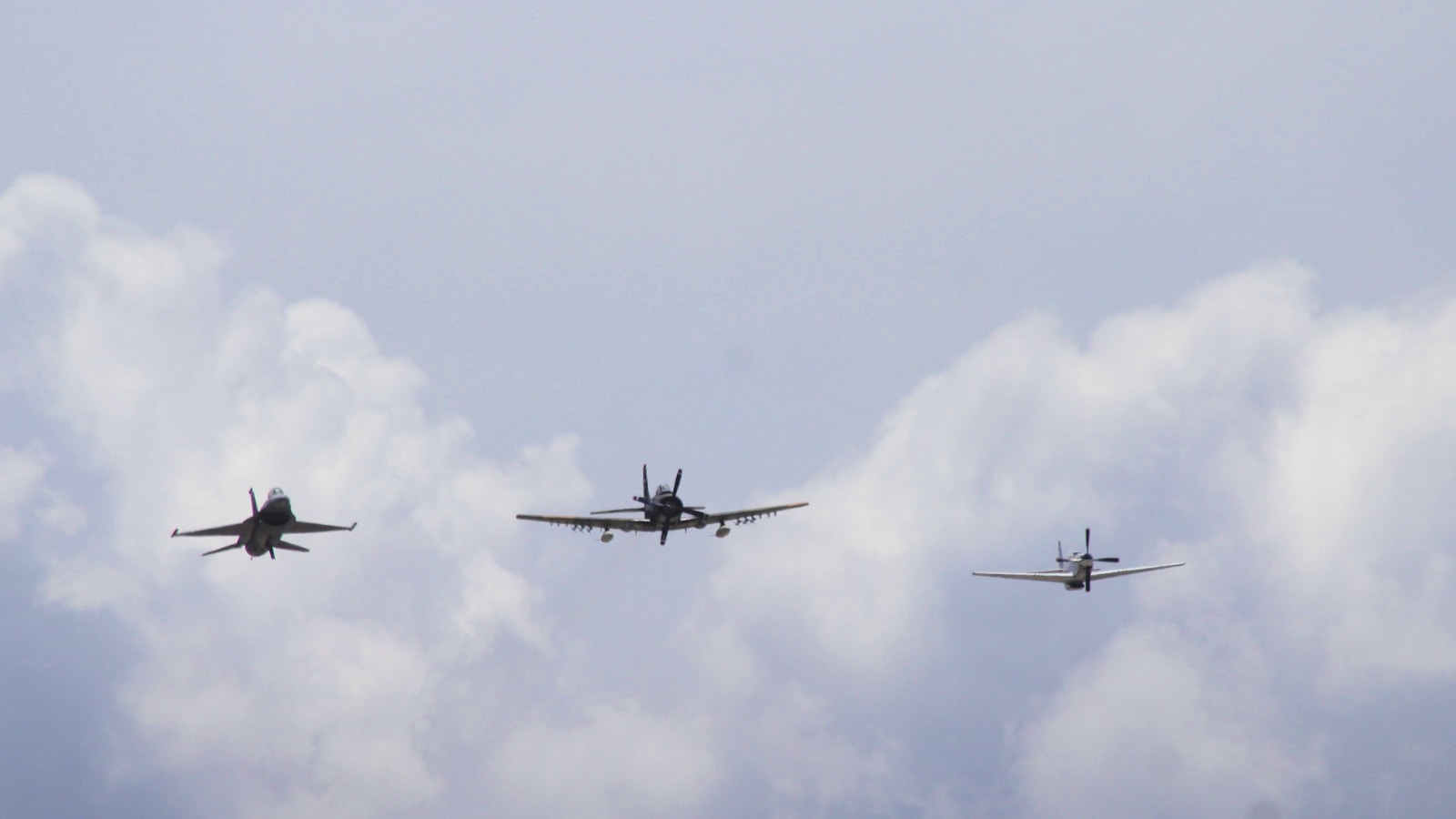
As military aviation enthusiasts and historians alike seek to preserve the legacy of air warfare, eight iconic warplanes have transitioned from active service to prominent museum centerpieces. This transformation is significant as it allows future generations to learn about the technological advancements and historical contexts surrounding these aircraft, which played pivotal roles in major conflicts around the globe.
1. Boeing B-17 Flying Fortress
First flown in 1935, the Boeing B-17 Flying Fortress is one of the most recognized bombers of World War II. Over 12,000 units were produced, and it became a symbol of American air power, conducting daylight bombing raids over Europe. Today, several B-17s are displayed in museums such as the National Museum of the United States Air Force in Dayton, Ohio, where visitors can appreciate its robust design and hear stories of its courageous missions.
2. Lockheed SR-71 Blackbird
The Lockheed SR-71 Blackbird, introduced in 1966, is renowned for its incredible speed and altitude capabilities. Capable of flying at speeds exceeding 2,200 miles per hour, the SR-71 was a reconnaissance aircraft that provided invaluable intelligence during the Cold War. Now retired, it can be seen at museums like the Steven F. Udvar-Hazy Center in Virginia, where it stands as a testament to Cold War aviation technology.
3. McDonnell Douglas F-4 Phantom II
The McDonnell Douglas F-4 Phantom II, a twin-engine fighter-bomber, was first introduced in 1960 and saw extensive action during the Vietnam War. With over 5,000 units manufactured, the F-4 became a versatile platform used by multiple branches of the military. Today, it is featured in various museums, including the National Museum of the U.S. Air Force, allowing visitors to explore its storied history and technological significance.
4. North American P-51 Mustang
Recognized as one of the best fighter aircraft of World War II, the North American P-51 Mustang was first introduced in 1940. With its distinctive design and exceptional range, the Mustang played a crucial role in escorting bombers over Europe. Several restored P-51s are on display in museums such as the Fighter Factory in Virginia, where aviation history enthusiasts can admire its engineering and performance.
5. Boeing 747-100
While primarily known as a commercial airliner, the Boeing 747-100 also served as a military transport aircraft. Introduced in 1970, it became the first “jumbo jet” and transformed air travel. The 747-100 is an important part of aviation history and is featured in several aviation museums, including the Museum of Flight in Seattle, where it highlights the intersection of commercial and military aviation.
6. Grumman F-14 Tomcat
The Grumman F-14 Tomcat, known for its variable-sweep wing design, was introduced in 1974 and served as a naval fighter until its retirement in 2006. It gained fame for its role in the Gulf War and its appearances in popular culture, notably the film “Top Gun.” Today, several F-14s are preserved in museums across the United States, such as the National Naval Aviation Museum in Florida, where visitors can learn about its operational history and technological innovations.
7. Lockheed Martin F-22 Raptor
The Lockheed Martin F-22 Raptor, which entered service in 2005, is considered one of the most advanced stealth fighters in the world. With its combination of speed, agility, and advanced avionics, it represents the pinnacle of modern military aviation. Although still operational, some F-22s are displayed at museums like the National Museum of the United States Air Force, enabling visitors to see firsthand the future of air combat technology.
8. Concorde
The Concorde, while not a warplane per se, was a significant technological achievement in aviation history. Introduced in 1976, it was a turbojet-powered supersonic passenger airliner that operated until 2003. Concorde is prominently displayed at the Intrepid Sea, Air & Space Museum in New York City, where it serves as a reminder of the era of supersonic flight and its implications for both civilian and military aviation.