

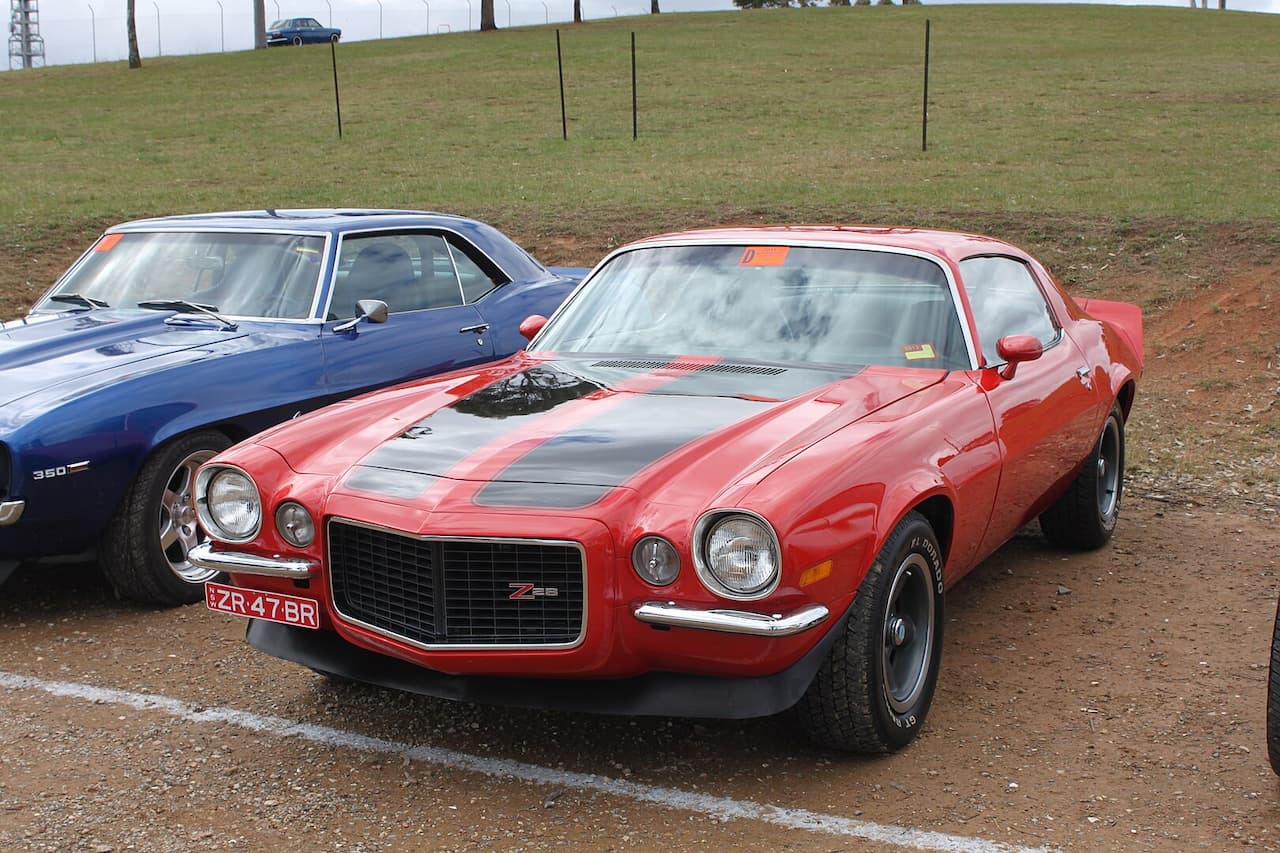
In the realm of American automotive history, the muscle car is a revered symbol of power and performance, yet numerous models never received the muscle car designation despite their capabilities. This distinction affects car enthusiasts, collectors, and casual drivers alike, as the market often overlooks these hidden gems that could have thrived in the muscle car segment. Below, we explore 9 cars that possess the attributes of a muscle car but never carried the badge.
1. Chevrolet Camaro Z28 (1982–1992)
The Z28 variant of the Chevrolet Camaro is often overshadowed by its more powerful siblings. While it was equipped with a 5.0-liter V8 engine producing 190 horsepower, the Z28’s performance could easily rival many muscle cars of its time. Despite its capabilities, it was marketed more as a sporty coupe rather than a true muscle car, which limited its recognition in the muscle car community.
2. Ford Thunderbird (1955–1966)
The Ford Thunderbird started as a response to the Chevrolet Corvette but quickly evolved into a personal luxury car. With engines ranging from a 292 cubic inch V8 to a 428 cubic inch V8, the Thunderbird had the muscle, but its identity leaned towards luxury rather than raw power. As a result, it missed the muscle car classification despite its strong performance metrics.
3. Dodge Charger (1975–1979)
Though the Dodge Charger is known for its muscle car legacy, the mid-1970s versions fell short of that reputation. During this period, the Charger was equipped with smaller engines, including a 318 cubic inch V8, which produced only 150 horsepower. The shift in focus towards fuel efficiency and safety regulations led to the Charger being seen more as a family car rather than a muscle machine.
4. Pontiac Firebird (2000–2002)
The final generation of the Pontiac Firebird, produced from 2000 to 2002, came equipped with a powerful 5.7-liter LS1 V8 engine that generated 305 horsepower. However, by the early 2000s, the muscle car era was waning, and the Firebird was not marketed as a muscle car. Instead, it was categorized as a sports car, which contributed to its eventual discontinuation.
5. Nissan 370Z (2009–2020)
The Nissan 370Z has often been viewed as a sports car, but its performance specs suggest it could fit the muscle category. With a 3.7-liter V6 engine producing 332 horsepower, the 370Z offers impressive acceleration and handling. Despite these numbers, Nissan never positioned the 370Z as a muscle car, opting instead for a more refined sports car image.
6. Toyota Supra (1993–2002)
The Toyota Supra, particularly the fourth generation (A80), is renowned for its tuning potential and performance capabilities. With a turbocharged inline-six engine capable of pushing 276 horsepower, the Supra could easily compete with its muscle-car counterparts. However, Toyota marketed it primarily as a sports car, which diluted its image as a muscle vehicle.
7. Chevrolet Impala SS (1994–1996)
The Chevrolet Impala SS returned in the mid-1990s with a 5.7-liter LT1 V8 engine that produced 260 horsepower. While it had the muscle to back its name, it was branded as a full-size sedan rather than a muscle car. The Impala SS was a blend of performance and practicality, which ultimately prevented it from being classified in the muscle car category.
8. Mercury Marauder (2003–2004)
The Mercury Marauder reintroduced the classic nameplate with a 4.6-liter DOHC V8 engine generating 302 horsepower. Despite its muscle-like performance, the Marauder was aimed at a more mature audience and marketed as a full-size sedan. This strategic decision limited its appeal as a muscle car, even though its specifications could compete with the best.
9. Subaru WRX STI (2004–2021)
The Subaru WRX STI has gained a reputation for its rally-inspired performance, featuring a 2.5-liter turbocharged engine producing 305 horsepower. While it excels in handling and acceleration, it has always been classified as a compact sports car. The lack of a traditional American V8 engine kept it from being embraced as a muscle car, despite its impressive capabilities.