

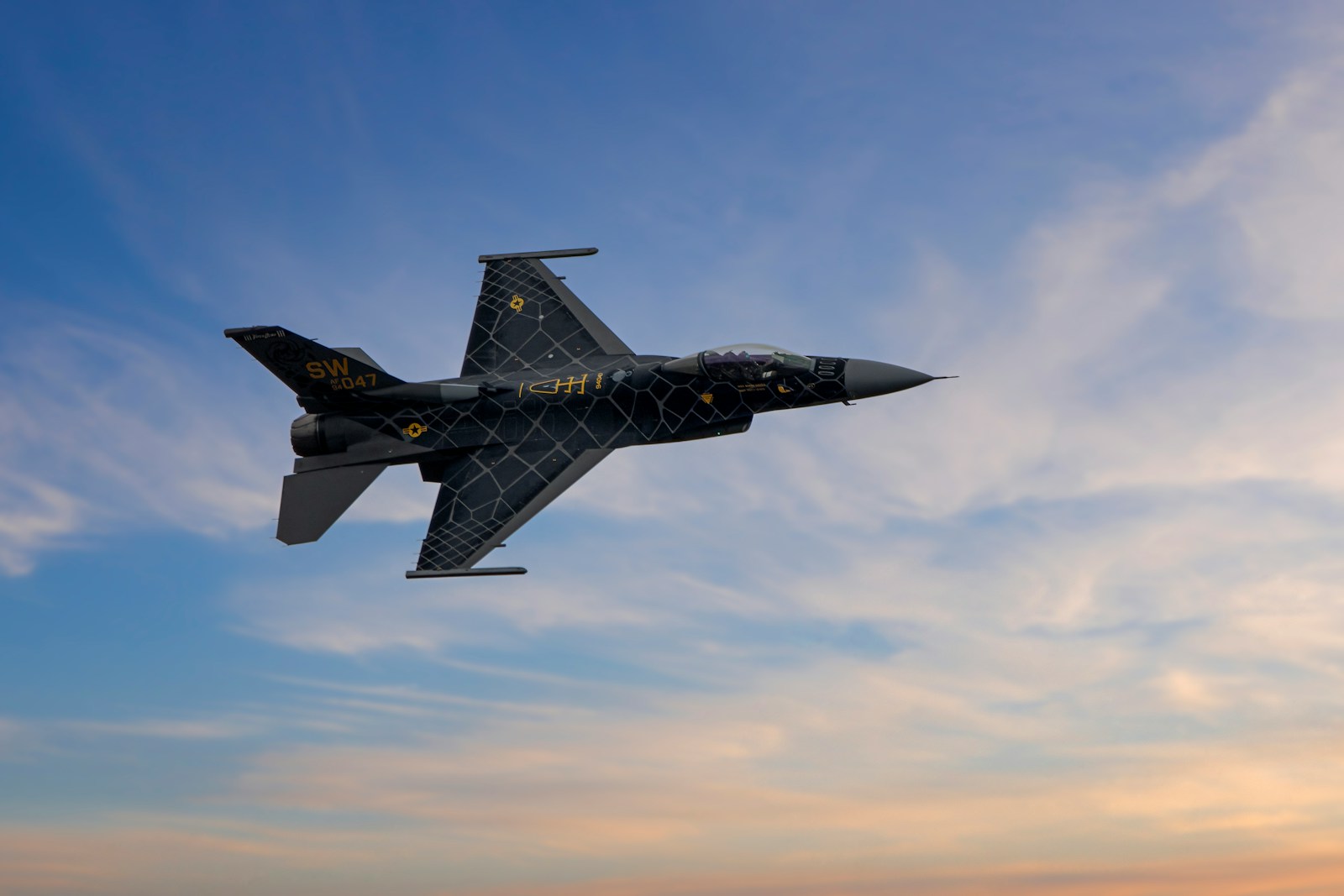
The evolution of military aviation has been significantly shaped by various fighter jets that introduced revolutionary technologies and strategies, impacting air combat and national defense. From the early days of World War I to present-day conflicts, these aircraft have redefined aerial warfare, influencing tactics and international relations. Understanding these jets not only highlights their historical importance but also underscores the ongoing advancements in military technology.
1. Sopwith Camel (1917)
The Sopwith Camel, introduced in 1917 during World War I, was one of the most effective fighter aircraft of its time. With its unique design and agile performance, it achieved 1,294 aerial victories, making it a formidable foe against German aircraft. The Camel’s success helped establish the importance of air superiority in modern warfare, paving the way for future fighter designs.
2. Supermarine Spitfire (1936)
Debuting in 1936, the Supermarine Spitfire became a symbol of British resistance during World War II. Its innovative elliptical wings and powerful Rolls-Royce Merlin engine gave it exceptional speed and maneuverability, allowing it to compete effectively against the German Luftwaffe. The Spitfire played a crucial role in the Battle of Britain, where it helped secure British skies, demonstrating the importance of advanced aerodynamics in fighter design.
3. North American P-51 Mustang (1940)
The P-51 Mustang, introduced in 1940, revolutionized long-range fighter operations. It boasted a top speed of 437 mph and a combat radius of over 1,000 miles, allowing it to escort bombers deep into enemy territory. The Mustang’s success in World War II not only contributed to the Allies’ victory but also set a new standard for future fighter aircraft, emphasizing the need for range and performance.
4. McDonnell Douglas F-4 Phantom II (1960)
The F-4 Phantom II, first flown in 1960, was a game-changer in air-to-air and air-to-ground combat. With its twin-engine design and ability to carry a wide array of weapons, it became the backbone of U.S. air power during the Vietnam War. The F-4’s versatility and effectiveness led to over 5,000 units being produced, influencing the design of multi-role fighter jets for decades to come.
5. Lockheed SR-71 Blackbird (1966)
Introduced in 1966, the Lockheed SR-71 Blackbird redefined reconnaissance capabilities with its unmatched speed and altitude, reaching over 2,200 mph at 85,000 feet. This stealth aircraft was instrumental during the Cold War, gathering intelligence without being intercepted. The SR-71’s innovative design and technology have inspired numerous advancements in stealth and high-speed flight.
6. Boeing F/A-18 Hornet (1978)
The F/A-18 Hornet, which entered service in 1978, marked a significant advancement in multi-role capabilities. This aircraft can perform both air-to-air combat and ground-attack missions, making it a versatile asset for the U.S. Navy and Marine Corps. With over 1,500 units built, the Hornet has been a key player in various conflicts, showcasing the shift towards multi-role fighter designs in modern militaries.
7. Lockheed Martin F-22 Raptor (2005)
The F-22 Raptor, introduced in 2005, is recognized as one of the most advanced stealth air superiority fighters in the world. Incorporating fifth-generation technology, the Raptor features supercruise capability, advanced avionics, and a stealthy design that renders it nearly invisible to radar. With a production run of only 187 units, its high cost and technological advancements have set a benchmark for future military aircraft.
8. Eurofighter Typhoon (2003)
The Eurofighter Typhoon, first entering service in 2003, is a collaborative project among four European nations. This multi-role fighter combines agility with advanced avionics, making it highly effective in both air-to-air and air-to-ground missions. With over 600 units produced, the Typhoon represents a significant step in European defense cooperation, demonstrating the importance of multinational development in modern military aviation.
9. Lockheed Martin F-35 Lightning II (2015)
The F-35 Lightning II, which began entering service in 2015, is a family of stealth multirole fighters designed to perform a variety of missions. Its advanced sensors and networking capabilities allow for superior situational awareness.