

The legacy of military aviation is underscored by a select group of aircraft that not only served their nations but also left an indelible mark on global culture, innovation, and warfare. These nine military planes are recognized worldwide, representing advancements in technology and significant historical milestones. Understanding their impact is crucial for appreciating the evolution of air power and its implications for modern warfare and international relations.
1. Boeing B-17 Flying Fortress (1935)
The Boeing B-17 Flying Fortress is one of the most iconic bombers of World War II, known for its durability and strategic bombing capabilities. With over 12,700 units produced, it played a critical role in the Allied bombing campaigns over Europe. Its iconic status was solidified by its appearances in films and literature, symbolizing American resilience during the war.
2. Lockheed SR-71 Blackbird (1966)
Renowned for its speed and altitude capabilities, the Lockheed SR-71 Blackbird was a reconnaissance aircraft that could fly at over 2,200 miles per hour. This aircraft served from 1966 to 1998 and remains the fastest air-breathing manned aircraft in history. Its advanced technology and role in intelligence gathering during the Cold War cemented its place in aviation history.
3. McDonnell Douglas F-4 Phantom II (1960)
With over 5,000 units produced, the McDonnell Douglas F-4 Phantom II became a versatile fighter-bomber that saw extensive service during the Vietnam War. Its ability to engage air-to-air and air-to-ground combat made it a favorite among pilots. The F-4’s widespread use in various conflicts and its role in shaping air combat tactics have made it an enduring symbol of military aviation.
4. Northrop Grumman B-2 Spirit (1989)
The B-2 Spirit, commonly known as the stealth bomber, revolutionized aerial warfare with its low observable technology. Designed to penetrate dense anti-aircraft defenses, the B-2 can carry both conventional and nuclear payloads. Its first operational deployment occurred during the Kosovo War in 1999, showcasing its capabilities in a real-world scenario and establishing its reputation as a game-changer in military aviation.
5. Lockheed Martin F-22 Raptor (2005)
The F-22 Raptor, introduced in 2005, is considered one of the most advanced fighter jets in the world, featuring stealth, supercruise, and advanced avionics. With a production run of 187 units, its role as an air superiority fighter has been pivotal in U.S. military strategy. The F-22’s capabilities represent the cutting edge of military aviation technology and have influenced the development of future aircraft.
6. Boeing CH-47 Chinook (1962)
The Boeing CH-47 Chinook is a twin-rotor heavy-lift helicopter that has been in service since 1962, with over 1,200 units produced. Its versatility in transporting troops, equipment, and supplies has made it a crucial asset in various military operations around the world. The Chinook’s design has evolved over the decades, but its iconic silhouette remains a constant in modern aerial logistics.
7. Lockheed C-130 Hercules (1956)
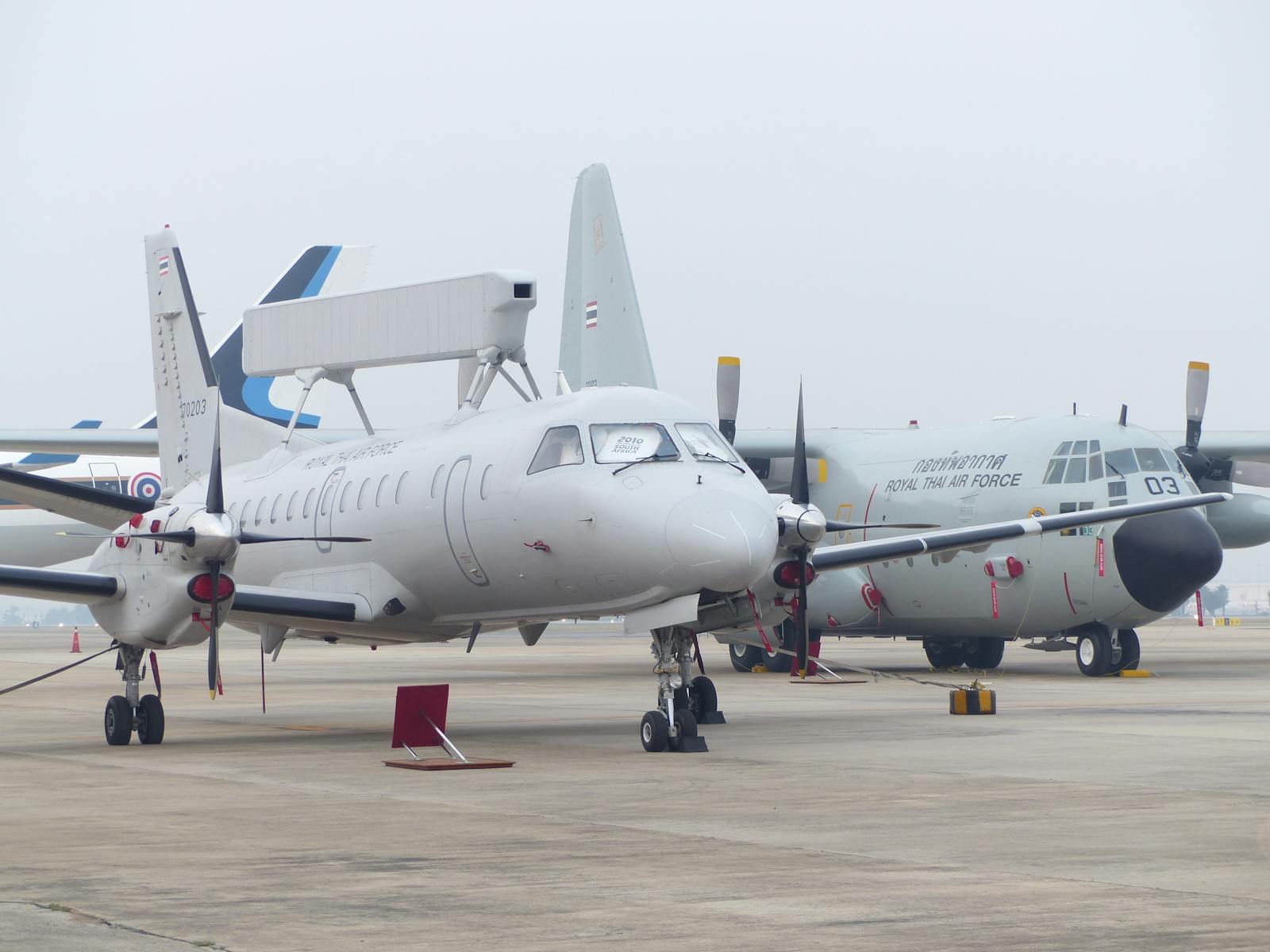
The Lockheed C-130 Hercules is a military transport aircraft that has been in service for over six decades, with more than 2,500 units built. Its ability to operate from short and unpaved airstrips has made it invaluable for logistical support in diverse environments. The C-130 is not just a workhorse for military operations; it has also been adapted for humanitarian missions, reinforcing its iconic status.
8. Dassault Mirage III (1961)
The Dassault Mirage III, first flown in 1956, was a pioneer in the realm of supersonic fighters and played a significant role in several conflicts, including the Six-Day War in 1967. Its distinctive delta wing design and impressive performance made it a favorite among air forces worldwide. The Mirage III’s influence extends beyond its operational history, as it inspired future generations of fighter aircraft.
9. Sukhoi Su-27 (1977)
The Sukhoi Su-27 is a Russian air superiority fighter that first entered service in 1985. With a production run of over 1,000 units, it has been widely exported and adapted into numerous variants. Its agility, range, and combat capabilities have established it as a formidable opponent in aerial warfare.