

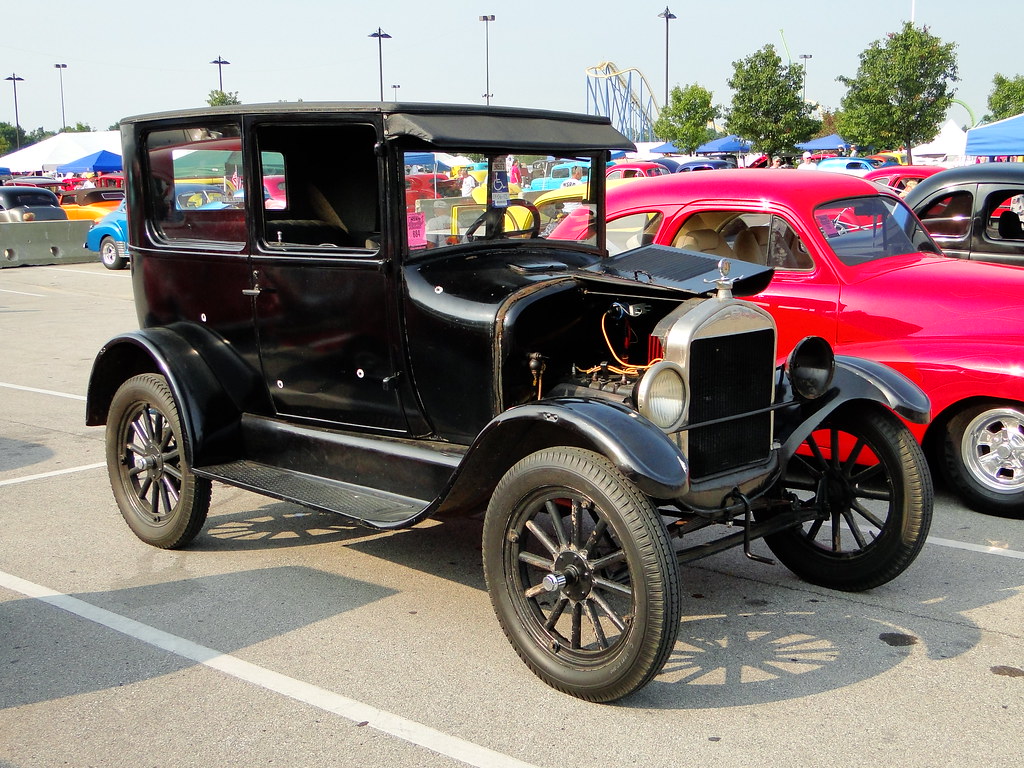
The automotive industry has seen countless innovations and iconic models over the years, but a select few have managed to stand out as the greatest cars ever made. These vehicles are not only celebrated for their design and performance but also for their lasting impact on car culture and technology. This article explores five of these legendary cars, highlighting their significance and why they remain relevant today.
1. Ford Model T (1908)
The Ford Model T, produced from 1908 to 1927, is often regarded as the vehicle that put America on wheels. With over 15 million units sold, it was the first mass-produced car that made automobile travel accessible to the average person. Its affordability and reliability transformed the transportation landscape, contributing to the rise of suburban America and the expansion of the road infrastructure.
The Model T’s introduction of assembly line production revolutionized manufacturing processes across industries. Its success not only laid the foundation for the modern automotive industry but also symbolized the American dream of mobility and independence.
2. Volkswagen Beetle (1938)
Launched in 1938, the Volkswagen Beetle is one of the most recognizable cars in history, with over 21 million units sold worldwide. Designed by Ferdinand Porsche at the request of Adolf Hitler, the Beetle aimed to provide affordable transportation for the masses. Its distinctive shape and robust construction made it a favorite among consumers, especially during the 1960s when it became a symbol of counterculture and freedom.
The Beetle’s impact extends beyond sales figures; it shaped the automotive design language and is credited with influencing future compact cars. Its longevity and continued popularity have made it a cultural icon in various media, from films to music, demonstrating its lasting legacy.
3. Ferrari 250 GTO (1962–1964)
Among car enthusiasts, the Ferrari 250 GTO is often hailed as the pinnacle of automotive engineering and design. Produced between 1962 and 1964, only 39 units of this model were made, making it one of the rarest and most sought-after cars in the world. In 2018, a Ferrari 250 GTO sold for a staggering $48.4 million at auction, highlighting its extraordinary value and status in the collector market.
The 250 GTO was not just a pretty face; it was a formidable racing car, dominating competitions like the FIA World Sports Car Championship. Its combination of aesthetics, performance, and rarity has cemented its place in automotive history as a dream car for collectors and enthusiasts alike.
4. Porsche 911 (1964–present)
Since its debut in 1964, the Porsche 911 has remained a benchmark for sports cars, with over 1 million units produced as of 2021. Renowned for its distinctive design and rear-engine layout, the 911 has evolved over the decades while maintaining its core identity. It’s celebrated for its precision engineering, offering an exhilarating driving experience that appeals to both casual drivers and professional racers.
The 911 has also made an impact in motorsports, securing numerous victories in various racing events. Its blend of performance, luxury, and practicality has allowed it to remain relevant in a rapidly changing automotive landscape, making it a staple in the sports car segment for nearly six decades.
5. Tesla Model S (2012–present)
Launched in 2012, the Tesla Model S has played a pivotal role in popularizing electric vehicles (EVs) worldwide. With an impressive range of over 370 miles on a single charge, the Model S combines luxury with sustainability, redefining what consumers expect from electric cars. As of 2023, Tesla has sold more than 1 million Model S units, showcasing its widespread acceptance and influence on the automotive market.
The Model S has also accelerated the global shift towards electric mobility, prompting traditional automakers to invest heavily in EV technology. Its success has not only changed consumer perceptions of electric cars but has also sparked discussions about the future of transportation, energy efficiency, and environmental responsibility.
The Legacy of Automotive Innovation
The five cars highlighted in this article showcase the evolution of the automotive industry, each contributing in unique ways to its history. From the mass production revolution initiated by the Ford Model T to the electric vehicle revolution led by the Tesla Model S, these vehicles have shaped driving experiences and consumer expectations.
Understanding the significance of these cars is essential for anyone interested in automotive history and technology. As the industry continues to innovate, the legacy of these iconic models serves as a reminder of the creativity and engineering prowess that drives the automotive world forward.</