

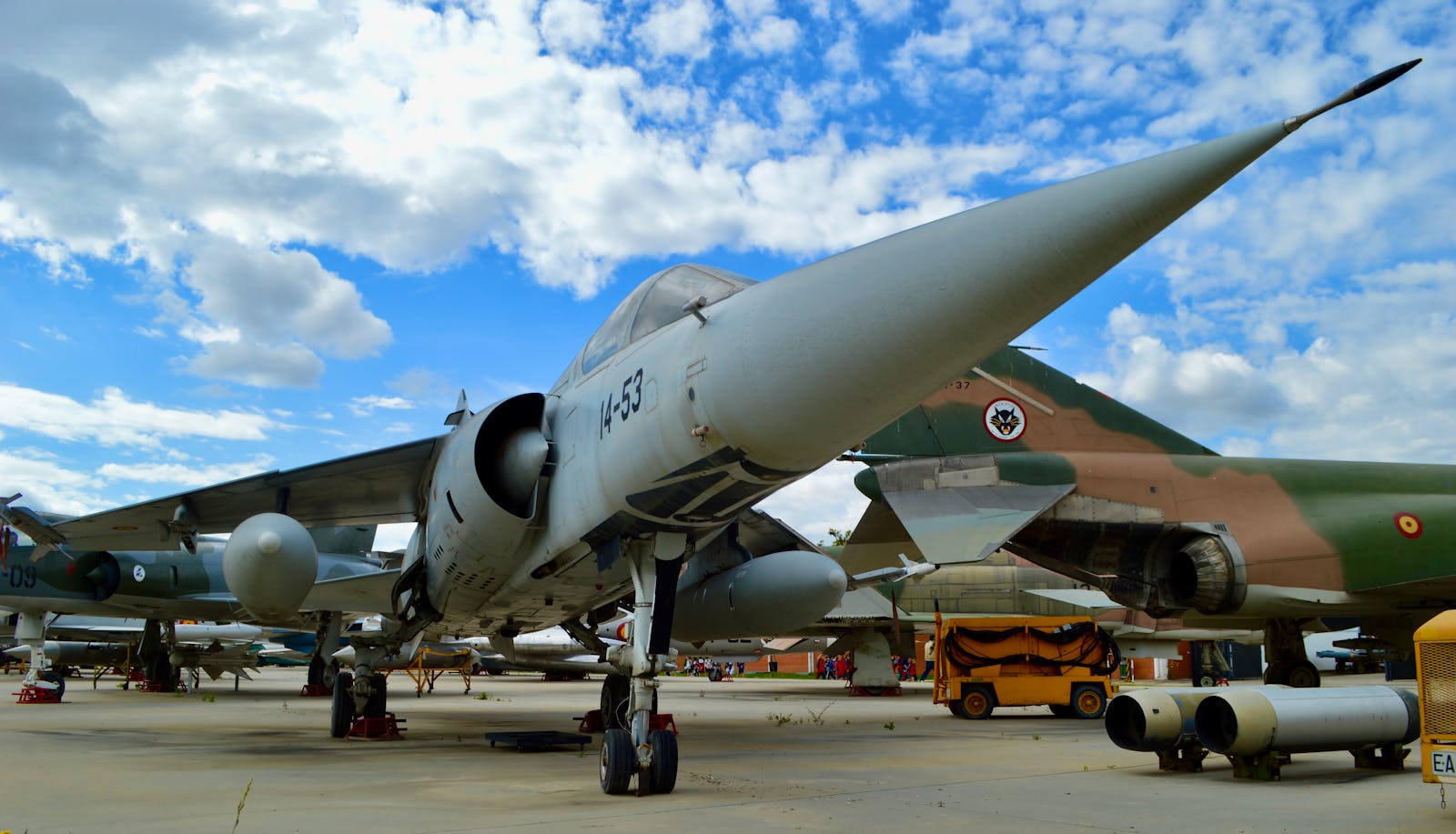
Several military aircraft have demonstrated remarkable longevity in service, with some models flying for decades while adapting to changing combat environments. This enduring presence affects military readiness and modernization, showcasing the balance between legacy systems and new technological advancements. Here, we explore eight warplanes with the longest service records, highlighting their histories and contributions to military operations.
1. Boeing B-52 Stratofortress (1955 – Present)
The B-52 Stratofortress has been a cornerstone of the U.S. Air Force since its introduction in 1955. Originally designed as a long-range bomber, this aircraft has undergone numerous upgrades to remain relevant in modern warfare. Currently, the B-52 is expected to remain in service until at least 2030, marking an impressive operational lifespan of over 75 years.
2. Lockheed C-130 Hercules (1956 – Present)
Introduced in 1956, the Lockheed C-130 Hercules has established itself as one of the most versatile military transport aircraft in history. It has been utilized in various roles, from troop transport to aerial refueling and humanitarian missions. As of 2023, the C-130 is still in active service with over 70 air forces worldwide, solidifying its position with a service record of more than 67 years.
3. McDonnell Douglas F-15 Eagle (1976 – Present)
The F-15 Eagle, first entering service in 1976, has proven itself as a dominant air superiority fighter. Known for its speed and agility, the F-15 has undergone several upgrades and variants, including the F-15EX, which began deliveries in 2021. With over 45 years of service, the F-15 continues to be a key asset for the U.S. Air Force and several allied nations.
4. Northrop F-5 Freedom Fighter (1962 – Present)
Since its introduction in 1962, the Northrop F-5 Freedom Fighter has been a reliable and cost-effective combat aircraft. It has been widely exported and used by various nations for decades. The F-5 remains operational in several air forces, with some variants still being upgraded, marking its service record at over 60 years.
5. Lockheed Martin F-16 Fighting Falcon (1978 – Present)
The F-16 Fighting Falcon has been in service since 1978 and is one of the most widely used fighter aircraft globally. Known for its versatility and affordability, the F-16 has seen continuous upgrades, ensuring its relevance in modern air combat. As of 2023, it boasts a service record of 45 years and is still actively produced, with many countries relying on it for air defense and ground attack missions.
6. Boeing KC-135 Stratotanker (1957 – Present)
The KC-135 Stratotanker has been refueling military aircraft since 1957, significantly extending the range of U.S. Air Force operations. Its design has not changed substantially, reflecting its successful capabilities. With over 65 years in service, the KC-135 is undergoing modernization to continue supporting aerial operations well into the future.
7. Douglas A-4 Skyhawk (1956 – Present)
The Douglas A-4 Skyhawk, first flown in 1956, has served in various roles, including as a fighter-bomber and attack aircraft. Although it has been retired from the U.S. Navy, many countries still operate the A-4, and it remains notable for its agility and simplicity. Its service record extends beyond 67 years, showcasing its enduring legacy.
8. Lockheed P-3 Orion (1962 – Present)
The P-3 Orion, introduced in 1962, has been a critical asset in anti-submarine warfare and maritime patrol missions. With several nations operating this aircraft, it has undergone numerous upgrades to adapt to modern threats. The P-3’s service record of over 60 years underscores its effectiveness and reliability in various maritime operations.
Conclusion
The longevity of these warplanes illustrates not only their design and engineering excellence but also the evolving needs of military forces worldwide. As conflicts change and technological advancements unfold, these aircraft have adapted to serve critical roles in national defense. With many of these models still in active service, the military relies on their proven capabilities while also seeking to innovate with new technologies.
As military forces around the globe continue to modernize, understanding the historical context and service records of these aircraft is essential.