

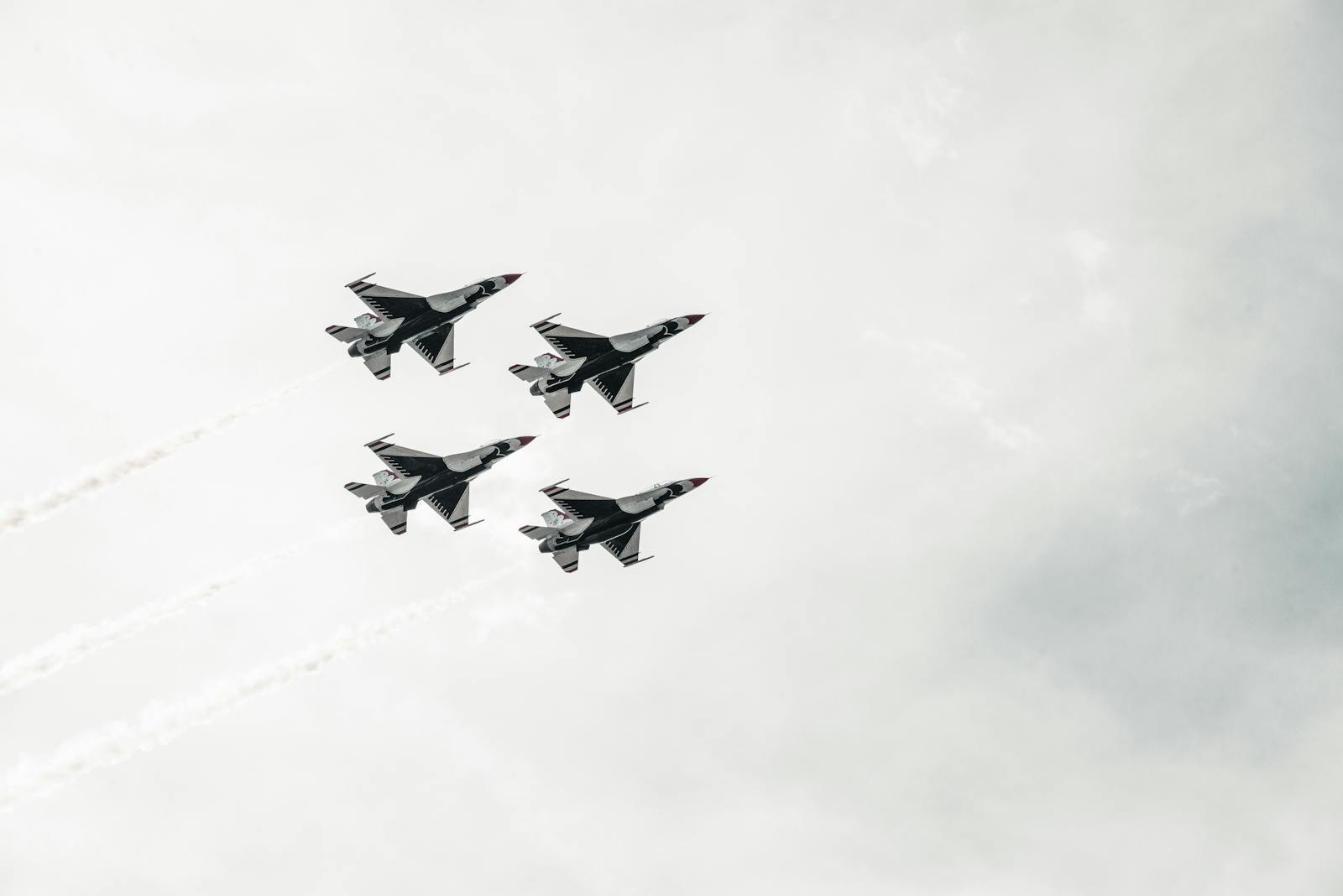
Throughout military history, certain fighter jets have earned legendary status due to their exceptional performance and pivotal roles in warfare. These aircraft not only changed the dynamics of air combat but also influenced military strategies worldwide. Understanding the significance of these jets is crucial for military enthusiasts and defense analysts alike, as they continue to inform current aerospace innovations and tactics.
1. F-15 Eagle (1976)
The McDonnell Douglas F-15 Eagle, introduced in 1976, has become synonymous with air superiority. Designed to counter Soviet threats during the Cold War, the F-15 boasts an impressive air-to-air combat record, with over 100 confirmed kills and zero losses in dogfights. Its advanced avionics and thrust-vectoring capabilities have kept it relevant even decades after its first flight.
2. F-16 Fighting Falcon (1978)
The General Dynamics F-16 Fighting Falcon, entering service in 1978, revolutionized multi-role fighter capabilities. Its lightweight design and versatility allowed it to conduct various missions, from air-to-air combat to ground attack. With over 4,600 units built and operational in more than 25 countries, the F-16 remains a cornerstone of many air forces worldwide.
3. MiG-21 Fishbed (1959)
First flown in 1959, the Mikoyan-Gurevich MiG-21 Fishbed became one of the most produced supersonic jets in history, with over 11,000 units manufactured. Its simple design, speed, and agility made it a formidable adversary in various conflicts, especially during the Vietnam War. The MiG-21’s legacy continues as it remains in service in several countries, adaptable for modern combat needs.
4. Sukhoi Su-27 (1977)
The Sukhoi Su-27, introduced in 1977, is a Russian fighter jet known for its long-range capabilities and advanced maneuverability. Its design was a response to the F-15 and has since evolved into various derivatives, including the Su-30 and Su-35. The Su-27’s performance in air-to-air engagements has solidified its reputation, especially during the post-Soviet conflicts in the late 20th century.
5. Boeing F/A-18 Hornet (1983)
The Boeing F/A-18 Hornet, which entered service in 1983, has served as a vital asset for the U.S. Navy and Marine Corps. This versatile aircraft is capable of both fighter and attack missions, making it indispensable in modern naval warfare. With over 1,400 units produced and active in various international forces, the Hornet has showcased its effectiveness in numerous military operations, including the Gulf War and ongoing conflicts in the Middle East.
6. Lockheed Martin F-22 Raptor (2005)
Launched in 2005, the Lockheed Martin F-22 Raptor represents the pinnacle of stealth technology and air dominance. With a production limit of 187 operational units, its advanced systems allow for unparalleled situational awareness and combat capabilities. The Raptor’s deployment has redefined air combat strategies, particularly in terms of engaging adversaries before they can even detect its presence.
7. Lockheed Martin F-35 Lightning II (2015)
The F-35 Lightning II, operational since 2015, is a fifth-generation multi-role stealth fighter designed to meet the needs of various branches of the U.S. military and allied nations. With a projected production of over 3,000 units, the F-35 incorporates cutting-edge technology, including advanced sensors and data-sharing capabilities. It has already seen combat in several operations, illustrating its role in modern warfare.
Impact on Military Strategy and Future Developments
The legacy of these fighter jets extends far beyond their specifications and individual combat records. They have shaped military strategies, dictated procurement policies, and influenced the development of new aircraft. With advancements in technology, such as artificial intelligence and drone warfare, the role of fighter jets will continue to evolve, but the foundational lessons learned from these legendary aircraft remain relevant.
Conclusion: The Ongoing Importance of Fighter Jets
The realm of fighter jets is not merely about machines; it encompasses the broader implications for national security and military readiness. As geopolitical tensions rise and technology advances, understanding the capabilities and historical significance of these aircraft is paramount. For those interested in military aviation, keeping abreast of developments in this field is more important than ever.