

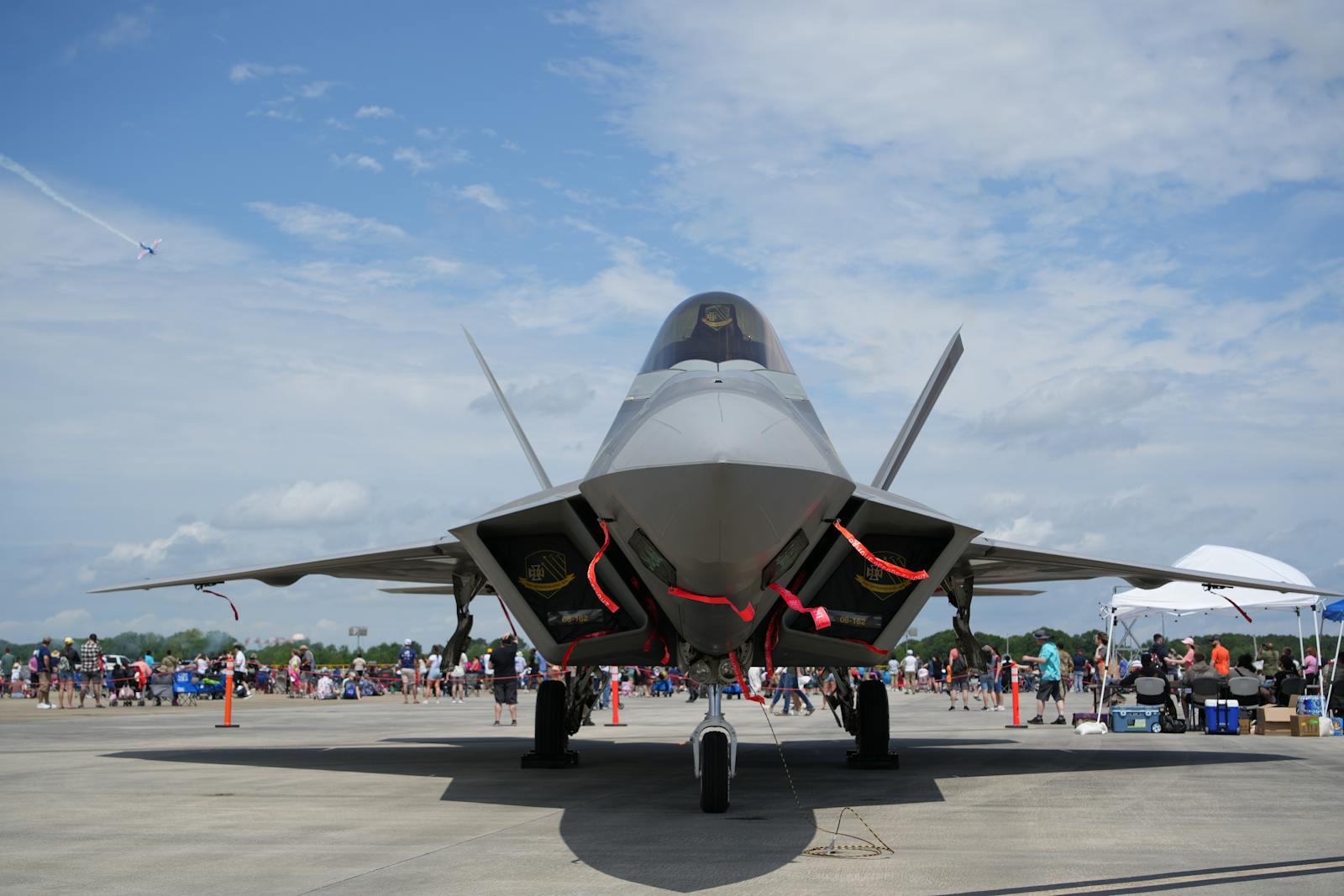
In the world of military aviation, the development of fighter jets often involves a rigorous process that can lead to the creation of groundbreaking aircraft, or in some cases, the cancellation of projects that never make it past the prototype stage. This article examines seven notable fighter prototypes that, despite extensive investment and innovation, ultimately failed to reach production. Understanding these aircraft sheds light on the challenges and complexities of modern military technology, as well as the strategic implications for armed forces worldwide.
1. Northrop YF-23 Black Widow II (1990s)
The Northrop YF-23 Black Widow II was developed as part of the United States Air Force’s Advanced Tactical Fighter program in the early 1990s. With its stealthy design and advanced avionics, the YF-23 was a strong contender against the Lockheed Martin YF-22. However, the program was discontinued in 1996 after only two prototypes were built, as the YF-22 was selected for further development, leading to the F-22 Raptor. The decision cost Northrop and its partners millions in research and development expenses.
2. Boeing X-32 (2000)
The Boeing X-32 was another contender in the Joint Strike Fighter (JSF) program, aimed at creating a versatile aircraft for multiple branches of the U.S. military. First flown in 2000, the X-32 faced criticism for its unconventional design and performance issues. Ultimately, the program culminated in the selection of Lockheed Martin’s F-35 Lightning II, leading to the cancellation of the X-32 project after only two prototypes were produced. The shift demonstrated the competitive nature of defense contracting and the high stakes involved.
3. McDonnell Douglas F-15SE Silent Eagle (2010)
The F-15SE Silent Eagle was an advanced version of the well-known F-15 fighter jet, introduced in 2010 as a stealthy alternative for nations seeking modern capabilities. Despite its promising features, including conformal fuel tanks and reduced radar cross-section, the project struggled to find international buyers and was eventually shelved. The prototype never transitioned to full production, highlighting the challenges of balancing innovation with market demand in military aviation.
4. Lockheed Martin X-44 MANTA (1990s)
The Lockheed Martin X-44 MANTA (Multi-Axis No-Tail Aircraft) was an experimental aircraft designed to demonstrate advanced technologies, including a tailless design for improved aerodynamics. Developed in the late 1990s, the prototype showed potential for enhanced maneuverability. However, the project was ultimately abandoned due to budget constraints and shifting military priorities, with only a concept model ever realized. The cancellation reflected the often fickle nature of defense funding and technological feasibility.
5. Saab JAS 39 Gripen NG (2000s)
While the original Saab JAS 39 Gripen entered service in the late 1990s, the Gripen NG was an advanced variant intended to enhance capabilities significantly. The prototype was unveiled in the late 2000s, showcasing improved avionics and engine performance. However, it faced stiff competition from other modern fighters and was deemed too costly for many potential buyers, leading to its discontinuation. The Gripen NG serves as a cautionary tale about the risks associated with next-generation developments in a competitive global market.
6. Dassault Mirage 4000 (1970s)
The Dassault Mirage 4000 was a French prototype developed in the late 1970s, showcasing advanced features like twin-engine design and delta wings. Though it captured attention for its innovative technology, the project was ultimately abandoned due to high development costs and a lack of export interest. Only two prototypes were built before the Mirage 4000 was shelved, illustrating the difficulties faced by countries attempting to compete against established aerospace giants.
7. Bell Boeing V-22 Osprey (1990s)
The Bell Boeing V-22 Osprey is a tiltrotor aircraft that has become known for its versatility. However, the early prototypes faced numerous technical challenges and safety issues, leading to a lengthy development period. Despite these setbacks, the Osprey eventually entered service, but not without a substantial investment of resources. The challenges faced during its prototype stages highlight the complexity and risks associated with pioneering new aviation technologies.