

The aviation industry has a long history of innovation, and certain aircraft have transcended their utilitarian purpose to become symbols of technological achievement, design excellence, and cultural significance. This article highlights six iconic airplanes that have left an indelible mark on aviation and should be recognized by everyone, regardless of their familiarity with the industry.
The Wright Flyer (1903)
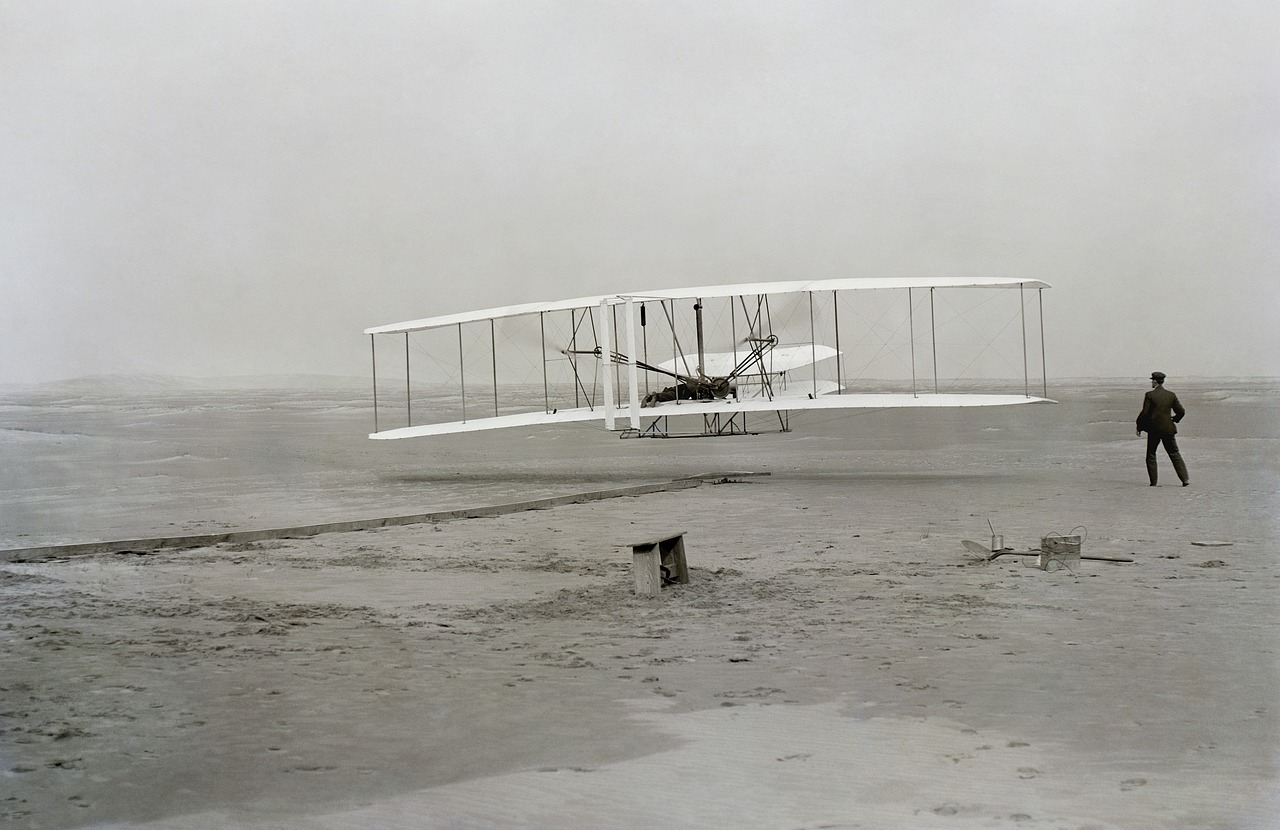
The Wright Flyer, designed and built by Orville and Wilbur Wright, is celebrated as the first successful powered aircraft. On December 17, 1903, it made its inaugural flight at Kitty Hawk, North Carolina, covering just 120 feet in 12 seconds. This feat marked the birth of modern aviation and paved the way for the development of more advanced aircraft. The Wright Flyer’s significance lies not only in its engineering but also in its role in inspiring generations of inventors and aviation enthusiasts.
Douglas DC-3 (1935)
The Douglas DC-3 is one of the most important aircraft in aviation history, revolutionizing commercial air travel in the 1930s. With a capacity of up to 32 passengers, it introduced the concept of air travel as an accessible mode of transportation for the general public. The DC-3’s reliability and performance made it a favorite among airlines, and with over 16,000 units produced, it played a vital role during World War II as a military transport aircraft. Even today, many DC-3s remain operational, serving as a testament to its enduring legacy.
Boeing 707 (1958)
Launched in 1958, the Boeing 707 was the first commercially successful jet airliner, fundamentally changing the landscape of international travel. With its capacity for over 200 passengers and a cruising speed of 600 miles per hour, the 707 enabled airlines to connect distant cities like never before. Its introduction marked the beginning of the jet age, making air travel faster, more comfortable, and more affordable. The Boeing 707 has since influenced the design of countless other commercial jets, solidifying its place in aviation history.
Concorde (1969)
The Concorde, a turbojet-powered supersonic passenger airliner, was developed in a joint venture between the United Kingdom and France. First entering service in 1976, the Concorde could fly at speeds exceeding Mach 2, enabling it to complete transatlantic flights in less than half the time of conventional aircraft. Despite its luxurious service and advanced technology, only 20 Concordes were built, and the aircraft was retired in 2003 due to high operating costs and changing market demands. The Concorde remains a symbol of speed and elegance in aviation, representing a unique chapter in the history of air travel.
Boeing 747 (1970)
Introduced in 1970, the Boeing 747, also known as the “Jumbo Jet,” revolutionized air travel by making it more affordable for the masses. With its distinctive humpbacked fuselage and capacity for up to 660 passengers, the 747 allowed airlines to operate long-haul flights economically. Over 1,500 units have been produced, and it has served various roles, including cargo transport and VIP transport. The 747’s introduction significantly increased the number of people flying around the world, making it an iconic symbol of global connectivity.
Airbus A380 (2005)
The Airbus A380, introduced in 2005, is the world’s largest passenger airliner and represents the pinnacle of commercial aviation design. With a capacity of up to 850 passengers in an all-economy configuration, the A380 was developed to meet the growing demand for air travel in congested air corridors. Its double-deck design and advanced aerodynamics allow for a quieter and more fuel-efficient operation compared to its predecessors. While production of the A380 has slowed, its impact on air travel and its status as a technological marvel cannot be overstated.
Conclusion: Recognize and Appreciate Aviation’s Legacy
From the pioneering Wright Flyer to the modern Airbus A380, each of these iconic airplanes has contributed to the evolution of aviation, influencing how we connect with the world. Understanding the significance of these aircraft not only enriches our knowledge of aviation history but also highlights the incredible advancements made in technology and design over the past century. As air travel continues to evolve, recognizing these monumental achievements is essential for appreciating the industry’s impact on society.
Stay informed about the latest developments in aviation and explore the stories behind these iconic airplanes. Recognize their contributions, and engage with the ongoing conversations about the future of air travel. Your