

Throughout the history of aviation, several airplanes have revolutionized the way we travel, impacting millions of passengers and transforming the industry. These aircraft not only introduced groundbreaking technology but also altered the economics of air travel, making it more accessible. Here, we explore ten airplanes that have left an indelible mark on commercial flight.
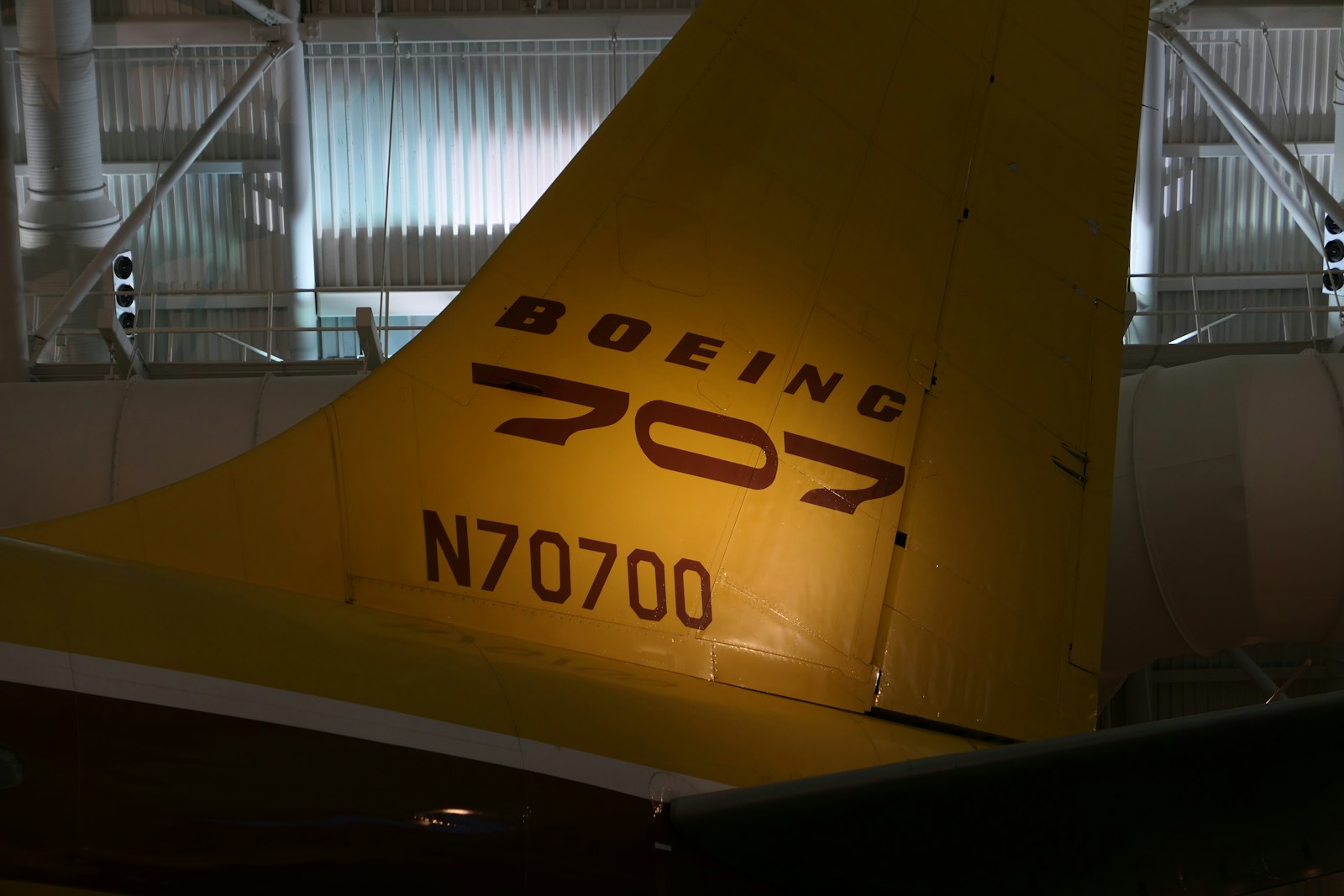
Boeing 707 (1958)
The Boeing 707 is often credited with ushering in the jet age for commercial aviation. First flown in 1954 and entering service in 1958, the 707 was one of the first jetliners to gain widespread popularity, with over 1,000 units sold. It reduced flight times significantly, making international travel feasible for the average person, and set the standard for modern air travel.
Douglas DC-3 (1936)
Introduced in 1936, the Douglas DC-3 changed air travel by providing a reliable and comfortable means of transportation. This aircraft was the first to allow airlines to operate profitably on a large scale, which helped establish commercial aviation as a viable industry. With over 16,000 units built, the DC-3 played a crucial role in shaping air travel in the mid-20th century.
Boeing 747 (1970)
The Boeing 747, famously known as the “Jumbo Jet,” transformed air travel by making it more affordable and accessible. First flown in 1969 and entering service in 1970, the 747 could carry more than 400 passengers, which significantly lowered the cost per seat. With over 1,500 units built, it became a symbol of international travel and helped democratize air transportation.
Airbus A320 (1988)
The Airbus A320, introduced in 1988, was the first commercial aircraft to feature a fully digital fly-by-wire control system. This innovation improved safety and efficiency, allowing airlines to reduce operational costs. The A320 family has since become one of the best-selling commercial aircraft lines, with over 10,000 units delivered, and it played a pivotal role in the rise of low-cost carriers.
Concorde (1969)
The Concorde, which first flew in 1969, was the world’s only supersonic passenger airliner, reaching speeds over twice that of sound. Although it had a limited operational lifespan and was retired in 2003, the Concorde represented the pinnacle of speed and luxury in air travel. Its introduction was a statement of technological prowess, influencing future designs even if it ultimately did not lead to a new era of supersonic travel.
McDonnell Douglas MD-80 (1980)
The McDonnell Douglas MD-80, which entered service in 1980, became one of the most popular narrow-body aircraft of its time. Known for its reliability and efficiency, the MD-80 series helped airlines reduce operating costs while maintaining passenger comfort. Over 1,100 units were produced, and its design influenced future models in the industry.
Boeing 787 Dreamliner (2011)
Launched in 2011, the Boeing 787 Dreamliner introduced advanced materials and systems that improved fuel efficiency by up to 20% compared to similar-sized airplanes. Its composite construction and innovative systems have set new standards in commercial aviation, leading to more sustainable travel. With over 1,500 orders, the Dreamliner has reshaped expectations for long-haul flights.
Airbus A380 (2005)
The Airbus A380, which entered service in 2007, is the world’s largest passenger airliner, capable of carrying more than 800 passengers in a single configuration. This double-decker aircraft was designed to alleviate congestion at busy airports by maximizing capacity. Although production ended in 2021, the A380 changed the dynamics of air travel by allowing airlines to operate high-capacity routes efficiently.
Boeing 737 (1968)
The Boeing 737, first flown in 1967 and introduced in 1968, has become the best-selling commercial jetliner in history, with over 10,000 units delivered. Its versatility and reliability have made it a favorite among airlines for short to medium-haul flights. The 737 family continues to evolve, with the latest MAX series incorporating advanced technology and improved fuel efficiency.
Embraer E-Jet Series (2004)
Launched in 2004, the Embraer E-Jet series has become a staple for regional airlines, bridging the gap