

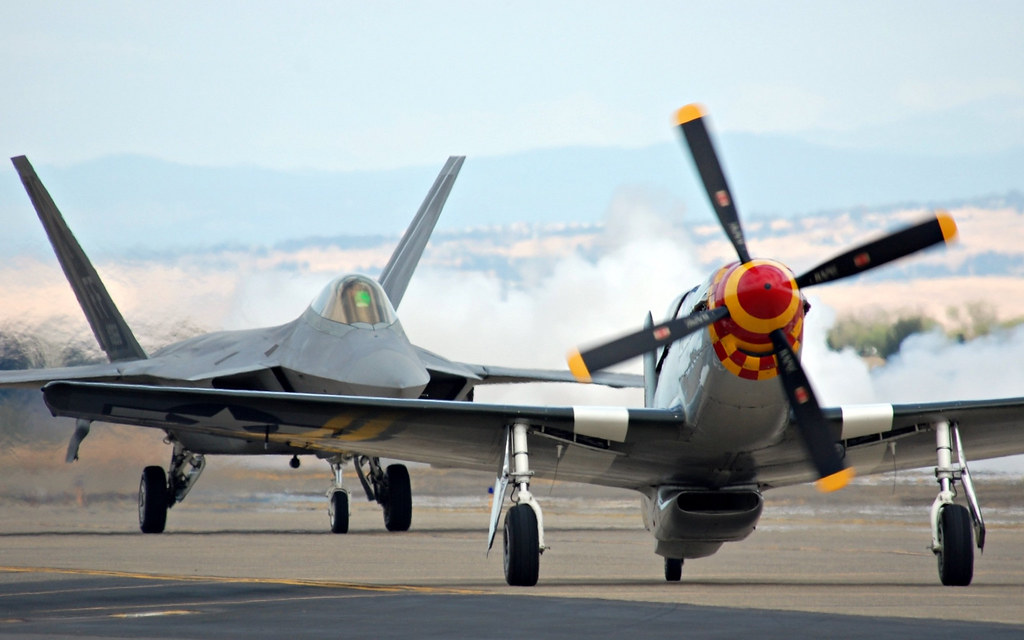
Throughout military aviation history, certain fighter aircraft have achieved legendary status due to their exceptional performance in dogfights. These aircraft not only shaped the outcomes of battles but also influenced the design and tactics of future generations of fighters. Understanding these iconic planes is crucial for military historians and aviation enthusiasts alike, as they represent significant advancements in aerial combat technology.
1. Supermarine Spitfire (1936–1948)
The Supermarine Spitfire is perhaps the most recognized fighter of World War II, known for its pivotal role in the Battle of Britain. Featuring a top speed of 362 mph and a service ceiling of 34,000 feet, the Spitfire helped defend the United Kingdom against the Luftwaffe. Its elliptical wings provided exceptional agility, making it a formidable opponent in dogfights. With over 20,000 units produced, the Spitfire remains a symbol of British resilience and engineering excellence.
2. North American P-51 Mustang (1940–1984)
The P-51 Mustang transformed aerial combat during World War II, boasting a cruising speed of 360 mph and an impressive range of 1,000 miles. It served as a long-range escort fighter for bombers, significantly reducing losses during raids over Europe. Its combination of speed, firepower, and maneuverability allowed it to dominate the skies against Axis forces. The Mustang’s legacy continues, influencing modern fighter designs and tactics.
3. F-14 Tomcat (1970–2006)
The F-14 Tomcat is renowned for its variable-sweep wing design, allowing it to excel at both high-speed intercepts and low-speed dogfighting. With a maximum speed of 2.34 Mach and an operational ceiling of 50,000 feet, the Tomcat was a game-changer for the U.S. Navy. Its advanced radar and missile systems, including the AIM-54 Phoenix, made it a lethal adversary. The F-14’s role in the Gulf War and its portrayal in popular culture cemented its legendary status among fighter jets.
4. McDonnell Douglas F-15 Eagle (1976–Present)
The F-15 Eagle has an unmatched air combat record, with over 100 confirmed aerial victories and no losses in dogfights. Capable of speeds exceeding 2.5 Mach and a service ceiling of 65,000 feet, the F-15 provides a perfect blend of speed, agility, and firepower. It has been a cornerstone of U.S. air superiority since its introduction, serving in multiple conflicts around the globe. The aircraft’s design has paved the way for future fighters, maintaining its relevance even decades after its debut.
5. Lockheed Martin F-22 Raptor (2005–Present)
The F-22 Raptor represents the pinnacle of fifth-generation fighter technology, featuring stealth capabilities and advanced avionics. With a top speed of around 1,500 mph and an operational range of 1,839 miles, the Raptor is designed to dominate both air-to-air and air-to-ground combat scenarios. Its supercruise capability allows it to fly at supersonic speeds without afterburners, enhancing its efficiency in combat. The F-22 has redefined aerial warfare, showcasing the importance of stealth and situational awareness.
6. Boeing F/A-18 Super Hornet (1995–Present)
The F/A-18 Super Hornet is a multirole fighter that has proven its versatility in various combat operations, from air superiority to ground attack missions. With a maximum speed of 1,190 mph and an operational range of 2,250 miles, the Super Hornet is a staple of the U.S. Navy. It has participated in numerous conflicts, including the wars in Iraq and Afghanistan, demonstrating its effectiveness in both air and maritime environments. The aircraft’s adaptability makes it a key component of modern naval aviation.
7. Sukhoi Su-27 Flanker (1977–Present)
The Sukhoi Su-27 Flanker has earned a reputation as one of the best air superiority fighters in the world. With a maximum speed of 2.35 Mach and an operational range of 1,500 miles, the Su-27 is celebrated for its agility and combat capabilities. Its advanced avionics and weapon systems enable it to engage multiple targets effectively. The Su-27 has been widely exported and remains in service with several air forces, demonstrating its enduring legacy in military aviation.