

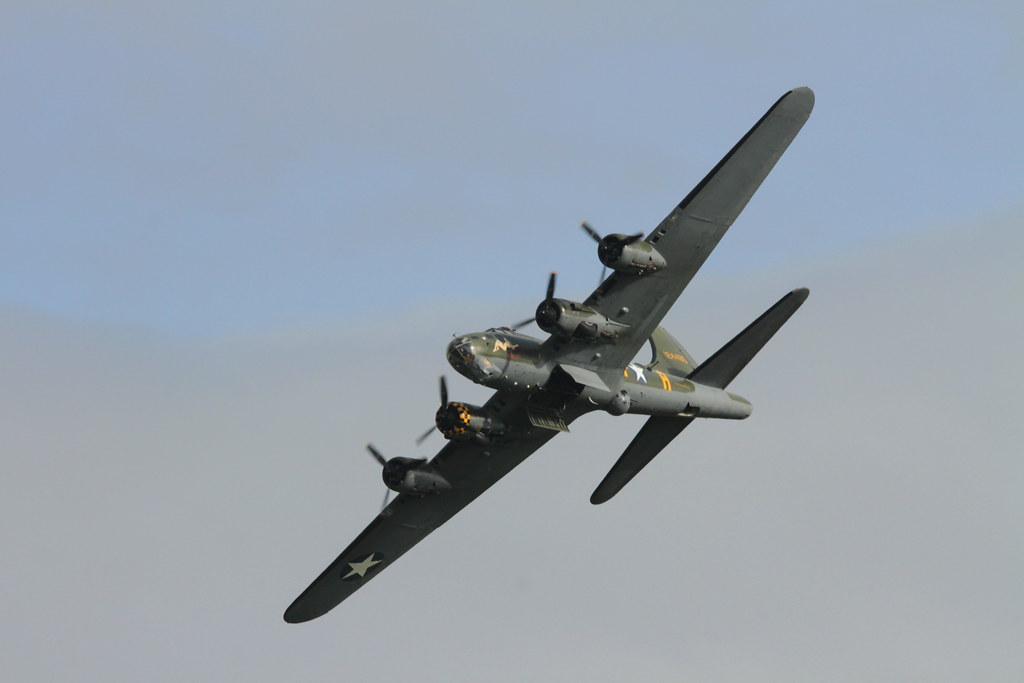
The legacy of historic bombers continues to influence modern aerospace engineering, with designs and technologies from the past shaping the future of aviation. Engineers and aviation enthusiasts alike draw inspiration from these iconic aircraft, which not only played pivotal roles in military history but also introduced innovations that remain relevant today. Understanding these bombers provides insight into engineering advancements and the evolution of flight.
1. Boeing B-17 Flying Fortress (1935)
The Boeing B-17 Flying Fortress is one of the most famous bombers of World War II, known for its durability and ability to sustain heavy damage while still completing missions. With a maximum bomb load of 8,000 pounds, the B-17 played a crucial role in strategic bombing campaigns over Europe. Engineers study its design for lessons in robustness and redundancy, particularly its multiple engines and crew safety features.
2. Avro Lancaster (1941)
The Avro Lancaster was the Royal Air Force’s primary heavy bomber during World War II, capable of carrying up to 22,000 pounds of bombs. Its innovative design included a four-engine layout that provided both power and reliability. Modern engineers admire the Lancaster’s operational range and payload capacity, applying similar principles to contemporary long-range bombers.
3. North American B-25 Mitchell (1940)
The North American B-25 Mitchell is renowned for its versatility and effectiveness in various roles, including medium bombing and ground attack missions. With a top speed of 275 mph and a combat radius of around 1,350 miles, its design incorporates lessons in aerodynamics and maneuverability that engineers apply to current aircraft. The B-25’s successful Doolittle Raid highlighted the potential of bombers in strategic surprise attacks.
4. Lockheed Martin B-2 Spirit (1989)
The B-2 Spirit, also known as the stealth bomber, is a significant leap in aviation technology, utilizing stealth capabilities to evade enemy radar systems. Its unique flying wing design minimizes radar cross-section while maximizing payload capacity, allowing it to carry up to 40,000 pounds of ordnance. Engineers study the B-2 for its advanced materials and design principles that have influenced the development of modern stealth aircraft.
5. Boeing B-29 Superfortress (1942)
The Boeing B-29 Superfortress was a technological marvel of its time, featuring a pressurized cabin and remote-controlled gun turrets. With a range of approximately 3,250 miles and a bomb load of 20,000 pounds, it was instrumental in the Pacific Theater. The B-29’s engineering complexities, including its four Wright R-3350 engines, provide valuable insights into propulsion and performance for today’s aircraft designers.
6. Douglas A-20 Havoc (1938)
The Douglas A-20 Havoc served as a fast attack bomber and night fighter during World War II, known for its speed and adaptability. With a maximum speed of 360 mph, the A-20 was designed for versatility, carrying various bomb loads for different missions. Modern engineers continue to learn from its multi-role capabilities, emphasizing the importance of adaptability in aircraft design.
7. Martin B-26 Marauder (1941)
The Martin B-26 Marauder was a medium bomber that gained a reputation for being challenging to fly, yet it proved to be effective in combat. It featured a unique design that allowed for a bomb load of 4,000 pounds and a top speed of 250 mph, making it a formidable presence in the skies. Its design elements related to speed and payload efficiency are still relevant in discussions about optimizing modern bomber performance.
8. Handley Page Victor (1952)
The Handley Page Victor was one of the three V-bombers of the British Cold War era, notable for its distinctive delta wing design. It could carry nuclear payloads and had a maximum range of around 3,400 miles, showcasing advancements in aerodynamics and fuel efficiency. The Victor’s engineering principles are a point of reference for contemporary designs focusing on range and stealth attributes.
Conclusion: Learning from the Past
The historic bombers listed above not only shaped military aviation but also laid the groundwork for innovations that continue to influence aerospace engineering today. From the B-17’s resilience to the stealth technology of the B-2, these aircraft serve as case studies for modern engineers aiming to enhance performance, safety, and adaptability in flight. As engineering challenges evolve, revisiting the lessons learned from these iconic bombers will be crucial in developing the next generation of aircraft.
<p