

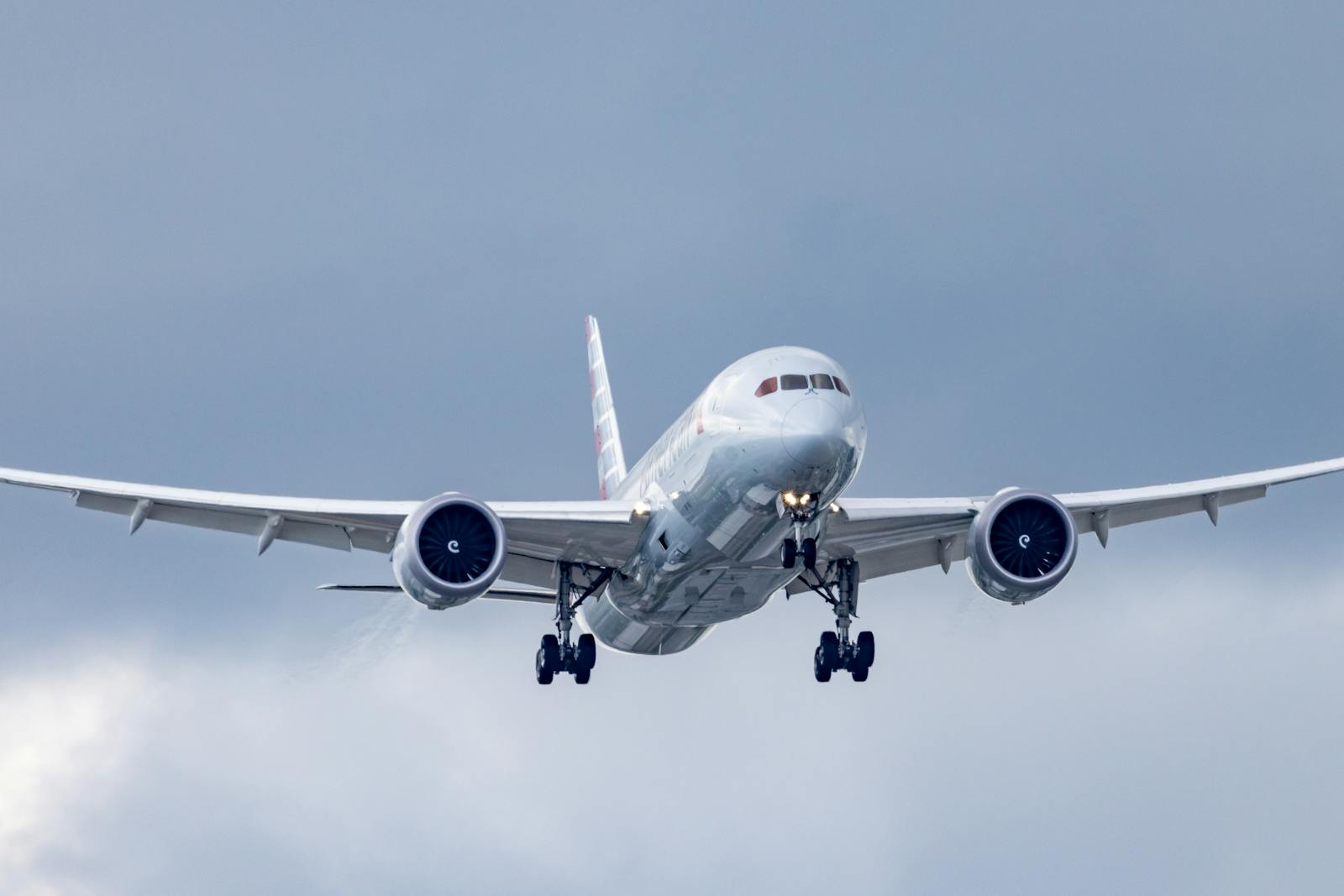
The aviation industry has continually evolved, influenced by technological advancements and changing consumer demands. This article explores eight airliners that have set design standards, shaping the future of air travel and impacting airlines and passengers alike. These aircraft have introduced innovations in fuel efficiency, passenger comfort, and operational capabilities, making them pivotal in the history of aviation.
Boeing 707 (First Flight: 1957)
The Boeing 707 is often credited with ushering in the Jet Age, transforming commercial air travel. Its first flight in 1957 marked the beginning of a new era, enabling airlines to operate transcontinental and transoceanic flights with unprecedented speed and efficiency. With a cruising speed of approximately 600 miles per hour and a range of 5,500 miles, the 707 set the benchmark for future jetliners and paved the way for long-haul travel.
Douglas DC-8 (First Flight: 1955)
Following closely behind the 707 was the Douglas DC-8, which made its first flight in 1955. This aircraft introduced a level of comfort and reliability previously unseen in commercial aviation. The DC-8 was also one of the first to offer a turbofan engine, improving fuel efficiency and reducing noise. Over its production run, which lasted until 1972, more than 500 units were built, with many still in service today, showcasing its lasting impact on airliner design.
Boeing 747 (First Flight: 1969)
Often referred to as the “Jumbo Jet,” the Boeing 747 revolutionized air travel upon its introduction in 1969. With its innovative wide-body design, the 747 could carry up to 660 passengers, making it the largest commercial aircraft of its time. The aircraft’s ability to transport large volumes of passengers and cargo helped lower ticket prices and democratize air travel. The 747’s distinctive hump and four-engine configuration remain iconic elements in aviation history.
Airbus A320 (First Flight: 1987)
The Airbus A320, which first took to the skies in 1987, introduced the concept of fly-by-wire technology to commercial aviation. This advancement allowed for more precise control and improved fuel efficiency, setting a new standard for aircraft design. With over 10,000 units sold, the A320 family has become the best-selling aircraft series in history, influencing the design of many subsequent airliners with its single-aisle configuration and modern cockpit layout.
Boeing 777 (First Flight: 1994)
First flying in 1994, the Boeing 777 was the first commercial aircraft designed entirely using computer-aided design (CAD) technology. This innovation enabled engineers to create a more aerodynamically efficient aircraft, which contributed to the 777’s impressive range of over 8,500 miles and capacity for up to 396 passengers. The 777’s advanced engines also provided significant reductions in fuel consumption, setting new benchmarks for efficiency in long-haul travel.
Airbus A380 (First Flight: 2005)
The Airbus A380, which entered service in 2007, is the world’s largest passenger airliner, capable of carrying over 800 passengers in an all-economy configuration. Its double-deck design and spacious cabin layout redefined the flying experience, offering amenities such as onboard lounges and showers in premium classes. The A380’s introduction not only illustrated significant advancements in engineering but also highlighted the growing demand for high-capacity, long-haul flights.
Boeing 787 Dreamliner (First Flight: 2009)
The Boeing 787 Dreamliner, which made its debut in 2009, introduced groundbreaking materials and technologies that revolutionized aircraft design. With a composite fuselage and wings, the Dreamliner is lighter and more fuel-efficient than previous models, achieving up to 20% better fuel economy. Its advanced cabin pressure and humidity levels enhance passenger comfort, making it a desirable choice for long-haul flights. The 787 has become a key player in modern commercial aviation, with over 1,500 orders to date.
Airbus A220 (First Flight: 2016)
The Airbus A220, initially developed by Bombardier as the CSeries, entered service in 2016 and quickly gained attention for its innovative design and efficiency. This aircraft is specifically tailored for the regional market, providing seating for 100 to 150 passengers. The A220’s advanced aerodynamics and Pratt & Whitney engines result in a 20% reduction in fuel consumption compared to older regional jets