

The United States military relies on a fleet of specialized cargo planes to maintain operational readiness and support global missions, with an estimated 1,900 cargo aircraft in service. These planes are essential for transporting troops, equipment, and supplies, ensuring that the military can respond swiftly to various crises. This article highlights seven pivotal cargo planes that play a critical role in sustaining military operations, providing insight into their specifications and contributions.
1. Lockheed C-130 Hercules
The Lockheed C-130 Hercules has been a workhorse for the U.S. military since its introduction in 1956. With over 2,500 units produced, the C-130 is the most widely used military transport aircraft in the world. Its versatility allows it to operate from short or unpaved airstrips, making it invaluable for missions in challenging environments. The C-130 can carry up to 45,000 pounds of cargo and is equipped for aerial refueling, humanitarian missions, and tactical airlift operations.
2. Boeing KC-135 Stratotanker
First entering service in 1957, the Boeing KC-135 Stratotanker has been a cornerstone of U.S. air mobility. This aircraft is primarily used for aerial refueling, allowing fighter jets and bombers to extend their range during missions. The KC-135 can carry 200,000 pounds of fuel and has supported numerous military operations worldwide. With over 800 aircraft produced, its role in maintaining air superiority cannot be overstated.
3. Lockheed Martin C-5M Super Galaxy
The Lockheed Martin C-5M Super Galaxy is one of the largest cargo planes in the U.S. military, capable of carrying oversized cargo that other aircraft cannot accommodate. With a maximum payload of 270,000 pounds, the C-5M can transport military vehicles, helicopters, and large equipment directly to forward operating bases. Its advanced avionics and engines also enhance fuel efficiency, making it a vital asset for long-range logistics.
4. Boeing C-17 Globemaster III
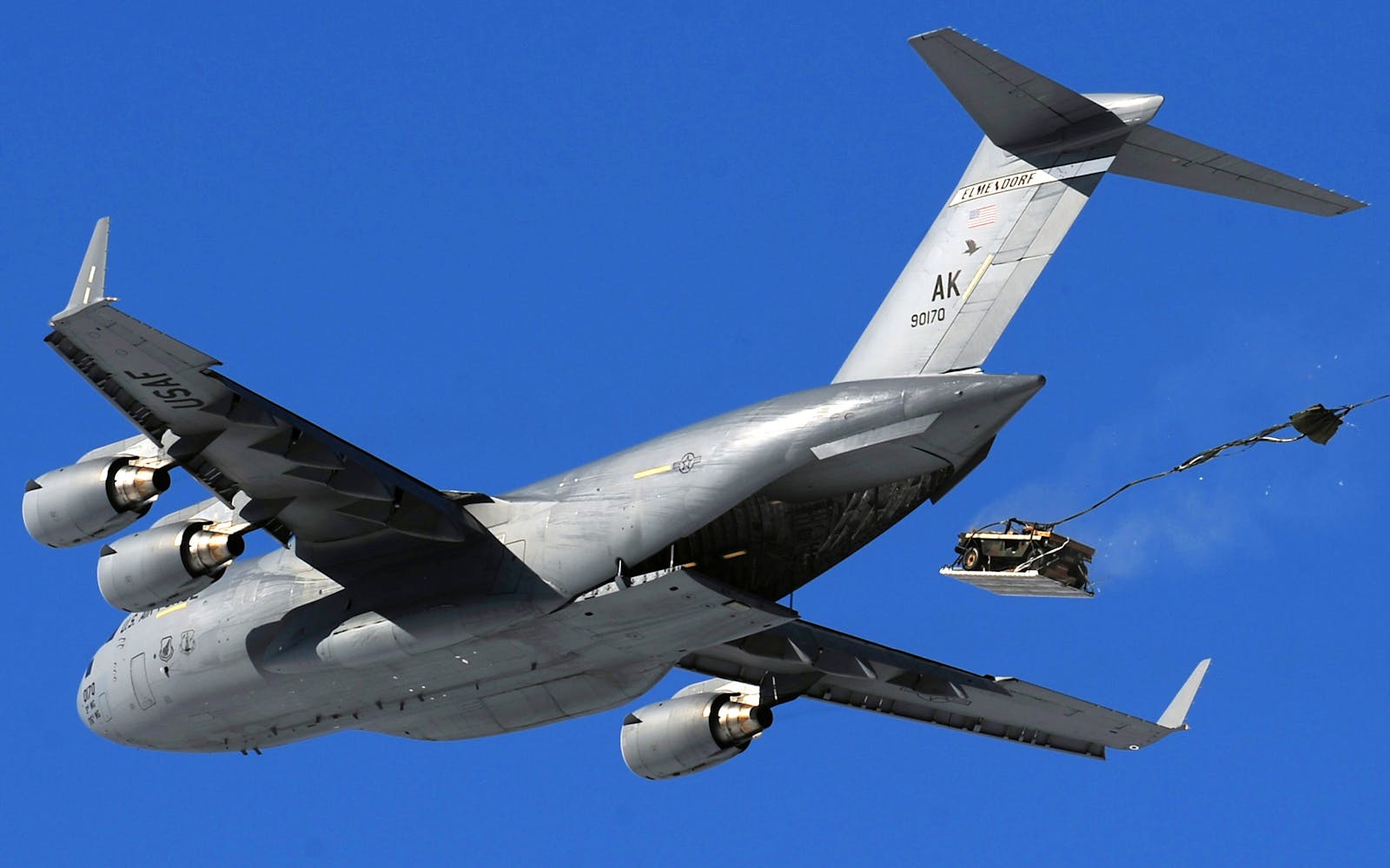
The Boeing C-17 Globemaster III, introduced in 1995, is designed for rapid strategic airlift of troops and cargo to main operating bases or forward operating bases. With a maximum payload capacity of 170,900 pounds, the C-17 can transport large volumes of cargo over long distances. Additionally, its ability to land on short and rough airstrips makes it ideal for operations in austere environments, ensuring timely delivery of essential supplies.
5. Airbus A330 MRTT
The Airbus A330 Multi Role Tanker Transport (MRTT) is a modern addition to military logistics, serving as both a transport and refueling aircraft. With capabilities to carry up to 245,000 pounds of fuel, the A330 MRTT can refuel various aircraft types while simultaneously transporting up to 300 troops or significant cargo loads. Its advanced technology and efficiency make it a critical component in the air forces of several allied nations.
6. Lockheed Martin KC-130J Super Hercules
A derivative of the C-130 Hercules, the KC-130J Super Hercules specializes in aerial refueling for helicopters and tilt-rotor aircraft. This aircraft can also carry cargo and personnel, making it a hybrid asset for the military. Equipped with advanced avionics and the ability to refuel in-flight, the KC-130J supports a wide range of missions, from combat support to humanitarian assistance, and has become a vital tool for U.S. Marine Corps operations.
7. Boeing 747-8F
Though primarily a commercial cargo plane, the Boeing 747-8F has also been utilized by the military for strategic airlift missions. With a maximum payload capacity of 140,000 pounds, this aircraft is capable of transporting large quantities of cargo quickly and efficiently. Its wide body allows for flexible loading of oversized items, making it an asset in times of crisis when rapid deployment of resources is essential.
Conclusion
The United States military’s reliance on these seven cargo planes underscores the importance of logistics in maintaining operational effectiveness. With conflicts and emergencies arising globally, the ability to transport troops and materials swiftly is critical. As military needs evolve, so too will the technology and capabilities of these aircraft, ensuring that the military remains prepared for any situation.