

Military innovation often comes at a steep price, as evidenced by the numerous fighter jets developed over the past few decades. From budget overruns to operational challenges, the pursuit of advanced capabilities has consistently shown that cutting-edge technology can lead to significant economic and operational burdens. These issues affect military budgets, national defense strategies, and the safety of personnel, making it vital for stakeholders to assess the true costs of innovation.
1. F-35 Lightning II (2015–Present)
The F-35 Lightning II, developed by Lockheed Martin, is one of the most advanced stealth fighter jets in the world. However, its development has been plagued by delays and budget overruns, with the total program cost estimated at $1.7 trillion over its lifetime. This figure represents a significant financial burden on the U.S. Department of Defense and allied nations, raising questions about the sustainability of such advanced military programs.
2. Boeing P-8 Poseidon (2013–Present)
The P-8 Poseidon, designed for anti-submarine warfare, has faced its own set of challenges since its introduction. With a price tag of around $300 million per aircraft, the program has experienced software issues and maintenance hurdles that have led to increased operational costs. As the U.S. Navy relies on these jets for critical missions, the expenses associated with their upkeep are a growing concern.
3. Dassault Rafale (2001–Present)
France’s Dassault Rafale has garnered attention for its versatility, but it also comes with a high price. The unit cost of the Rafale is approximately $100 million, and the jet has faced challenges in terms of export success compared to competitors like the F-35. The financial implications of maintaining such an advanced fleet could strain France’s military budget, especially amid economic uncertainties.
4. Eurofighter Typhoon (2003–Present)
The Eurofighter Typhoon, a collaborative project among several European nations, was designed to be a state-of-the-art multi-role fighter jet. However, its projected lifecycle cost has escalated to around $150 billion for 620 aircraft. This staggering figure highlights the ongoing financial implications of developing and operating advanced military technologies, which may divert funds from other critical defense needs.
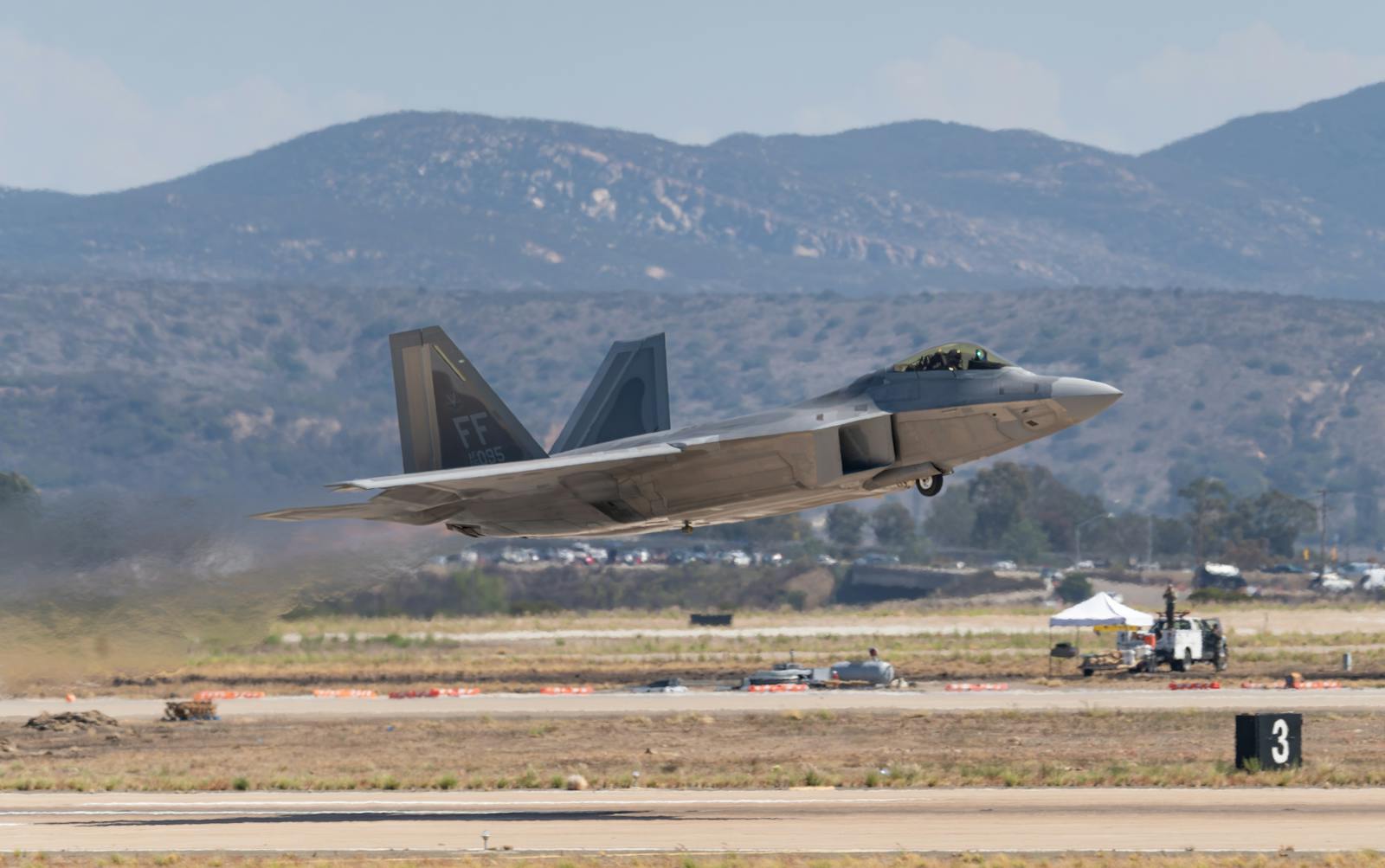
5. Lockheed Martin F-22 Raptor (2005–Present)
The F-22 Raptor, the U.S. Air Force’s premier air superiority fighter, has a unit cost of approximately $150 million. Despite its advanced capabilities, the program was curtailed after only 187 aircraft were produced, leading to concerns about fleet sustainability. The high cost of production and maintenance has limited the Raptor’s operational capacity, especially as adversaries continue to advance their own air capabilities.
6. Northrop Grumman B-2 Spirit (1997–Present)
The B-2 Spirit stealth bomber remains one of the most expensive aircraft ever built, with a unit cost of around $2.1 billion, including research and development. Its advanced technology and capabilities come with ongoing maintenance costs that add pressure to the U.S. Air Force budget. As the military seeks to modernize its fleet, the financial burden of maintaining such expensive platforms continues to be a topic of discussion among lawmakers.
7. Sukhoi Su-57 (2019–Present)
Russia’s Sukhoi Su-57, touted as a fifth-generation fighter, has faced numerous delays and cost overruns, with estimates placing its unit cost at around $40 million. While the aircraft is designed to compete with Western fighters, its development challenges have raised concerns about whether it can be effectively deployed in a conflict scenario. The financial implications for Russia’s defense budget are significant, especially amid ongoing economic pressures.
8. Chengdu J-20 (2017–Present)
China’s Chengdu J-20 stealth fighter represents a significant leap in military aviation technology but at a cost. Although exact figures are not publicly available, estimates suggest that the J-20’s development and production costs could reach several billion dollars, straining China’s military budget. As China continues to expand its air capabilities, the financial implications of such advanced projects must be carefully monitored.
9. McDonnell Douglas F-15E Strike Eagle (1997–Present)
The F-15E Strike Eagle has been a backbone of the U.S. Air Force since the late 1990s, but modernization efforts have led to rising costs. The total lifecycle cost of an F-15E is projected to exceed $30 billion.