

Throughout military history, advancements in bomber technology have significantly altered warfare strategies, impacting nations and their armed forces. Seven bombers stand out for their exceptional capabilities, which not only reshaped military doctrines but also influenced geopolitical landscapes. Understanding these aircraft offers insights into how air power has evolved and its implications for future conflicts.
The Boeing B-17 Flying Fortress (1935)
The B-17 Flying Fortress revolutionized strategic bombing during World War II with its ability to carry heavy payloads over long distances. With a bomb capacity of up to 8,000 pounds, this aircraft could deliver significant damage to enemy infrastructure. The B-17’s durability and defensive armament, including up to 13 .50 caliber machine guns, allowed it to endure enemy fire, making it a critical asset for the U.S. Army Air Forces and a game-changer in aerial warfare.
The North American B-25 Mitchell (1941)
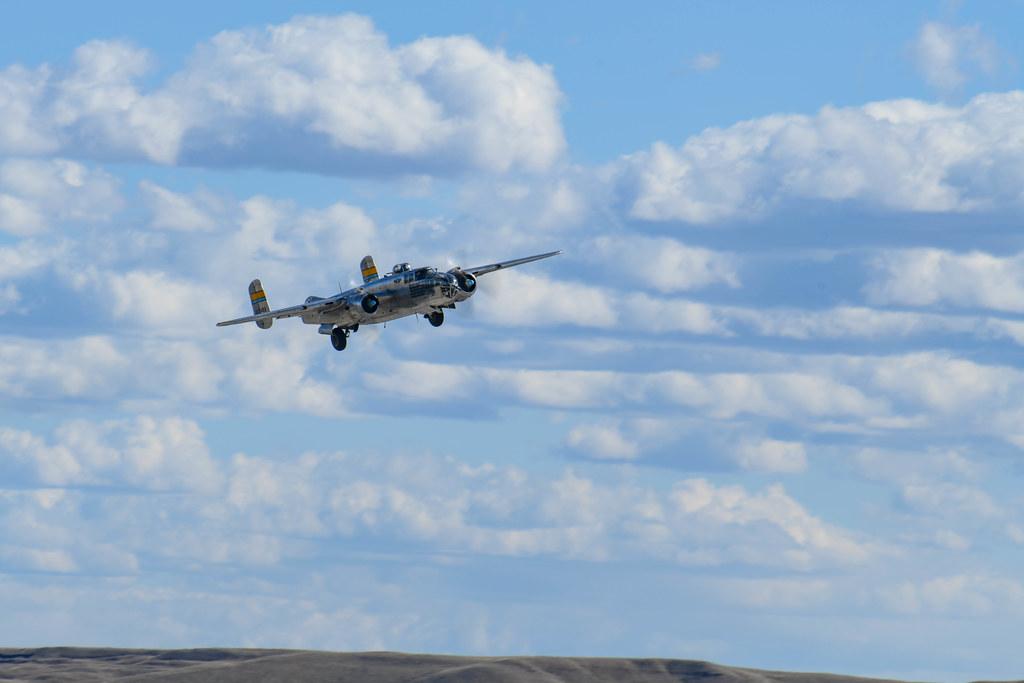
Famed for its role in the Doolittle Raid, the B-25 Mitchell was a versatile bomber that impacted tactics during World War II. With a maximum payload of 3,000 pounds, it was effective in both strategic and tactical bombing missions. The aircraft’s ability to take off from short runways and its adaptability to various combat roles enabled it to support ground troops, thus changing how air power was integrated into military strategy.
The Boeing B-29 Superfortress (1944)
Arguably one of the most advanced bombers of its time, the B-29 Superfortress introduced pressurized cabins and remote-controlled machine gun turrets. Its ability to carry up to 20,000 pounds of bombs over a range of 3,250 miles fundamentally changed strategic bombing operations during the latter part of World War II. The B-29’s deployment in the atomic bombings of Hiroshima and Nagasaki marked a pivotal moment in warfare, demonstrating the destructive potential of air power.
The Lockheed Martin B-2 Spirit (1989)
Entering service at the end of the Cold War, the B-2 Spirit brought stealth technology to the forefront of military strategy. With a radar-evading design, the B-2 can penetrate sophisticated enemy defenses and deliver both conventional and nuclear payloads. Capable of carrying 40,000 pounds of ordnance and flying intercontinental missions, this bomber redefined the concept of strategic bombing, emphasizing precision over sheer volume in warfare.
The Northrop Grumman B-21 Raider (Projected 2027)
Currently under development, the B-21 Raider is designed to be a next-generation stealth bomber that will further shift military strategies. Expected to enter service in 2027, it aims to provide enhanced capabilities for penetrating advanced air defenses. With a focus on networked warfare and adaptability, the B-21 will likely play a crucial role in future military engagements, emphasizing the need for nations to adapt their strategies in response to emerging technologies.
The Tupolev Tu-160 (1981)
The Tupolev Tu-160, known as the “White Swan,” is the largest and heaviest supersonic military aircraft ever built. With a maximum payload of 44,000 pounds and the ability to travel at speeds exceeding Mach 2, this Russian bomber has redefined strategic deterrence. Its variable-geometry wings allow it to operate effectively in various flight profiles, making it a formidable asset in Russia’s military strategy.
The Airbus A400M Atlas (2009)
While primarily a military transport aircraft, the Airbus A400M Atlas has capabilities that can support bomber operations, particularly in logistics and troop movement. With a maximum payload of 37 tons, its ability to operate in austere environments enhances the effectiveness of air power in modern warfare. The A400M’s versatility highlights the evolving role of support aircraft in strategic planning, ensuring that bombers can be deployed effectively wherever needed.
Conclusion: The Ongoing Evolution of Bombers and Military Strategy
The legacy of these seven bombers illustrates how advancements in technology have continually reshaped military strategies. From World War II to the modern era, each aircraft has introduced new capabilities that have influenced tactics and operations. As nations invest in the next generation of bombers, understanding these historical milestones is crucial for anticipating future developments in air power.
As military strategies evolve, it is essential for governments and defense agencies to stay informed about the capabilities of these aircraft. The implications for national security, international relations, and future conflict scenarios are significant. Readers are urged to follow defense news closely, as developments in bomber technology will