

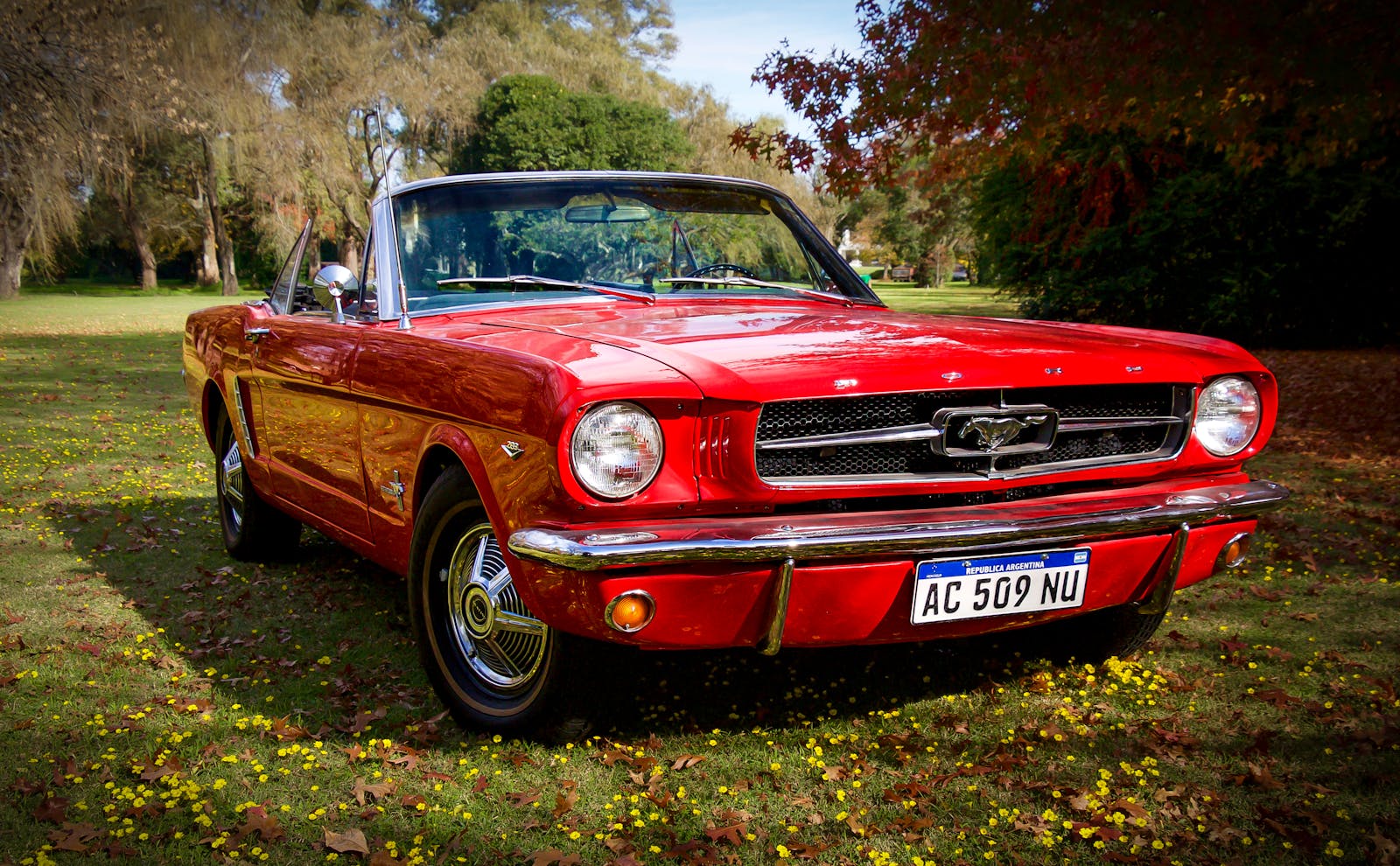
The muscle car era of the 1960s and 1970s was a transformative time in American automotive history, captivating the baby boomer generation with raw power and thrilling speed. As this demographic reached driving age, they were introduced to vehicles that not only represented freedom but also the burgeoning car culture in the United States. With their striking designs and powerful engines, these cars left an indelible mark on an entire generation, influencing car enthusiasts to this day.
1. Ford Mustang (1964½)
Launched in April 1964, the Ford Mustang is often credited as the car that ignited the muscle car craze. With its sporty design and a base price of around $2,368, it was accessible to young drivers eager for excitement. The Mustang offered an array of engine options, from the economical 170-cubic-inch six-cylinder to the ferocious 271-horsepower 289-cubic-inch V8. This combination of affordability and performance made it a symbol of the American dream, leading to over 400,000 units sold in its first year.
2. Chevrolet Camaro (1966)
In response to the Mustang’s success, Chevrolet introduced the Camaro in 1966 as a direct competitor. The first-generation Camaro quickly gained traction among boomers, offering powerful engine choices, including a 396-cubic-inch V8 that produced 375 horsepower. With a starting price around $2,466, the Camaro appealed to those seeking speed and style. Its aggressive design and performance capabilities solidified its place in the muscle car pantheon, with sales reaching over 200,000 in its inaugural year.
3. Dodge Charger (1966)
The Dodge Charger debuted in 1966 and quickly became a favorite among car enthusiasts, particularly due to its sleek design and powerful performance. The first-generation Charger featured an optional 426 Hemi V8 engine that delivered a staggering 425 horsepower, making it a formidable contender on the streets. With a base price of about $3,100, it offered both style and substance, appealing to boomers who desired a blend of luxury and speed. The Charger became iconic, not only as a muscle car but also as a star in pop culture, famously featured in the television series “The Dukes of Hazzard.”
4. Pontiac GTO (1964)
The Pontiac GTO is often regarded as the original muscle car, setting the standard for performance vehicles in the 1960s. Introduced in 1964, the GTO featured a 389-cubic-inch V8 engine that could produce up to 348 horsepower. Priced around $2,500, it offered an exceptional power-to-price ratio that resonated with the baby boomer generation. The GTO’s success played a pivotal role in the muscle car trend, with sales exceeding 32,000 units in its first year, influencing numerous other manufacturers to enter the market.
5. Mercury Cougar (1967)
While often overshadowed by its competitors, the Mercury Cougar carved out its own niche in the muscle car segment. Launched in 1967, the Cougar was marketed as a more upscale version of the Mustang, offering a unique blend of luxury and performance. Equipped with a standard 289-cubic-inch V8 engine, it could be upgraded to a 390-cubic-inch version with 320 horsepower. With a starting price of around $2,800, it appealed to boomers looking for a stylish alternative that still delivered speed and power. The Cougar’s unique features, including hidden headlights and a more refined interior, made it a compelling choice for the discerning driver.
The Lasting Impact of Muscle Cars
The legacy of these muscle cars continues to influence modern automotive design and culture. According to recent data, sales of classic muscle cars have surged in recent years, with values increasing by over 30% since 2016. This resurgence is largely attributed to the nostalgia of baby boomers who grew up idolizing these vehicles, as well as younger generations who appreciate their historical significance. The muscle car era not only shaped the automotive industry but also fostered a sense of community among car enthusiasts, leading to events and shows that celebrate these iconic machines.
Conclusion: Embrace the Legacy
The muscle cars of the 1960s and 1970s represent more than just vehicles; they embody a cultural revolution that forever changed the American landscape. For baby boomers, these cars symbolize a time of freedom, rebellion, and unbridled speed.