

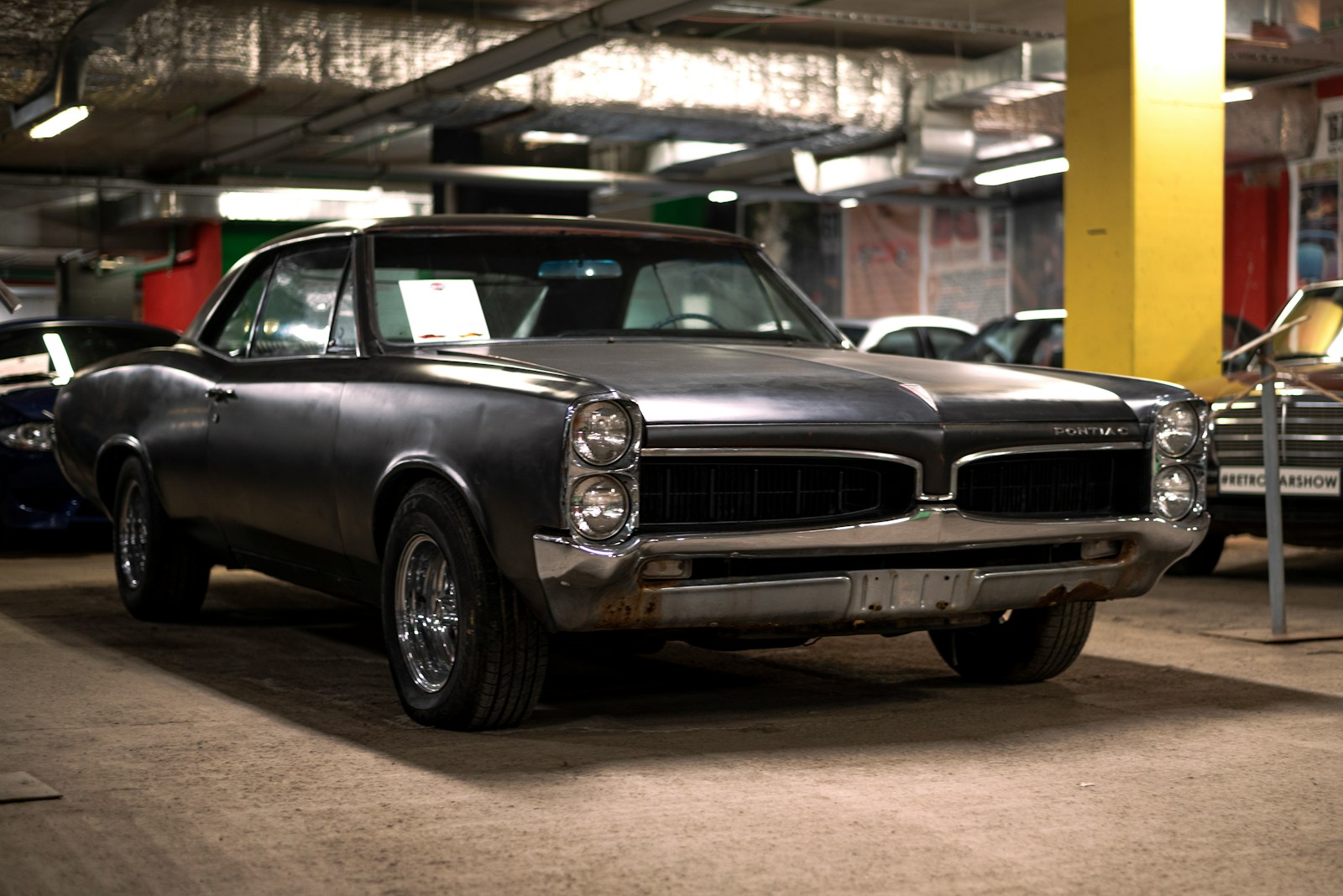
The automotive world often celebrates muscle cars during their production years, but some models gain a cult following only after they are no longer in production. This phenomenon highlights how nostalgia, collector interest, and market demand can resurrect the legacies of vehicles that initially struggled to gain traction. As car enthusiasts and collectors seek to invest in classic American muscle, seven notable models have emerged as posthumous success stories.
1. Pontiac GTO (1964-1974)
The Pontiac GTO is often hailed as the original muscle car, debuting in 1964. Despite its early popularity, sales dwindled as the oil crisis hit in the 1970s, and Pontiac discontinued the model in 1974. However, in recent years, interest has surged, leading auction prices to reach as high as $100,000 for pristine models. The GTO’s status as a classic has cemented its place in automotive history, making it a must-have for collectors.
2. DeLorean DMC-12 (1981-1983)
While not a traditional muscle car, the DeLorean DMC-12 gained widespread fame after its production ended. Initially, the car struggled with poor sales due to its high price and limited performance. However, its iconic appearance in the “Back to the Future” franchise in the mid-1980s catapulted it into pop culture. Today, well-preserved models can fetch upwards of $40,000, making it a favorite among collectors and fans of automotive history.
3. Chevrolet Camaro (1967-2002)
The Chevrolet Camaro was discontinued in 2002 after a production run that began in 1966. For several years, the model was overshadowed by its rivals, including the Ford Mustang. However, collectors’ interest in classic muscle cars surged in the late 2000s, leading to the Camaro’s resurgence in popularity. The return of the Camaro in 2009 has only fueled its legacy, with classic models now selling for over $30,000 at auctions.
4. Dodge Challenger (1970-1974)
Initially introduced in 1970, the Dodge Challenger faced stiff competition from other muscle cars and was discontinued by 1974. For decades, it remained somewhat obscure, but a revival in the mid-2000s reignited interest in the classic model. As a result, original Challengers are now highly sought after, with some rare versions selling for six-figure amounts. The Challenger’s unique blend of style and power has made it a symbol of American automotive culture.
5. Plymouth Barracuda (1964-1974)
The Plymouth Barracuda was one of the first pony cars, competing directly with the Ford Mustang. Despite its innovative design and performance options, the Barracuda struggled to maintain sales and was ultimately discontinued in 1974. In recent years, however, the Barracuda has gained traction among collectors, with some rare models fetching prices as high as $200,000. Its rarity and historical significance have solidified its place in the muscle car hall of fame.
6. Ford Torino (1968-1976)
Although the Ford Torino was popular in the late 1960s and early 1970s, it quickly fell out of favor and ceased production in 1976. The model was overshadowed by other muscle cars and lost its appeal amid changing consumer preferences. Today, however, the Torino has experienced a revival in interest, particularly among fans of classic muscle cars. Auctions have seen pristine Torinos sell for more than $50,000, highlighting its newfound desirability.
7. Buick GSX (1970)
The Buick GSX was a limited production model that debuted in 1970 and was discontinued the same year due to low sales. Despite its powerful engine and performance capabilities, it was often overlooked in favor of other muscle cars. In recent years, the GSX has become a coveted collector’s item, with values skyrocketing to over $100,000 for well-maintained examples. Its rarity and status as a performance icon have contributed to its resurgence in the automotive community.
Conclusion
The stories of these muscle cars illustrate how the passage of time can change public perception and value. Many of these vehicles, once sidelined in the automotive market, now symbolize a golden era of American engineering and muscle car culture. As car enthusiasts continue to seek out classic models, the demand for these once-overlooked vehicles shows no signs of slowing down.