

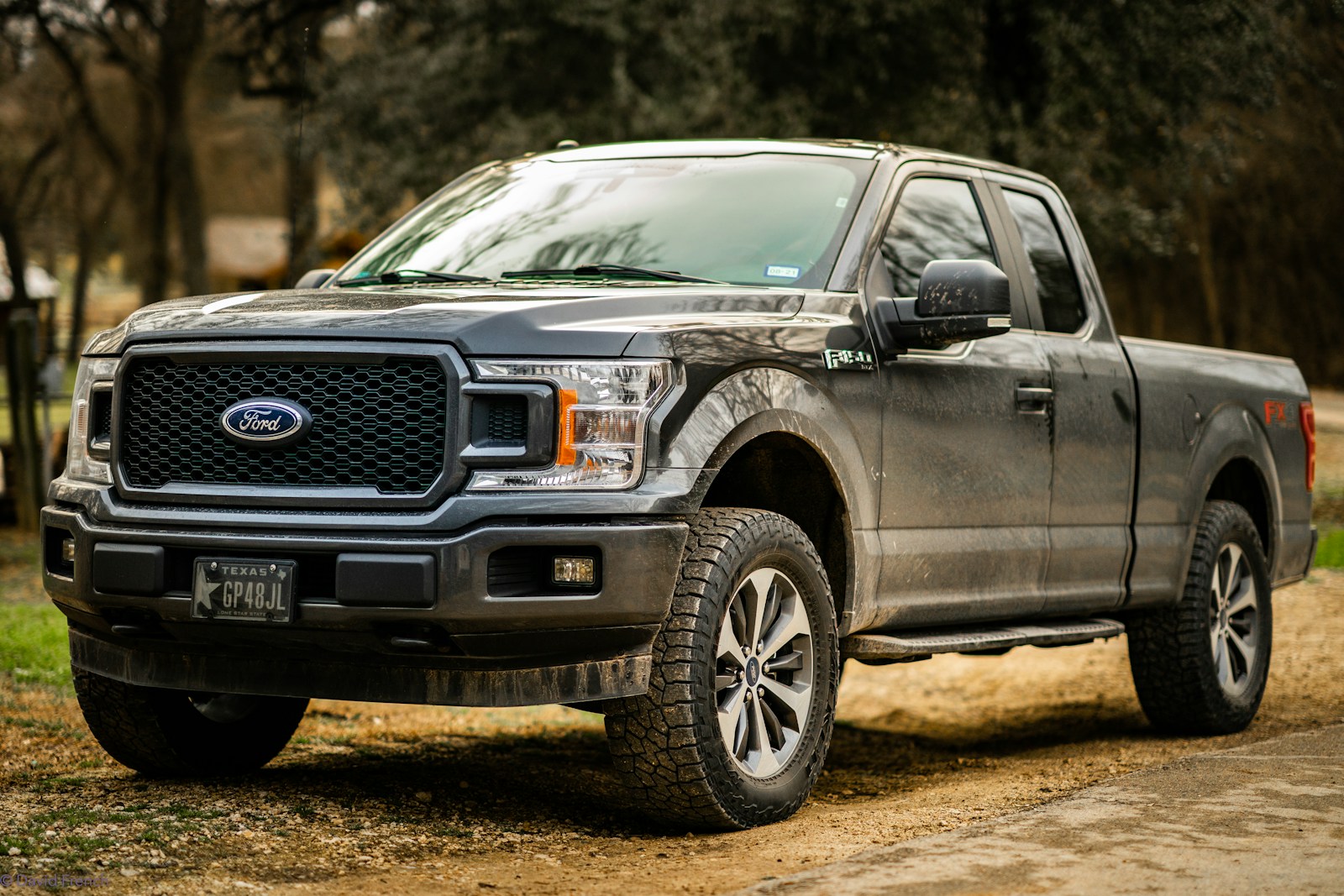
Ford pickup owners are facing a new safety headache as rear suspension components tied to the axle have triggered a sweeping recall of popular F-150 models. Cracks and failures in key hardware that helps keep the rear wheels in place are now under federal scrutiny, and the scale of the campaign underscores how a small bolt can create a big risk for drivers and everyone sharing the road.
Regulators and the automaker are moving to repair the problem, but the details matter for anyone who relies on a full-size truck for work or family duty. The recall centers on specific configurations and model years, and the fix will require owners to pay close attention to official notices and to act quickly once parts and appointments are available.
The rear axle defect putting F-150 suspensions under the microscope
At the heart of the recall is a defect in the rear axle hardware that can compromise the suspension’s ability to keep the truck stable. Axle hub bolts are designed to keep the wheel hubs firmly attached to the axle, the rod that connects the wheels and carries power from the drivetrain, and regulators have warned that damage to these parts can increase the risk of a crash if the connection fails under load. Reporting on the campaign notes that Axle hub bolts that crack or break can allow the hub to move or detach, which in turn can affect rear suspension geometry, braking, and steering control.
The problem is not theoretical. Federal safety officials have tied the defect to a large population of Ford’s best-selling pickup, and the recall focuses on F-150 trucks where the rear axle is under higher stress. Ford has acknowledged that 2021, 2022, and 2023 F-150 Trucks equipped with the Trailer Tow Max Duty Package are subject to a Rear Axle Hub Bolt Recall, with the company explicitly linking the campaign to concerns about rear hardware that can crack under towing or hauling loads. That configuration, marketed for heavy-duty trailering, places extra strain on the suspension and axle, which makes any weakness in the bolts especially consequential.
How many trucks are affected and what regulators are saying
The scale of the problem is significant for both Ford and its customers. The NHTSA has announced that a Ford recall is impacting 100,000 F-150 pickup trucks, with the campaign focused on F-150 models built with the affected rear axle components. In that reporting, The NHTSA is cited as the federal agency overseeing the action, and the coverage notes that the recall involves Ford’s F-150 line, with references to the model designation 150 and a distance figure of 150 m that appears in the technical description of the issue. Separate legal-focused reporting states that Ford Motor Co is recalling more than 103,000 F-150 trucks, describing the campaign as a response to an axle hub bolt defect and explicitly listing the model designation 150 as part of the affected vehicles.
Those figures are broadly consistent, though they use slightly different thresholds, with one account emphasizing “more than 100K” trucks and another specifying more than 103,000. Coverage of the recall notes that Ford is the manufacturer at the center of the campaign and that the company has been working with regulators since earlier in the year to define the scope of the defect. One report, framed as a consumer-facing overview, even breaks out the key details under headings like Who and Why, identifying Ford Motor Co as the responsible automaker and the axle hub bolt defect as the reason for the action. Another account highlights that more than 100,000 F-150 trucks from the 2023 to 2025 model years may be affected and notes that Dealers will provide a free fix for owners of the affected Ford F-150 gasoline trucks, again using the model designation 150 in the description.
What owners should do now and how to confirm a recall
For drivers, the most urgent step is to confirm whether their truck is covered and to schedule repairs as soon as possible. The National Highway Transportation Administration maintains a central portal where owners can search for open recalls using their vehicle identification number, and that NHTSA site is the starting point for anyone who has not yet received a mailed notice. Federal fleet managers are being given similar guidance, with government recall information pointing agencies to a VIN lookup tool operated by The National Highway Transportation Administration so they can quickly determine whether a vehicle has a recall. That same approach works for individual owners who want to verify their status before heading to a dealer.
Once a truck is identified as affected, the repair process should be straightforward, though it may require patience if parts supplies are tight. Ford has outlined the campaign under its internal reference 23S65, describing it as a Rear Axle Hub Bolt Recall for F-150 trucks with the Trailer Tow Max Duty Package and emphasizing that the company is committed to Building vehicles customers can count on. Consumer-focused coverage stresses that Ford and its dealer network will inspect the rear axle hardware and replace damaged or suspect bolts at no cost, a standard practice in safety recalls. Government recall guidance issued in Aug 21, 2025, reinforces that owners should not ignore recall notices, since unresolved defects can lead to serious crashes that might otherwise be prevented.