

In the high-stakes arena of modern aerial combat, several agile fighter jets have demonstrated their ability to outmaneuver larger, faster rivals, proving that size and speed are not the sole determinants of success. This article explores five notable aircraft that have consistently outsmarted their opponents, emphasizing their design, capabilities, and impact on aerial warfare. Understanding these aircraft is crucial for military strategists and defense analysts as they shape future combat scenarios.
1. Boeing F/A-18E/F Super Hornet
The Boeing F/A-18E/F Super Hornet, operational since 1999, is a versatile multirole fighter that has gained a reputation for its agility and adaptability in combat. With a wingspan of 44.9 feet and a length of 60.1 feet, this aircraft is smaller than many of its competitors, allowing it to maneuver effectively in tight spaces. Its advanced avionics and weapon systems, including the ability to carry up to 17,750 pounds of ordnance, enhance its combat effectiveness against larger adversaries.
In recent conflicts, the Super Hornet has been instrumental in carrier-based operations, balancing air-to-air and air-to-ground missions seamlessly. Its ability to engage in dogfights against faster jets, like the Russian Su-35, highlights its agility and tactical advantages, making it a preferred choice for the U.S. Navy.
2. Lockheed Martin F-22 Raptor
The F-22 Raptor, introduced in 2005, stands out as one of the most advanced stealth fighters in the world, with a maximum speed of approximately 1,200 mph. Its unique design, which includes thrust vectoring nozzles, allows it to perform remarkable aerial maneuvers, outclassing larger aircraft like the F-15 and Su-30 in dogfighting scenarios. With a combat radius of around 1,839 miles, the Raptor can engage targets deep within enemy territory while remaining undetected.
Despite its speed, the Raptor’s success is attributed more to its superior situational awareness and stealth capabilities. The integration of advanced radar and sensor systems enables it to detect enemy aircraft before being seen, allowing it to engage first. As a result, the F-22 remains a crucial asset for the U.S. Air Force, particularly in scenarios requiring air superiority.
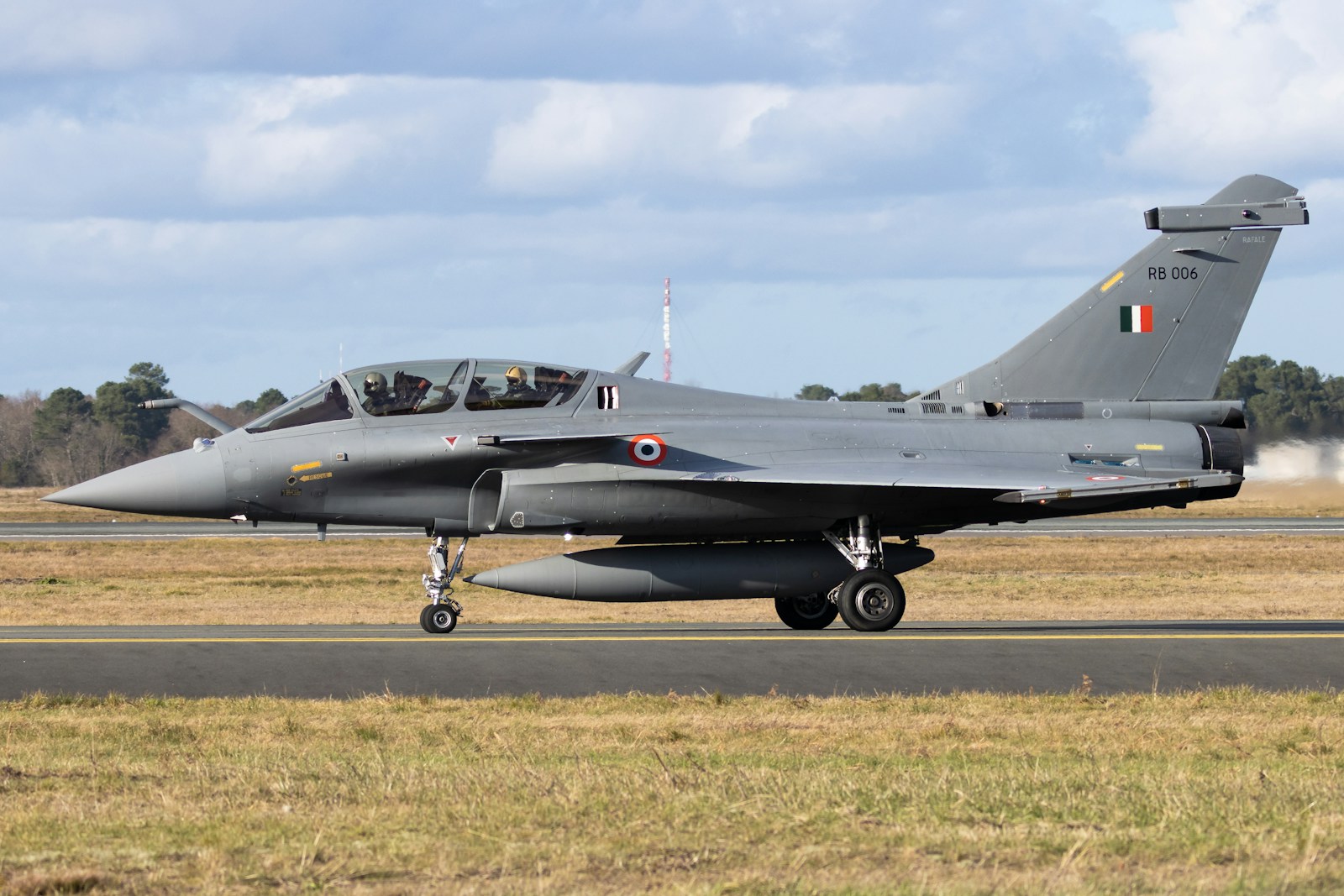
3. Dassault Rafale
The French Dassault Rafale, first entering service in 2001, is renowned for its agility and versatility in various combat roles. This twin-engine aircraft can take off from shorter runways, making it especially effective in expeditionary operations. With a maximum speed of 1,400 mph and a combat radius of about 1,000 miles, the Rafale is designed to outmaneuver larger aircraft while executing precision strikes on ground targets.
Its advanced avionics, including an integrated electronic warfare system and multi-target tracking capabilities, enhance its performance in combat. The Rafale has proven its mettle in real-world conflicts, where it has engaged and outsmarted larger adversaries such as the Eurofighter Typhoon, thanks to its superior agility and tactical flexibility.
4. Sukhoi Su-57 Felon
Russia’s Sukhoi Su-57, which began service in 2019, is a fifth-generation stealth fighter that combines advanced aerodynamics with cutting-edge technology. With a top speed of around 1,500 mph, the Su-57 is designed to evade radar detection while maintaining exceptional agility in the air. Its thrust vectoring engines allow for rapid changes in direction, making it a formidable opponent against larger jets like the F-15EX.
The Su-57 is equipped with advanced avionics and a sophisticated sensor suite, enabling it to engage multiple targets simultaneously. This capability, combined with its agility, allows the aircraft to effectively counter threats posed by larger fighter jets, thereby maintaining a strategic edge in aerial engagements.
5. Eurofighter Typhoon
The Eurofighter Typhoon, which has been in service since 2003, represents a collaborative effort among several European nations. This multirole fighter boasts a maximum speed of 1,550 mph and exceptional maneuverability, making it well-suited for air superiority missions. Its flight control system and advanced aerodynamics enable it to outmaneuver larger and faster rivals, such as the F-15 and Mirage 2000.