

The F-35 tends to dominate headlines and defense wish lists, but it is not the only modern fighter that matters. Saab’s JAS 39 Gripen has quietly built a reputation as a nimble, affordable, and surprisingly future‑proof jet that keeps popping up wherever smaller air forces need real capability without a ruinous price tag. The result is a fighter that keeps forcing its way into conversations that were supposed to be all about stealth and trillion‑dollar programs.
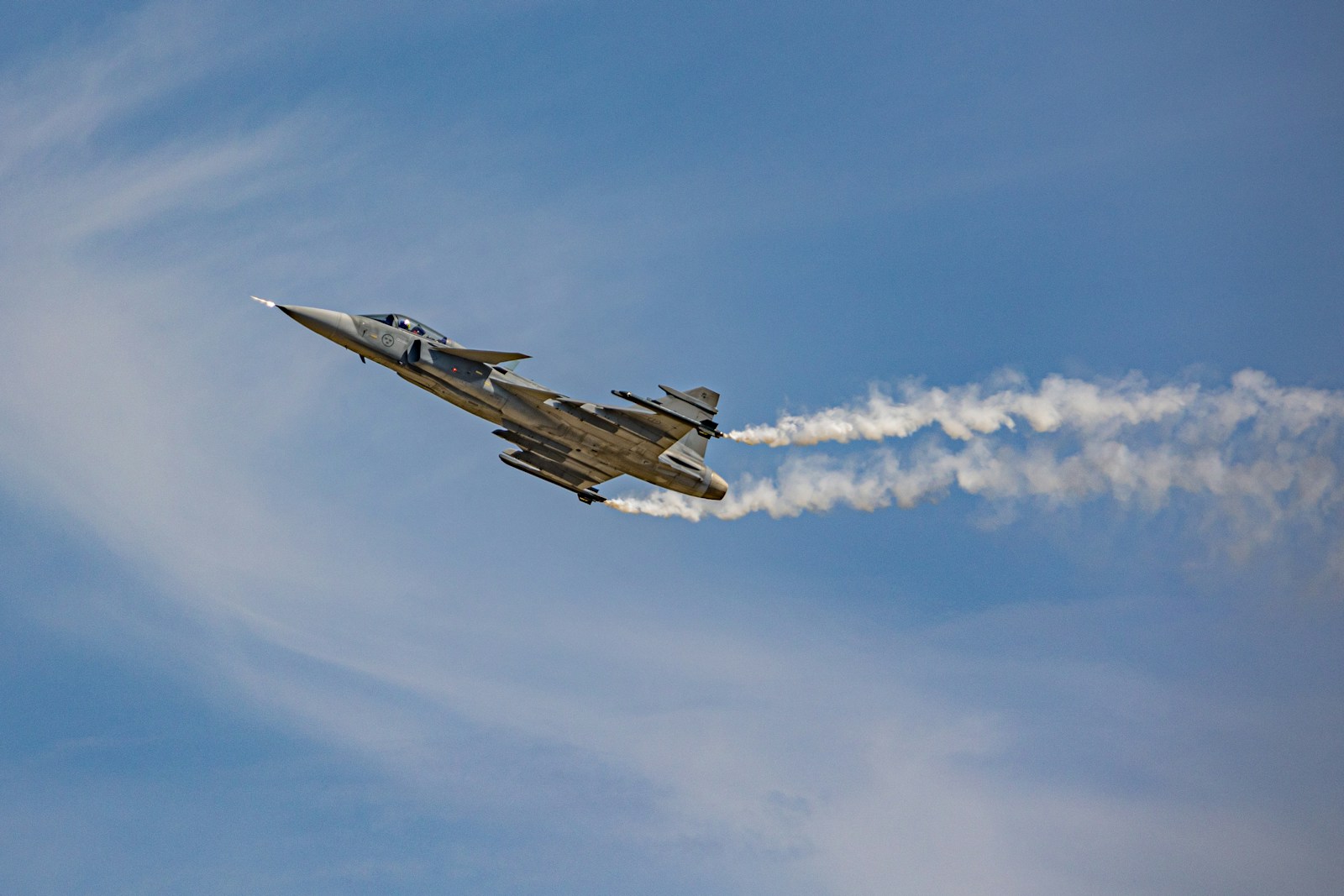
Why smaller air forces keep shortlisting the Gripen
For countries that cannot print money or field massive logistics tails, the Gripen’s basic proposition is hard to ignore: it is cheaper to buy, cheaper to fly, and designed from day one to be maintained by a lean crew in rough conditions. Operators have highlighted that the aircraft’s operating costs are a fraction of heavyweight jets, which matters when budgets have to cover pilots, weapons, and training rather than just fuel and spare parts. That cost profile has helped the Gripen win customers such as the Czech Republic and Hungary, which needed a modern multirole fighter but could not justify the financial gravity of an F‑35 fleet, a pattern echoed in reporting on European fighter choices in regional procurement debates.
The jet’s flexibility also fits the political realities of mid‑sized democracies that want credible defense without looking overtly offensive. Gripen was built as a true multirole platform, able to switch from air policing to ground attack to maritime missions with minimal turnaround, which is exactly the kind of versatility that shows up in modern NATO tasking and in coalition air operations. That mix of affordability and mission breadth has kept it in the running in competitions from Brazil to central Europe, even when it ultimately lost to the F‑35, because defense ministries could point to Gripen bids as a benchmark for what a more sustainable fighter fleet might look like.
Designed for rough fields, fast turnarounds, and real‑world wars
Where the F‑35 is optimized for high‑end stealth missions from well‑equipped bases, the Gripen is unapologetically built for the messy reality of dispersed operations. The aircraft was engineered to take off from short, improvised strips and be turned around quickly by small ground crews, a concept that lines up with the way Nordic and eastern European planners now talk about surviving the first days of a high‑intensity conflict. Reporting on NATO’s shift toward dispersed basing and road operations underscores how valuable it is to have fighters that can scatter, refuel, rearm, and get back in the air without a sprawling support footprint.
That design philosophy is not just a Cold War relic. The war in Ukraine has shown how quickly fixed air bases become targets for long‑range missiles and drones, pushing air forces to think in terms of mobility and redundancy rather than a few exquisite hubs. Analysts tracking the conflict have noted how Russian strikes on Ukrainian airfields forced Kyiv to constantly move aircraft and support gear, a pattern that plays directly to Gripen’s strengths. A fighter that can operate from a stretch of highway with a handful of technicians suddenly looks less like a niche Scandinavian idea and more like a template for surviving modern precision warfare.
Upgrades, weapons, and the politics of “good enough”
What keeps the Gripen relevant in a world of stealth jets is not just its original design, but the way Saab has kept layering in new sensors, weapons, and electronic warfare tools. The latest Gripen E/F variants carry an active electronically scanned array radar, advanced infrared search and track, and a powerful jamming suite, giving pilots a strong picture of the battlespace even without low‑observable shaping. Those upgrades mirror a broader trend in which air forces lean on smarter munitions and electronic warfare to offset the lack of full stealth, a tradeoff that shows up in coverage of precision weapons and stand‑off missiles used from non‑stealth platforms.
There is also a political dimension to the Gripen’s staying power. Buying the F‑35 often means buying into a tightly controlled ecosystem of software, data, and sustainment that runs through the United States, which can be a feature or a bug depending on the government in power. Countries that want Western technology but more autonomy over upgrades and weapons integration have repeatedly looked at Gripen as a way to hedge, a dynamic that surfaces in reporting on how partners navigate U.S. export controls and defense ties. In that sense, the Swedish jet represents a kind of “good enough” sovereignty: not the flashiest fighter on the ramp, but one that lets smaller states keep their airpower sharp without surrendering their entire playbook to a single supplier.
More from Steel Horse Rides: