
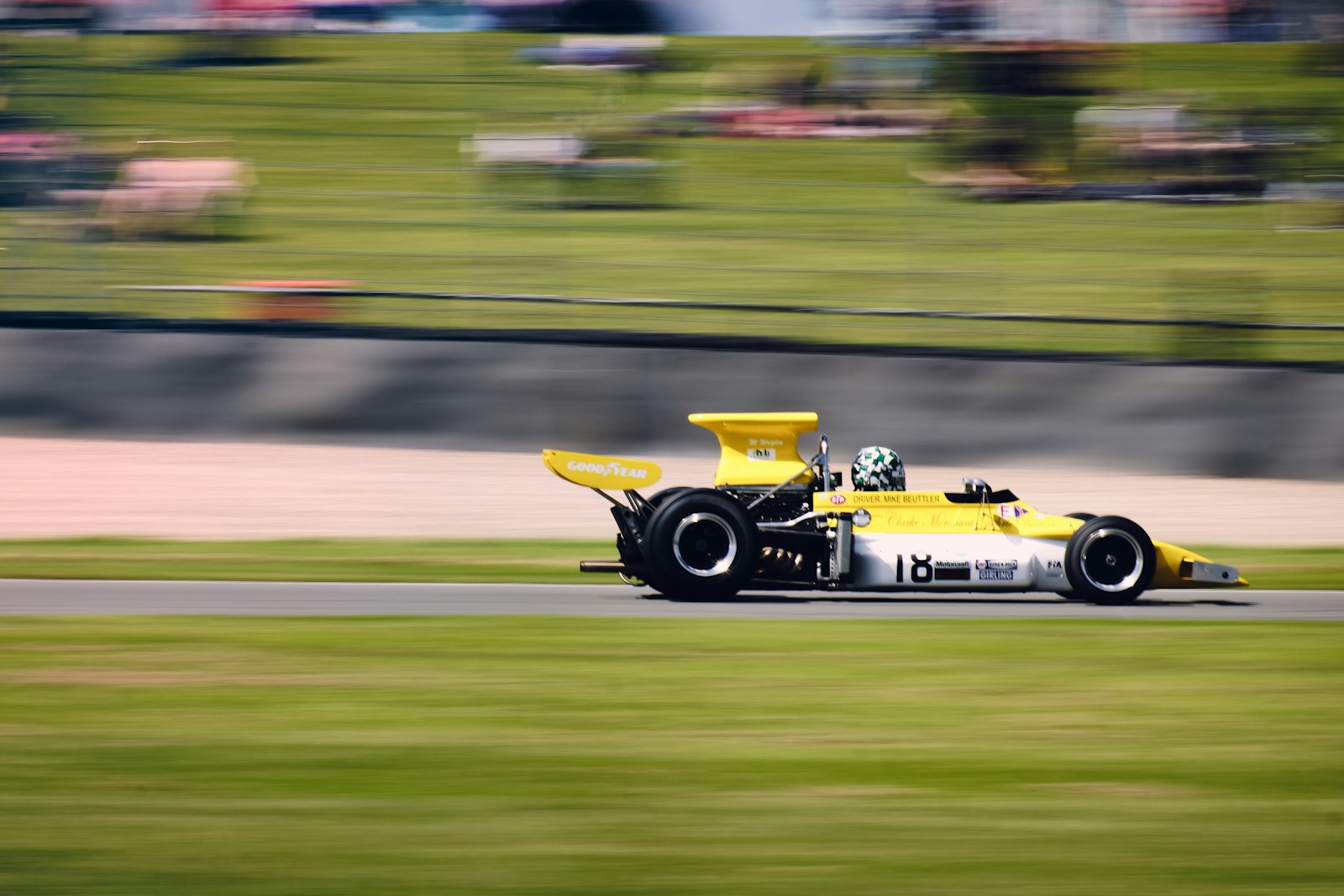

Formula 1 cars are built to cover ground at a pace that makes almost any road vehicle feel slow, but their speed on track is more nuanced than a single top‑speed figure. How fast they typically travel depends on the circuit layout, the phase of the lap, and how teams trade straight‑line pace for cornering grip. Understanding those patterns reveals why modern F1 machinery can be both blisteringly quick on the straights and astonishingly efficient through bends.
Across a race weekend, an F1 car cycles through low‑speed corners, medium‑speed sweeps, and flat‑out straights, each demanding a different balance of power and downforce. Average lap speeds, sector times, and trap‑speed data show that the sport’s headline numbers, such as 350 km/h on a straight, are only part of the story of how quickly these cars really circulate a Grand Prix track.
Top speeds on the fastest Formula 1 circuits
On the fastest tracks, Formula 1 cars regularly exceed 330 km/h in qualifying trim, with peak figures climbing even higher when drag‑reduction systems and slipstreaming line up. At venues built around long full‑throttle sections, such as Monza or Baku, teams trim rear wings to reduce drag, accepting lighter downforce in the corners to unlock higher terminal speeds at the end of the straights. That trade‑off, combined with the power of the current hybrid power units, allows modern cars to reach more than 350 km/h in race conditions according to documented speed‑trap data.
Those figures are not outliers confined to a single lap or a single season, they are representative of how the quickest cars behave on the sport’s most power‑sensitive layouts. At Monza, official timing has recorded cars clearing the main straight at over 360 km/h when aided by a tow, while Baku’s long run from the final corner to Turn 1 has produced similar numbers in recent years, with multiple drivers clocked above 340 km/h in qualifying and race trim according to F1 timing reports. Even at circuits with slightly shorter straights, such as Mexico City, the combination of thin air and low drag has pushed trap speeds beyond 350 km/h in documented race‑weekend summaries, underlining how routinely F1 machinery operates at these extremes on the right track.
Average lap speeds and how they differ by track
While top‑speed figures grab attention, the more telling metric for how fast Formula 1 cars typically travel is average lap speed, which blends straights and corners into a single number. On the quickest layouts, that average can exceed 250 km/h, a figure that reflects not only long full‑throttle sections but also the ability to carry enormous speed through medium and high‑speed bends. At Monza, for example, pole laps have been logged at average speeds above 260 km/h according to official qualifying statistics, making it one of the fastest circuits in the calendar by this measure.
By contrast, street circuits and twistier permanent tracks produce much lower averages even when their peak speeds remain impressive. In Monaco, the tight barriers and short straights limit the average lap speed to roughly half of Monza’s benchmark, with pole laps recorded at around 160 km/h in recent seasons based on lap‑time analysis. Singapore and Hungary sit in a similar band, with average speeds in the 170 to 190 km/h range according to race‑weekend data. The contrast shows that “how fast” an F1 car is on track depends heavily on the circuit’s character, even when the same chassis and power unit are involved.
Straight‑line pace versus cornering speed
The way an F1 car distributes its speed around a lap is shaped by the constant compromise between straight‑line efficiency and cornering grip. Teams can trim rear wings and adjust suspension to reduce drag, which boosts top speed on the straights but costs stability and downforce in the turns. On power tracks, that setup bias means cars spend a larger share of the lap above 300 km/h, while on high‑downforce circuits they sacrifice some terminal velocity to maintain higher speeds through long corners and rapid direction changes. Sector‑time breakdowns from recent seasons show that cars running low‑drag packages gain several tenths on straights but can lose similar time in complex corner sequences, as documented in technical timing reviews.
Cornering speed itself is a defining part of how quickly F1 cars circulate a track, even if it is less visible than a trap‑speed number. In fast bends such as Silverstone’s Copse or Suzuka’s 130R, modern cars can sustain more than 280 km/h while generating lateral forces above 5 g according to telemetry‑based reports. On medium‑speed corners, typical apex speeds in the 180 to 220 km/h range are common at circuits like Barcelona and Austin, supported by corner‑by‑corner analysis. That ability to maintain such high velocities through bends is why average lap speeds remain elevated even on tracks where the longest straight is relatively modest.
Race pace versus qualifying speed
Formula 1 cars are at their absolute quickest in qualifying, when fuel loads are minimal and engines are run in aggressive modes, but their typical race‑lap speeds are only slightly lower on many circuits. In qualifying, drivers can exploit fresh soft tyres and push flat out for a single lap, which often yields lap times 1.5 to 3.0 seconds faster than race pace according to session comparisons. That gap translates into a few km/h difference in average lap speed, with peak speeds on the straights sometimes identical between qualifying and the race when DRS and slipstreaming are factored in.
During the Grand Prix itself, heavier fuel loads at the start and tyre management across stints naturally pull the average down, but the effect diminishes as the race progresses. Data from recent events at circuits like Spa‑Francorchamps and Jeddah show that by the final stint, when fuel is light and the track is rubbered in, race laps can approach or even match early‑session qualifying times, particularly on harder compounds that resist degradation according to post‑race analysis. That pattern means that for much of a Grand Prix, especially after the opening laps, cars are circulating at speeds only marginally below their one‑lap peak, often averaging well above 200 km/h on traditional road courses and closer to 230 km/h on the fastest layouts as reflected in race‑average statistics.
How regulations and technology shape typical F1 speeds
The speeds fans see today are the product of a regulatory framework that tries to balance performance with safety, and of continuous technological development within those rules. Aerodynamic regulations introduced in recent seasons have aimed to reduce the turbulence behind each car and improve following, which has slightly altered how teams generate downforce and therefore how they reach their peak speeds. Ground‑effect floors and simplified wings have shifted more of the load under the car, allowing high cornering speeds while limiting the extreme outwash that previously made close racing difficult, as outlined in technical briefings. At the same time, minimum weight rules and standardised components have constrained some performance gains, keeping average lap speeds within a controlled window compared with earlier eras.
Power‑unit technology also plays a central role in how fast F1 cars typically travel on the track. The current hybrid systems combine a 1.6‑litre turbocharged V6 with energy‑recovery units that harvest power from braking and exhaust gases, delivering more than 735 kW (1,000 hp) in qualifying trim according to official technical data. That output, managed through sophisticated energy deployment maps, allows cars to sustain high speeds over long straights while still having electric boost available out of slower corners. Fuel‑flow limits and maximum fuel‑load regulations cap overall energy use, which in turn shapes how aggressively teams can run across a race distance, but even within those constraints, telemetry from multiple circuits shows cars spending a significant share of each lap above 250 km/h on power‑sensitive tracks and above 200 km/h on more technical layouts, as reflected in speed‑distribution graphs.
More from Steel Horse Rides: