
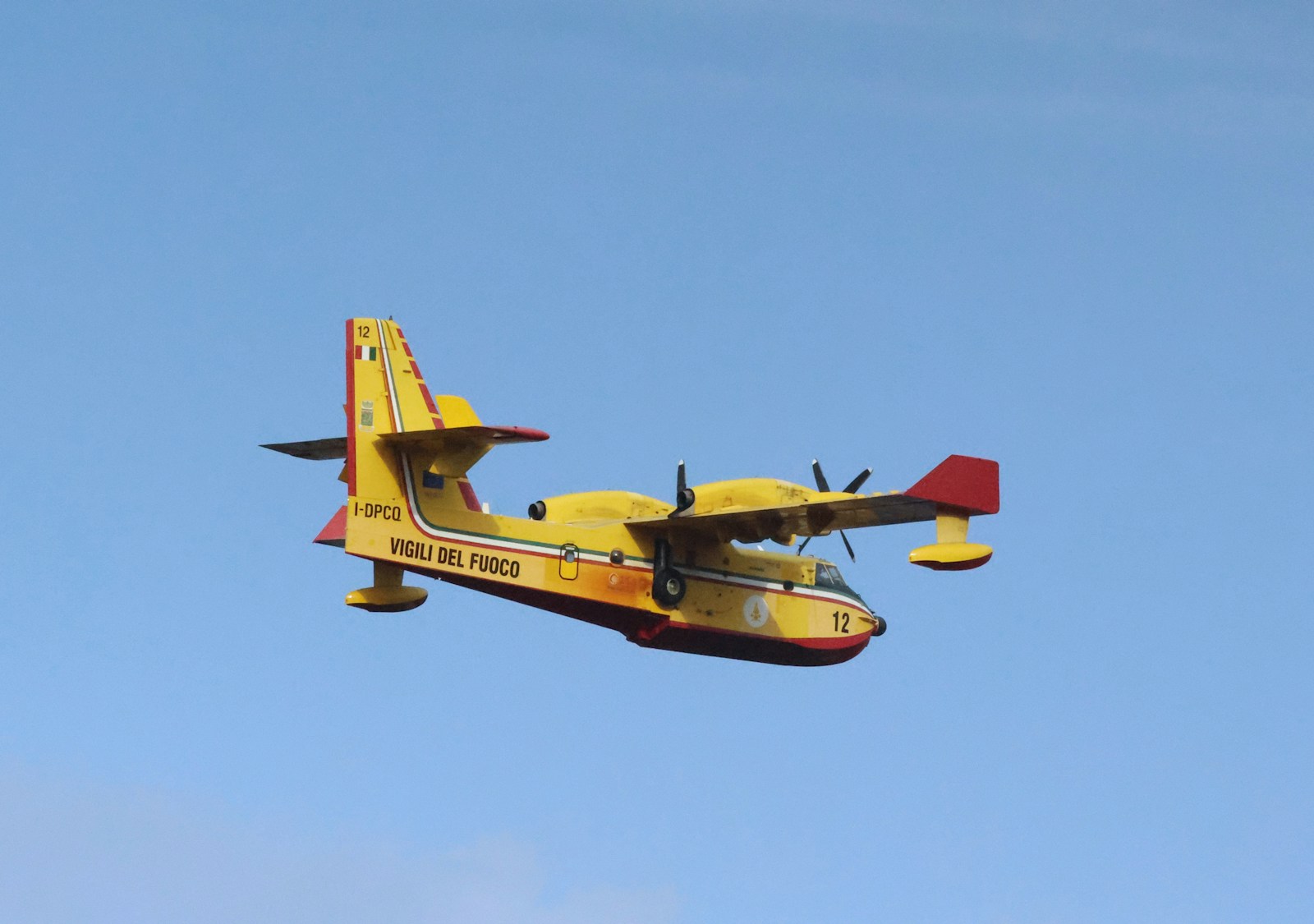

Modern firefighting aircraft can scoop or load tens of thousands of liters of water in the time it takes a ground crew to refuel a pickup truck, turning each pass into a high‑impact strike on a wildfire. That speed is not a stunt, it is the product of specialized tank designs, precision flying, and carefully choreographed support operations that compress a complex refilling process into seconds.
From amphibious scoopers that skim lakes at highway speeds to heavy air tankers that hot‑load on the ramp, every system is engineered to minimize the gap between drops. Understanding how those refills work, and what limits them, explains why some aircraft can cycle repeatedly over a fire while others are reserved for fewer, heavier drops when conditions are most critical.
Inside the tanks: how firefighting aircraft are built to move water fast
Firefighting aircraft are essentially flying plumbing systems, built to move huge volumes of water or retardant in a controlled way without destabilizing the airframe. Purpose‑built scoopers such as the Canadair CL‑415 and its successor, the DHC‑515, carry dedicated belly tanks that can take on roughly 6,000 liters in a single run, while large air tankers like the converted Boeing 737 or McDonnell Douglas DC‑10 use multiple internal tanks that can hold from about 15,000 liters to more than 40,000 liters of retardant. These tanks are compartmentalized to keep the liquid from sloshing, which would otherwise shift the center of gravity and make the aircraft difficult or unsafe to control during low‑level flight and steep turns back toward the fire line, according to technical descriptions of modern amphibious waterbombers and large air tanker fleets.
The plumbing is as critical as the tank volume, because the entire system has to accept or discharge water at very high flow rates without damaging the structure. On scoopers, retractable probes or scoops feed water into the belly tank through reinforced ducts, while on land‑based tankers, high‑capacity ground hoses connect to multiple fill ports so crews can load several compartments at once. Drop doors are actuated by hydraulics or electric systems that can meter the flow, allowing pilots to choose a quick salvo drop or a longer line depending on the terrain and fire behavior. Operators of aircraft such as the CL‑415 and the 737 Fireliner describe how these systems are designed to withstand repeated high‑stress cycles of rapid filling and dumping during peak wildfire seasons, with maintenance schedules built around the intense demands of aerial tanker operations.
Scooping on the move: how amphibious aircraft refill in seconds
Amphibious scoopers achieve their speed advantage by turning lakes and reservoirs into mobile filling stations, taking on water without ever coming to a stop. A typical CL‑415 or DHC‑515 approaches a suitable body of water at low altitude, then descends to skim the surface at roughly 70 to 80 knots while extending its scoops. As the aircraft planes across the water, the scoops channel a torrent into the belly tank, filling it in about 10 to 12 seconds before the pilot retracts the gear and climbs back toward the fire. Manufacturer data for the DHC‑515 notes that the aircraft can load approximately 6,137 liters in a single scooping run, and that it can repeat this cycle multiple times per hour when operating close to a fire, which aligns with operational accounts from agencies that rely on amphibious waterbombers during peak wildfire periods.
This technique depends on precise flying and strict site selection, which is why pilots and incident commanders spend significant time scouting and approving scooping locations before operations begin. The water body must be long and wide enough for a safe run, free of submerged hazards, and positioned so the aircraft can climb out with a full load even in hot, thin air. Operators describe how crews practice low‑level approaches and emergency procedures extensively, because a misjudged scooping run can lead to structural damage or a loss of control. Agencies in Europe and North America that deploy CL‑415 and DHC‑515 fleets emphasize that the ability to scoop repeatedly from nearby lakes can multiply the number of drops per hour compared with land‑based tankers, especially when fires burn in regions with abundant accessible water sources.
Ground refills: how heavy air tankers hot‑load between drops
Large air tankers that cannot scoop from lakes rely on ground crews to refill their tanks, and the fastest operations treat the aircraft like a racing pit stop. When a tanker such as a Boeing 737 Fireliner, a Lockheed C‑130 equipped with a Modular Airborne FireFighting System (MAFFS), or a DC‑10 Air Tanker lands at a designated base, it taxis to a loading pit where pre‑positioned hoses and mixing systems are already running. Crews connect multiple lines to the aircraft’s fill ports, pumping in water or long‑term retardant at rates that can exceed several thousand liters per minute, so a full load can be ready in roughly 10 to 20 minutes depending on tank size and base infrastructure. Operators of 737‑based tankers describe how their aircraft carry about 15,150 liters of retardant, while DC‑10 tankers can load up to 43,900 liters, figures that are reflected in technical summaries of large tanker capacities and MAFFS program documentation for C‑130 Hercules firefighting missions.
Speed on the ground depends as much on logistics as on the aircraft itself. Modern tanker bases use fixed or mobile retardant plants that blend water, fertilizer salts, and thickening agents on site, then feed that mixture directly into the aircraft tanks. Bases that support MAFFS‑equipped C‑130s or contracted jet tankers are designed with multiple pits so several aircraft can hot‑load in parallel, while ground crews rotate in shifts to keep hoses connected and safety checks moving. Incident reports from recent wildfire seasons describe how well‑equipped bases can turn a large tanker around in less than half an hour, including landing, loading, and takeoff, which allows a limited fleet of heavy aircraft to deliver repeated high‑volume drops during critical burning periods, as detailed in operational briefings on MAFFS deployments and contracted jet tanker operations.
Managing weight, performance, and safety on every refill
Refilling a firefighting aircraft in seconds is only useful if the aircraft can safely fly away with that weight, which is why performance calculations sit at the center of every loading decision. Water weighs roughly 1 kilogram per liter, so a fully loaded CL‑415 is carrying more than 6 metric tons in its tanks, while a DC‑10 tanker at maximum load is lifting close to 44 metric tons of retardant in addition to fuel, crew, and airframe weight. Pilots and dispatchers use detailed performance charts that factor in runway length, elevation, temperature, and wind to determine how much liquid the aircraft can safely carry on each sortie. Technical data for aircraft such as the DHC‑515 and C‑130 Hercules highlight how hot, high conditions can significantly reduce allowable payload, which is why some tankers depart with partial loads when operating from short or high‑altitude strips, as described in performance planning guidance for amphibious waterbombers and tactical transports.
Safety margins also shape how aggressively crews use rapid refilling capabilities. Amphibious pilots may shorten a scooping run or accept a slightly smaller load if the surrounding terrain limits climb‑out options, while tanker captains can request reduced fills when turbulence, smoke, or nearby thunderstorms complicate low‑level approaches to the drop zone. Incident reviews from wildfire agencies note that strict weight and balance procedures, along with conservative go‑around policies, are key to preventing accidents during the most intense operational periods. Operators of large tanker fleets describe how onboard systems monitor tank levels and door positions, giving crews real‑time feedback during both refills and drops, and how maintenance teams inspect scoops, valves, and structural components frequently to catch any fatigue from repeated high‑stress cycles, practices that are reflected in maintenance and safety documentation for dedicated air tankers and MAFFS‑equipped aircraft.
Why refill speed matters for modern wildfire strategy
The ability to reload water or retardant in seconds is not just a technical achievement, it is a strategic tool for wildfire managers trying to keep pace with faster, more intense fire seasons. When aircraft can cycle quickly between a nearby lake or tanker base and the fire line, incident commanders can maintain a near‑continuous pattern of drops that cool hot spots, slow advancing fronts, and buy time for ground crews to build and reinforce containment lines. Agencies that operate mixed fleets of scoopers, large tankers, and helicopters describe how they assign each platform based on refill options and turnaround times, using scoopers for rapid, repeated hits near lakes and reserving heavy tankers for longer‑range missions where their larger payloads offset slower ground refills, a strategy reflected in fleet planning materials from amphibious operators and multi‑aircraft aerial firefighting companies.
Refill speed also influences where infrastructure investments go, from upgrading tanker bases with higher‑capacity pumps to negotiating access to reservoirs that can support scooping operations. As climate‑driven fire behavior stretches seasons and pushes fires into new regions, agencies are evaluating whether to expand amphibious fleets, convert additional transports with MAFFS units, or contract more jet tankers, decisions that hinge on how quickly each option can reload and return to the fight. Planning documents and recent procurement announcements for aircraft like the DHC‑515 and modernized C‑130 fleets highlight how governments are prioritizing platforms that combine high payloads with rapid turnaround, underscoring that the race to refill in seconds has become a central factor in the evolving aerial strategy against large wildfires.
More from Steel Horse Rides: