

Collectors who once dismissed 1980s metal as disposable are now paying serious money for the decade’s standouts, turning once-affordable coupes and hot hatches into fast-rising assets. Five nameplates in particular are seeing sharp appreciation, driven by nostalgia, limited supply, and a new wave of buyers who grew up with these cars on posters and video games. For enthusiasts and investors alike, understanding why these specific models are climbing helps separate passing fads from genuine long-term value.
Market data, expert lists, and recent sales all point to a clear pattern: clean, well-kept examples of certain 1980s performance cars are moving from used-car status into the realm of serious collectibles. While no vehicle is a guaranteed payday, the momentum behind these models suggests that the window to buy before further gains is narrowing.
Toyota Supra (MkII): The Japanese GT Coming Into Its Own
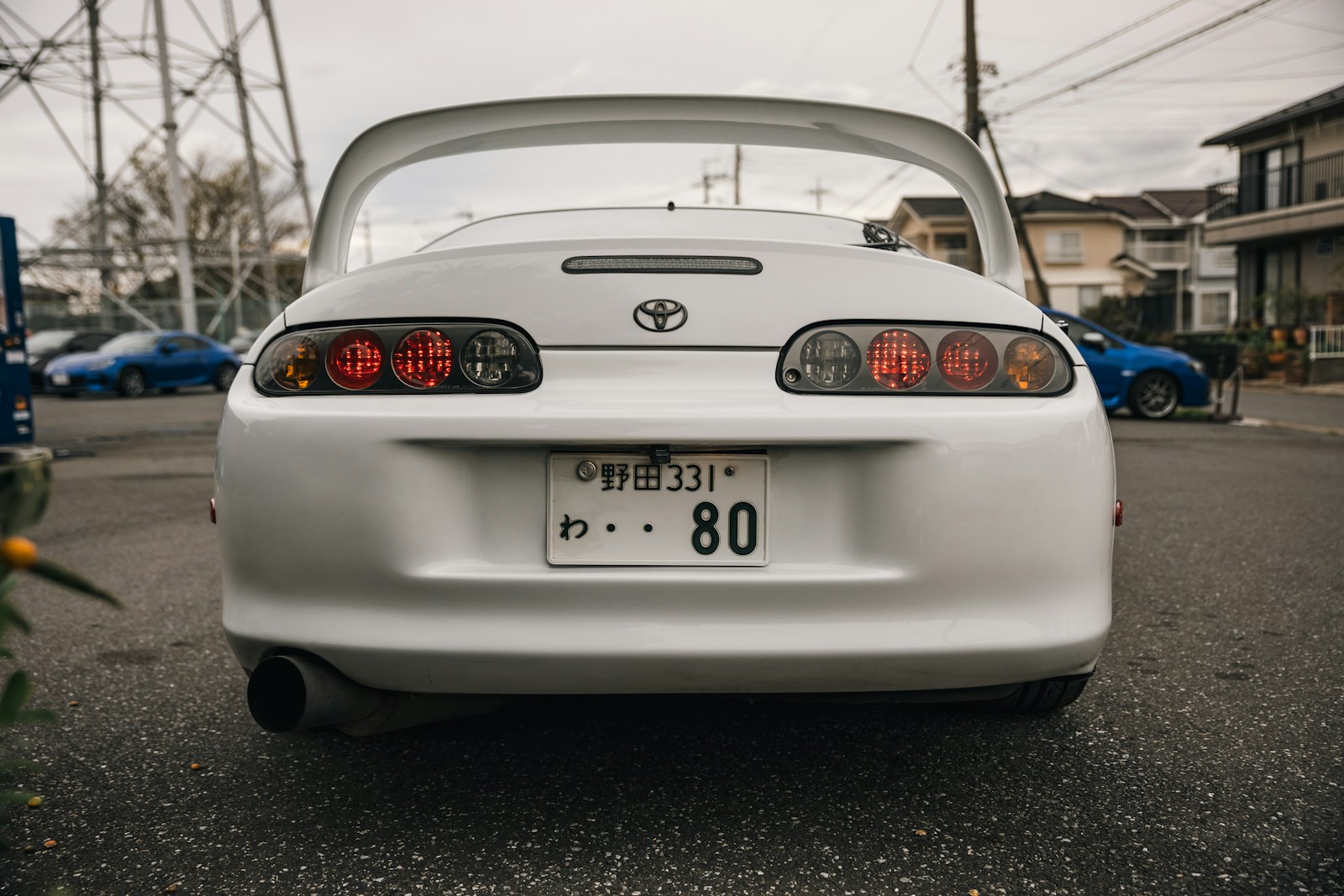
The second-generation Toyota Supra, often referred to as the MkII, has shifted from underappreciated grand tourer to one of the most closely watched Japanese classics of the era. Long overshadowed by the later MkIV, the earlier car’s mix of straight-six power, rear-wheel drive, and crisp 1980s styling is finally being recognized in the market. Coverage from late Nov highlights the Toyota Supra among 5 ’80s Cars That Are Currently Skyrocketing In Value, underscoring how quickly sentiment has shifted.
What makes this generation particularly interesting is the gap between its original positioning and current prices. Reports note that these old Supra models originally sold as relatively attainable performance cars, yet recent sales show examples trading hands for sums that would have seemed implausible a decade ago. One analysis points out that, considering these old Supra originally targeted everyday enthusiasts, the premium now being paid for clean cars reflects a broader reassessment of 1980s Japanese engineering, with the Toyota Supra singled out as a prime example of that shift.
Volkswagen GTI (Mk1 and early GTI lineage): Hot Hatch Royalty Heating Up
While the original Volkswagen GTI predates the 1980s, its influence and continued evolution through that decade have turned early GTI models into some of the most desirable hot hatches on the market. Collectors are increasingly chasing cars that combine everyday usability with genuine performance heritage, and the GTI’s boxy profile, light weight, and playful dynamics fit that brief perfectly. A recent feature on 5 ’80s Cars That Are Currently Skyrocketing In Value notes that 2025 GTIs are part of a broader story in which earlier GTI models are being reevaluated as enthusiasts show off their inherent value, with the GTI nameplate central to that trend.
For buyers who remember these cars as inexpensive commuter hatchbacks, the current pricing trajectory can be jarring. Yet the logic is straightforward: limited surviving numbers of unmodified cars, a strong motorsport and tuning culture, and the GTI’s role in defining the hot hatch segment all support rising values. Broader collector-car research, including a detailed Bull Market analysis from Dec 8, 2024, notes that 1980s and 1990s era cars are increasingly seen as collectible, reinforcing why early GTIs are no longer treated as disposable runabouts.
Datsun 280ZX: From Overlooked Cruiser to Data-Driven “Bull Market” Pick
The Datsun 280ZX spent years in the shadow of the original 240Z, often criticized for being softer and heavier than its predecessor. That narrative is now being challenged by hard numbers. In its 2025 Bull Market coverage, one major valuation service describes how, like so many things as they age, the Datsun 280ZX got a little slower and heavier than the earlier Z cars, yet is now being recognized for its comfort, turbocharged performance, and period-correct styling, with the Datsun name specifically called out.
Another detailed breakdown of the 2025 Bull Market List highlights the 1978–1983 Datsun 280ZX with an excellent, condition 2 value of $32,800, describing it as Often overlooked despite its turbocharged credentials. That figure, paired with the car’s inclusion among Notable Cars on the Bull Market List, signals that the 280ZX is no longer a bargain-bin alternative but a rising star in its own right. A separate Dec 8, 2024 report on the Full 2025 Bull Market list reinforces that this movement is grounded in extensive data rather than anecdote, giving buyers a clearer sense of where values may be headed.
Third-Generation Camaro: The 80s Icon Collectors Were Warned About
Few shapes scream 1980s quite as loudly as the third-generation Chevrolet Camaro, with its sharp lines, recessed headlights, and angular interior. For years, these cars were cheap entry points into V8 ownership, but that affordability is fading. A detailed guide from Jun 30, 2020 framed This Camaro as “as 80’s as it gets,” noting that its boxy design and period-correct cabin made it a prime candidate to buy before prices climbed, and explicitly warned that these cars are about to skyrocket in price, with the phrase This Camaro used to capture that moment.
That early call is now being validated by the broader shift toward 1980s and 1990s performance cars as serious collectibles. The same Dec 8, 2024 Bull Market research that highlighted 2000s era cars as collectible also emphasized how nostalgia-driven buyers are moving backward into earlier decades, creating a rising tide for American pony cars of the period. As more pristine examples are lost to modifications or neglect, the supply of original third-gen Camaros shrinks, supporting higher prices for the best survivors. For enthusiasts who once saw these as ubiquitous high school parking-lot fixtures, the market’s reassessment is a reminder that the most familiar shapes can become the most coveted once scarcity sets in.
Buick GNX and the 1980s “Hidden Muscle Renaissance”
On the American side, few 1980s cars have seen a more dramatic rise in status than the Buick GNX. Built in limited numbers and famous for its stealthy looks and brutal turbocharged acceleration, the GNX has become a benchmark for how quickly values can move when rarity and performance intersect. A feature from Oct 5, 2025 on 1980s cars worth more money today singles out the Buick GNX, noting that, Sticking to American cars, this one is stealthier than the DeLorean, with more go, and that prices have skyrocketed in recent years, with the Buick GNX used as a prime example.
The GNX is not alone. A broader survey of 10 Rare American Cars from the 1980s describes a Hidden Muscle Renaissance, highlighting how turbocharged and limited-production models from that era are finally getting their due. That analysis, published Feb 20, 2025, frames these vehicles as Rare American Cars that combine sleeper styling with serious performance, a combination that resonates strongly with today’s collectors. As buyers chase the most extreme and storied versions of 1980s performance, the GNX and its peers illustrate how quickly values can move once a car crosses from cult favorite into mainstream auction headline.
Why These Five, and What It Means for Buyers
Although these cars differ in origin and character, they share several traits that help explain their rapid appreciation. Each represents a clear performance or design milestone, whether it is the Toyota Supra’s evolution into a Japanese GT, the GTI’s role in defining the hot hatch, the Datsun 280ZX’s turbocharged refinement, the Camaro’s unmistakable 80s styling, or the Buick GNX’s role in the Hidden Muscle Renaissance. They also sit at the intersection of nostalgia and attainability: buyers who grew up with these cars now have the means to chase the best examples, and they are doing so in a market that is increasingly data driven. A Dec 8, 2024 analysis of the 2025 Bull Market list notes that millions of data points were used to identify cars poised to gain value, underscoring that these trends are not purely anecdotal.
For anyone considering a purchase, experts caution that classic cars should be approached as both passion projects and financial decisions. A detailed Apr 23, 2025 report titled Are Classic Cars Still a Good Investment? Here What the Experts Say explains that Experts see classic cars as a viable investment class, but emphasize that returns depend heavily on buying the right model, in the right condition, at the right price. That analysis, which frames classic vehicles as a potential Good Investment, reinforces the importance of documentation, originality, and careful inspection. In practical terms, that means shoppers eyeing a Supra, GTI, 280ZX, Camaro, or GNX should prioritize unmodified cars with clear histories, accept that the cheapest example is rarely the best value, and be prepared for ongoing maintenance costs. The upside is that, for those who choose wisely, the reward is not just potential appreciation, but the chance to enjoy some of the most characterful machines the 1980s ever produced.
More from Steel Horse Rides: