
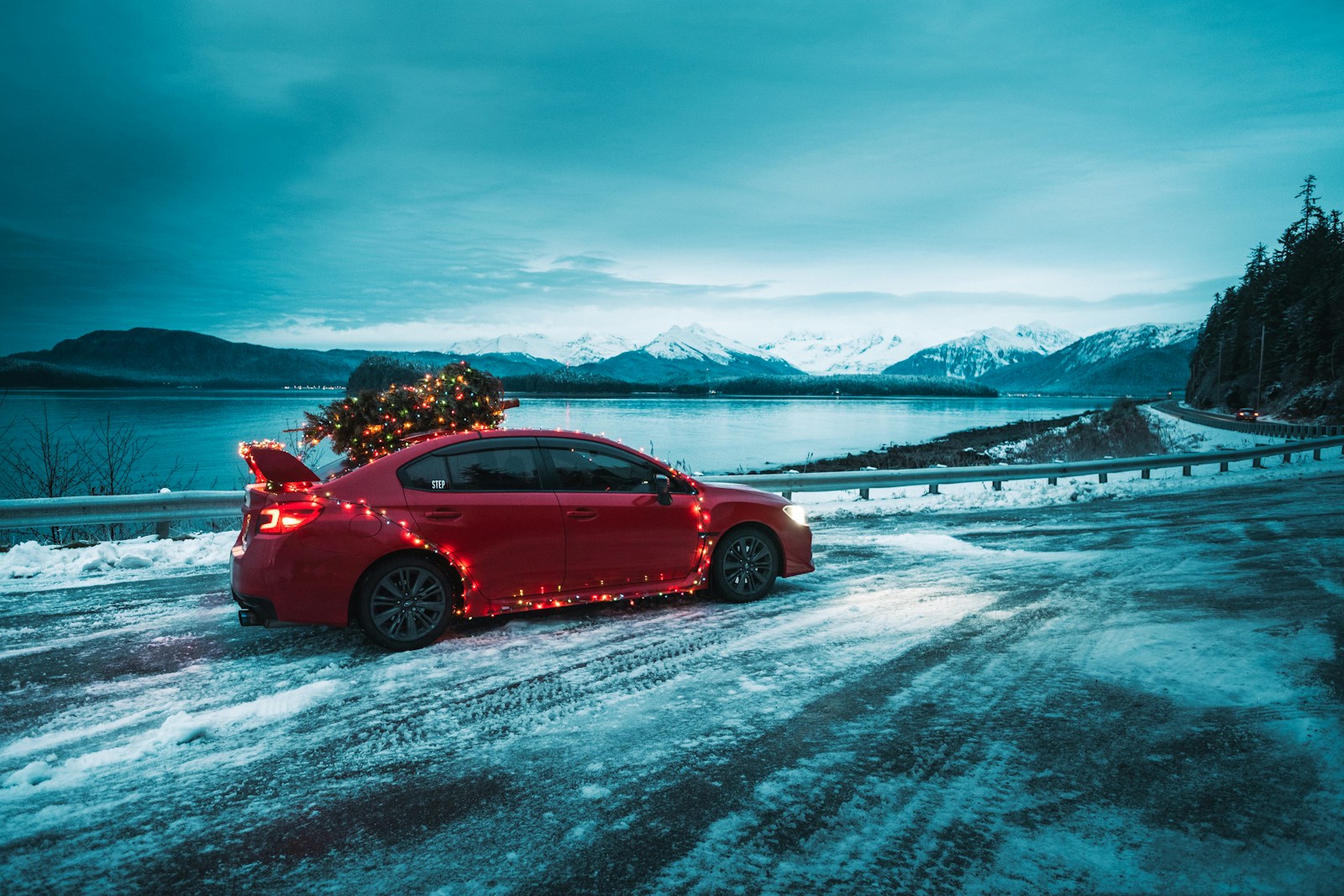

Holiday car decorations have become a rolling light show, with drivers wrapping SUVs in twinkling strands and mounting glowing reindeer on roof racks. The legal line between festive flair and a traffic violation, however, is far less bright, hinging on a patchwork of state rules about colors, flashing patterns, and how much attention a vehicle is allowed to demand on the road.
Across the United States, traffic codes were written for emergency beacons and aftermarket underglow, not for a Chevrolet Equinox covered in synchronized LEDs. That leaves drivers navigating a maze of restrictions where the same string of lights might be tolerated in one state, ticketed in the next, and treated very differently once the car starts moving instead of sitting in a parade lineup.
Why Christmas lights on cars fall into a legal gray area
Most traffic laws never mention Christmas lights at all, which is why the legality question often turns on broader rules about “auxiliary lighting” and “display of lights.” States typically regulate what colors can face forward, how many lamps a vehicle can show at once, and whether anything other than turn signals and hazard flashers is allowed to blink. When drivers zip-tie a string of LEDs to a Toyota Camry grille or wrap a Ford F-150 tailgate in fairy lights, they are effectively adding extra lamps that may not fit neatly into those categories, even if the bulbs themselves look harmless.
That ambiguity is compounded by the fact that many holiday products are designed for homes, not highways. Consumer-grade string lights are rarely tested for vehicle vibration, weather exposure at freeway speeds, or electrical loads on a 12‑volt system, which can raise safety concerns even before the law comes into play. Traffic codes that address “unsafe equipment” or “improperly secured loads” can apply if a strand starts to sag, flap, or detach at speed, and enforcement often depends on whether an officer believes the decoration creates a distraction or hazard for other drivers, a standard that is reflected in broad language in many state traffic statutes.
The strictest rules: colors, flashing, and impersonating emergency vehicles
The clearest legal red line for holiday car lighting is color. Across states, blue and red lights facing forward are typically reserved for law enforcement and emergency vehicles, and some codes also restrict white or amber flashing to specific uses like turn signals or hazard flashers. A driver who strings red-and-blue LEDs across the front of a Subaru Outback or installs a roof-mounted light bar that mimics a police pattern risks being cited for impersonating an emergency vehicle, a serious offense that goes well beyond a minor equipment ticket and is explicitly addressed in many vehicle lighting regulations.
Flashing patterns are another flashpoint. Even when the bulbs are a neutral color like warm white, rapidly blinking or strobing lights can be treated as prohibited “flashing lights” if they are not part of the vehicle’s original signaling equipment. Some states allow steady-burning decorative lights as long as they do not change color or pulse, while others bar any additional illumination that could be confused with official signals. That means a static string of white LEDs along the roofline of a Honda CR‑V might be tolerated where a synchronized, music-responsive display on the same vehicle would be considered an illegal distraction under broadly worded bans on nonstandard flashing lamps.
State-by-state differences and common enforcement patterns
Because traffic law is largely written and enforced at the state level, the same holiday setup can draw very different reactions depending on the jurisdiction. Some states spell out detailed limits on auxiliary lighting, including maximum numbers of forward-facing lamps and strict color codes, while others rely on more general language about “unsafe” or “confusing” lights. A driver who outfits a 2022 Honda Civic with green LED strips along the rocker panels might be technically compliant in a state that only bans red and blue, yet run afoul of another state’s rule that no extra lights may be visible from the front beyond the factory headlamps and turn signals, a distinction that shows up in comparative state traffic law summaries.
Enforcement also tends to be situational. Officers are more likely to overlook modest, non-flashing decorations during a neighborhood parade or on low-speed residential streets than on an interstate at night, where any unusual lighting can draw attention. In practice, many drivers only learn the boundaries when they are pulled over and warned that their roof-wrapped pickup or illuminated Jeep Wrangler spare tire violates a local code. That discretionary approach is consistent with how police handle other borderline equipment issues, such as tinted windows or aftermarket LED light bars, which are often cited only when combined with speeding, erratic driving, or other behavior that already justifies a stop under traffic safety enforcement guidelines.
Safety risks that matter more than aesthetics
Even when a decoration is technically legal, safety experts warn that extra lighting can change how other drivers perceive a vehicle. Bright or oddly placed LEDs can obscure brake lights, turn signals, or the high-mounted stop lamp on vehicles like the Toyota RAV4 or Ford Explorer, making it harder for following traffic to judge when the car is slowing or turning. Strings draped across the windshield or A‑pillars can create glare or reflections that reduce the driver’s own visibility, especially in wet or foggy conditions, concerns that echo broader research on how lighting and contrast affect driver reaction times in nighttime visibility studies.
There is also the basic question of how securely the decorations are attached. Zip ties and suction cups that hold up fine at 25 miles per hour in a cul‑de‑sac can fail at highway speeds, turning a cheerful string of lights into road debris. If a strand peels off a moving Tesla Model 3 and tangles under another car’s wheels, the driver who installed it could face liability under general rules about unsecured loads and negligent vehicle maintenance. Those risks are why many safety organizations advise keeping decorations away from moving parts, exhaust outlets, and any area that could interfere with airbags or crumple zones, guidance that aligns with broader vehicle modification safety recommendations.
Practical tips for staying festive and legal
Drivers who still want a rolling light show can reduce their legal exposure by treating holiday lighting like any other aftermarket modification: conservative, clearly non-emergency colors, and mounted in ways that do not change the vehicle’s basic lighting signature. That usually means avoiding red or blue facing forward, skipping any strobe or chase patterns, and keeping lights away from brake lamps, turn signals, and headlights. Battery-powered window decals, interior string lights that stay inside the cabin, and small, steady-burning accents on roof racks or cargo baskets are less likely to draw scrutiny than a full exterior wrap, especially if they are dim enough not to overpower the factory lamps, a balance that mirrors best practices in aftermarket lighting guidance.
Checking local law before plugging in is just as important as choosing the right hardware. Many state motor vehicle departments publish online summaries of what colors and flashing patterns are allowed, and some city codes add their own restrictions on “moving displays” or illuminated signage. For drivers who cross state lines in vehicles like a Ram 1500 or Subaru Forester, the safest approach is to assume the strictest rules apply and to treat elaborate displays as something to reserve for parades, parking-lot events, or driveway photo ops. When in doubt, a quick review of state statutes and a willingness to scale back the spectacle can keep the holiday spirit intact without inviting a traffic stop or a citation that turns a cheerful tradition into an expensive lesson.
More from Steel Horse Rides: