
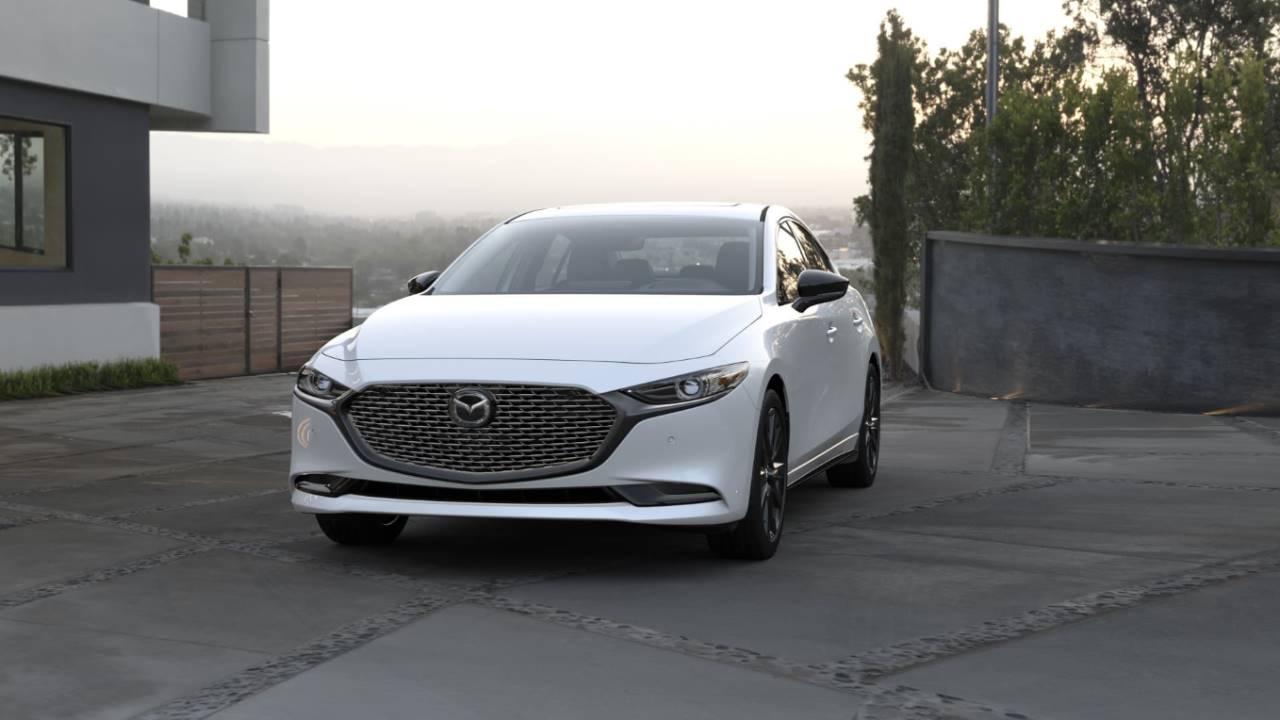

The latest Mazda 3 continues to rely on a torsion beam rear axle at a time when many compact rivals advertise multi-link hardware as a badge of sophistication. That choice is not a cost-cutting accident but a deliberate piece of engineering strategy aimed at balancing comfort, control and packaging in a tightly constrained platform. Understanding why Mazda keeps returning to this layout helps explain how the brand thinks about driving feel, refinement and the trade-offs that actually matter on real roads.
From the first Skyactiv-era cars to the current generation, Mazda’s chassis team has argued that the right torsion beam can deliver the stability and ride quality they want while freeing up space and budget for other improvements. Rather than chasing spec sheet prestige, the company has doubled down on tuning, materials and geometry to make a simple design behave like something far more complex.
The engineering logic behind Mazda’s torsion beam choice
Mazda’s decision to stick with a torsion beam is rooted in a clear engineering brief: prioritize predictable responses and a calm body over theoretical maximum grip. Internal development accounts describe how the team “went back to basics” and focused on how the human body perceives motion, aiming to keep vertical, lateral and longitudinal forces arriving at the driver in a single, coherent flow so the subconscious can process them without strain. That philosophy is captured in an analysis from Nov 23, 2022, which notes that if those inputs are separated by even a few milliseconds, the driver’s subconscious cannot react quickly enough. A torsion beam, with its rigid connection between the rear wheels, gives engineers a stable, easily modeled platform to synchronize those forces.
That simplicity also lets Mazda shape the rear axle’s compliance in very specific ways. Compared with a multi-link setup, a torsion beam has fewer bushings and joints, which means fewer variables to manage when trying to control toe and camber changes as the suspension moves. Reporting on the current car’s chassis highlights how the latest beam design uses carefully tuned bushings and a diagonally oriented stiffness path so that one diagonal of the car reacts first to a disturbance, then the other, keeping the body’s motion smooth and progressive rather than abrupt. This approach, detailed in the same One diagonal discussion, shows how Mazda is using the beam not as a cheap compromise but as a tool to shape how the car talks to its driver.
Packaging, cost and the Skyactiv platform
The current Mazda 3 sits on a next-generation Skyactiv platform that was designed from the outset around a torsion beam rear end, and that decision has cascading benefits for packaging and cost. A beam axle occupies less lateral space than a multi-link arrangement, which opens up room for a wider fuel tank, a lower trunk floor and more consistent rear-seat footwell dimensions. Owners discussing the 2019 Mazda3 on Mar 12, 2025 describe how the car’s underpinnings, including the torsion beam, trade some ultimate adjustability for a cohesive feel in everyday driving, with the platform integrating suspension, engine and steering responses into a single package rather than a collection of separate systems.
Cost is part of the equation, but not in the simplistic sense of cutting corners. A torsion beam is cheaper to manufacture and assemble than a multi-link system, which typically requires more stamped arms, bushings and subframe complexity. Analysis from Dec 18, 2018 notes that compared to multi-link suspensions, torsion beams are often mechanically simpler and typically easier to package, which frees up budget for other areas such as cabin materials, noise insulation and advanced driver assistance. That trade-off is reflected in the 2020 Mazda3’s positioning, where the car offers a richly finished interior and sophisticated driver aids while relying on a rear axle layout that some rivals abandoned years ago, a balance that aligns with the Dec 18, 2018 reporting.
Refinement goals and the role of suppliers
When Mazda’s engineers committed to the torsion beam for the current generation, they did so with refinement targets that went beyond the outgoing multi-link car. Development leader Matsumoto-san explained on Sep 6, 2017 that a new torsion beam design was key to achieving his team’s refinement and dynamic targets, describing how the geometry and stiffness distribution were tuned to reduce noise and harshness while preserving the brand’s trademark agility. That statement undercuts the assumption that a beam axle automatically means a downgrade in sophistication, instead framing it as a different route to the same goal of a quiet, composed ride.
Suppliers have been central to making that strategy work in production. On Jun 11, 2019, Hutchinson detailed how the nouvelle Mazda 3 launched in 2019 in Japan, China, Thailand and Mexico with components designed to improve comfort, reliability and vehicle dynamics. Those parts include elastomer mounts and bushings that filter out high-frequency vibrations while allowing the torsion beam to move in the carefully controlled patterns Mazda’s chassis team specified. The collaboration illustrates how a relatively simple mechanical layout can be elevated by sophisticated materials and supplier expertise to meet modern expectations for refinement.
How the torsion beam shapes real-world driving feel
On the road, the Mazda 3’s rear suspension is less about spec sheet bragging rights and more about how the car feels as it flows down a back road or navigates broken city pavement. Enthusiast-focused analysis from Nov 29, 2025 points out that multi-link rear suspensions are often praised for their ability to keep each wheel acting independently, but they can also introduce complexity that makes it harder to achieve a single, unified response to bumps and steering inputs. In contrast, the latest Mazda 3’s torsion beam has been tuned to deliver tighter handling and a comfier ride, giving suspension engineers the freedom to dial in their preferred geometry without juggling as many moving parts, a balance highlighted in the Nov 29, 2025 reporting.
Driver impressions collected over the current model’s life echo that intent. Owners and testers note that the car feels planted and predictable when pushed, with the rear end following the front in a smooth arc rather than snapping into sudden rotation. That behavior aligns with Mazda’s broader human-centric development, which extends from the suspension to the cabin. In official materials, the company’s DRIVING POSITION section describes how the telescopic steering adopts an additional 10 mm of movement at either end to offer a wider adjustment range, helping the driver maintain a natural posture that works in concert with the chassis tuning. The focus on a stable, relaxed driver is spelled out in the DRIVING POSITION guidance, and it reinforces why Mazda values a rear suspension that communicates clearly rather than chasing ultimate configurability.
Why Mazda keeps doubling down on a “simple” solution
The persistence of the torsion beam in the Mazda 3 is not nostalgia, it is a reflection of how the company prioritizes trade-offs in a crowded compact segment. By accepting that a beam axle might never match a top-tier multi-link system in laboratory tests of wheel independence, Mazda frees itself to invest in areas that drivers notice every day, from cabin quality to steering feel. The development story from Sep and the subsequent rollout in 2019 show a consistent throughline: Matsumoto-san and his team believed that a new torsion beam design was the right tool to hit their refinement and dynamic targets, and they built the rest of the car around that conviction.
That approach has sparked debate among enthusiasts, particularly those who equate multi-link hardware with “real” performance, but the reported outcomes suggest Mazda has largely achieved what it set out to do. Analyses from Dec 18, 2018 and Nov 29, 2025, along with owner feedback on Mar 12, 2025, converge on a picture of a compact car that rides quietly, steers accurately and feels cohesive in daily use, even if its rear suspension diagram looks old-fashioned on paper. In that sense, the latest Mazda 3’s torsion beam is less a compromise than a statement: when tuned with care and supported by partners like Hutchinson, a simple layout can still meet modern expectations for comfort, reliability and vehicle dynamics while giving engineers the clarity they need to make the car feel exactly the way they want.
More from Steel Horse Rides: