

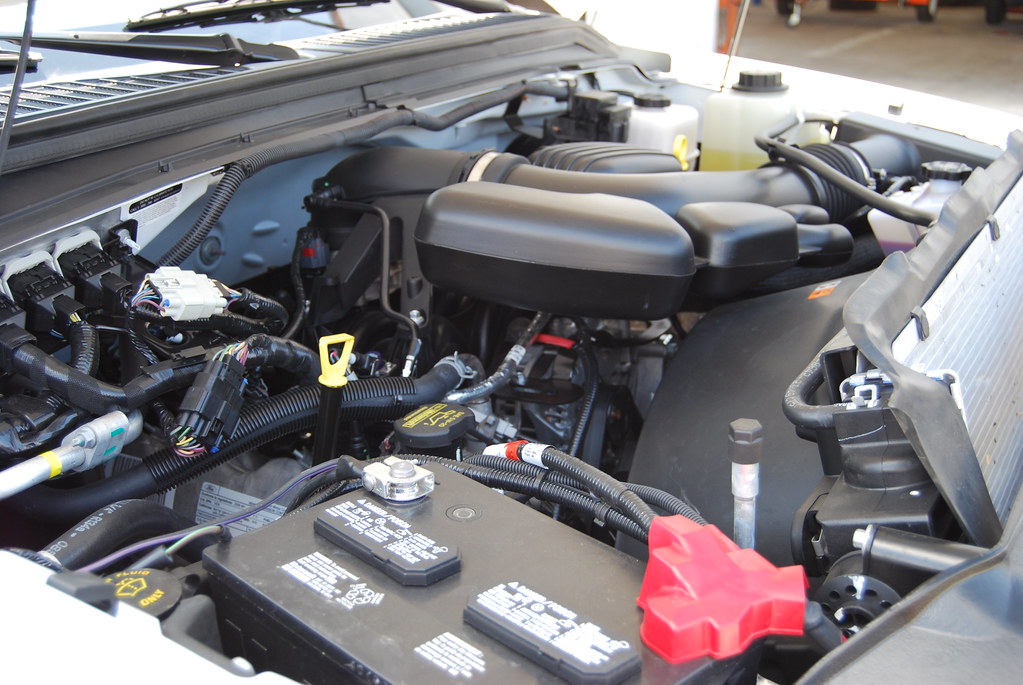
When you depend on a truck for work, an engine that fails before 100,000 miles is more than an inconvenience, it is a financial hit. Mechanics often see the same weak designs and rushed tech experiments show up on the hook, long before they should. Using their complaints about fragile modern hardware and the push away from simple, durable designs, you can spot patterns that hint which engines are most likely to give up early.
1) High-Strung Turbo Gas V6s With Complex Emissions
High-strung turbocharged gas V6 truck engines with intricate emissions hardware are the first red flag when you are worried about making it to 100,000 miles. Mechanics who work on late-model pickups describe how layers of sensors, exhaust treatment parts, and delicate turbo plumbing can turn a minor issue into a cascade of failures. When an engine is tuned for maximum output from a small displacement, it often runs hotter and under more stress, which can accelerate wear on pistons, bearings, and timing components.
Technicians who favor simpler powertrains argue that the push away from straightforward designs toward complicated emissions systems is a major reason some engines struggle to last. In one widely shared discussion of trucks that owners regret, the host urges buyers to “get rid of computers and emissions” and “go back to $35k pickup trucks that worked, lasted, and could be serviced by their owners,” a sentiment captured in a video titled 5 Trucks Mechanics Say ”DON’T BUY!”. When you combine that complexity with tight packaging and high boost, the odds of expensive failures before 100,000 miles rise sharply.
2) Small Displacement Turbo Diesels Tuned For Power Over Longevity
Small displacement turbo diesel truck engines that are tuned aggressively for power rather than durability are another category mechanics warn about. These engines often promise big torque numbers from modest size, but to deliver that, they rely on high fuel pressures, extreme boost, and sensitive emissions systems. When used for heavy towing or constant stop and go work, the strain can show up early as injector problems, turbo wear, or clogged exhaust treatment components that are costly to replace.
Veteran diesel technicians point out that older, lower-stressed diesels tended to survive abuse that modern small units cannot tolerate. The same frustration that leads some mechanics to call for a return to simpler, owner-serviceable trucks also underpins their skepticism about these compact diesels. If you are buying used, an engine like this that has spent its life hauling at maximum capacity is more likely to suffer a major failure before 100,000 miles, especially if maintenance or fuel quality has ever been neglected.
3) First-Generation Direct-Injection Gas Engines With Carbon Issues
First-generation direct-injection gas truck engines, especially those without supplemental port injection, have earned a reputation among mechanics for intake valve carbon buildup that can show up well before 100,000 miles. Because fuel is sprayed directly into the cylinder instead of over the valves, oil vapors and blow-by can coat the intake tract, gradually choking airflow. Drivers may notice rough idle, misfires, or power loss, and the fix often requires labor-intensive cleaning that many owners skip until the engine is already struggling.
Technicians who see these engines regularly say the problem is not always catastrophic, but it can shorten the practical life of the powertrain if ignored. When carbon buildup combines with neglected oil changes or cheap fuel, the risk of early failure rises. For a work truck that idles for long periods or makes short trips, the conditions are perfect for deposits to form. If you are shopping for a used truck with an early direct-injection engine, budget for preventive cleaning or look for evidence that the previous owner stayed ahead of the issue.
4) Light-Duty Gas V8s With Weak Timing Chain Designs
Some light-duty gas V8 truck engines are known in the service bay for fragile timing chain systems that can stretch or fail before 100,000 miles. When an engine relies on long chains, plastic guides, and complex tensioners, any oil starvation or poor maintenance can quickly turn into a noisy front cover and, eventually, serious internal damage. Mechanics often hear rattling on cold starts, a warning sign that the chain is no longer holding proper tension and that valve timing may already be drifting.
Once timing components start to fail, repair costs can rival the value of an older truck, pushing owners to give up on an engine that should have lasted much longer. Technicians who prefer simpler, overbuilt designs see these delicate timing systems as another example of engineering for quietness and efficiency instead of longevity. If you are considering a truck with a known weak chain setup, insist on detailed service records and listen carefully for startup noise, because ignoring it can mean the engine never reaches that 100,000 mile mark.
5) Half-Ton Truck Engines With Undersized Cooling Systems
Half-ton truck engines that are paired with marginal cooling systems are another group that mechanics say often fail early, especially in hot climates or towing duty. When a manufacturer pushes a light-duty platform to handle heavier loads without upgrading radiators, fans, and transmission coolers, the engine can spend much of its life running hotter than ideal. Over time, that extra heat can warp heads, cook gaskets, and break down oil faster, all of which shorten the engine’s useful life.
Technicians who see repeated overheating complaints on certain models note that the problem is not always driver abuse, but a mismatch between real-world use and the cooling capacity provided. Owners who hook up trailers or haul heavy cargo on steep grades are the ones who pay the price. If you plan to work a half-ton hard, look closely at the cooling hardware, consider aftermarket upgrades, and watch temperature gauges closely, because chronic heat issues are a classic path to engines that never see 100,000 miles.
6) High-Compression Gas Engines Requiring Premium Fuel
High-compression gas truck engines that are calibrated for premium fuel can also struggle to reach 100,000 miles when owners ignore the octane requirement. Mechanics frequently encounter detonation damage, from pitted pistons to stressed bearings, in engines that have been fed regular gas despite factory recommendations. Modern knock sensors can adjust timing to protect the engine, but running on the edge of detonation for years still adds stress and heat that erode long-term durability.
Service advisors often warn that saving a few dollars at the pump can cost thousands in repairs later, yet many drivers continue to use cheaper fuel. Over time, the combination of high compression, heavy loads, and low octane can lead to chronic pinging, reduced power, and eventually internal failure. If you are considering a truck with this type of engine, factor the cost of premium fuel into your budget and treat it as non-negotiable if you want the engine to survive past 100,000 miles.
7) Early Stop-Start Truck Engines With Weak Starters
Early stop-start truck engines, which shut off at every light to save fuel, have drawn criticism from mechanics for premature starter and battery failures. In some designs, the starting system was not robust enough to handle the constant cycling, leading to repeated no-start complaints and, in some cases, damage to flywheels or ring gears. While these issues may not always destroy the engine itself, they can strand drivers and contribute to a perception that the powertrain is unreliable long before 100,000 miles.
Technicians who replace these components regularly say that work trucks, which already see heavy electrical loads from accessories, are especially vulnerable. Frequent short trips amplify the problem, because the battery never fully recovers between starts. If you are looking at an early stop-start truck, ask whether the starter and battery have been upgraded and consider disabling the feature when possible, since reducing the number of start cycles can help the engine and its supporting hardware last longer.
8) Gas Engines With Cylinder Deactivation Problems
Gas truck engines that use cylinder deactivation to save fuel have also earned a place on mechanics’ watch lists. In some designs, the system that turns cylinders on and off can cause uneven wear, oil consumption, or lifter failures that show up well before 100,000 miles. Drivers may notice ticking noises, misfires, or a sudden drop in performance, and repairs often require deep engine work that is not economical on an older truck.
Technicians who see these failures argue that the complexity of managing multiple operating modes introduces new failure points that did not exist in traditional fixed-displacement engines. For owners who tow or haul frequently, the constant switching between active and deactivated cylinders can be especially hard on valvetrain components. If you are shopping for a truck with this technology, research whether the specific engine has a history of lifter or cam issues and consider software updates or tuning solutions that keep the engine in full-cylinder mode under heavy use.
9) Overstressed Fleet-Spec Four-Cylinder Truck Engines
Fleet-spec four-cylinder truck engines, especially in midsize or compact pickups, can be pushed beyond their comfort zone when used like full-size workhorses. Mechanics who service commercial fleets report that these smaller engines often spend their lives at high rpm, hauling loads or running tools, which accelerates wear on bearings, cooling systems, and turbochargers if equipped. When maintenance intervals are stretched or oil quality is poor, the combination can lead to failures well before 100,000 miles.
Because fleet trucks are often driven by multiple operators, they may not receive the mechanical sympathy that a single owner would provide. Hard launches, long idling periods, and skipped warm-up time all add up. If you are considering a used fleet truck with a small engine, assume it has lived a hard life and have a trusted mechanic perform compression tests and oil analysis. That extra diligence can help you avoid inheriting an engine that is already on borrowed time.
10) Budget-Oriented Truck Engines With Minimal Owner Maintenance
Finally, budget-oriented truck engines that attract cost-conscious buyers can be some of the most vulnerable to early failure simply because they are not maintained properly. Mechanics often see these engines arrive with sludge, worn timing components, and failing pumps, all symptoms of skipped oil changes and cheap fluids. When an engine is built to a price and then subjected to neglect, the odds of it surviving to 100,000 miles drop dramatically.
Technicians who lament the shift away from durable, owner-serviceable trucks point out that even a modestly engineered engine can last if it receives regular care. The problem is that buyers drawn to the lowest purchase price sometimes cut corners on maintenance too. If you own or are considering a lower-cost truck, following the service schedule precisely, using quality parts and fluids, and addressing small leaks or noises early are the best ways to keep it from becoming another engine that mechanics say “doesn’t make it to 100k.”
More from Wilder Media Group: